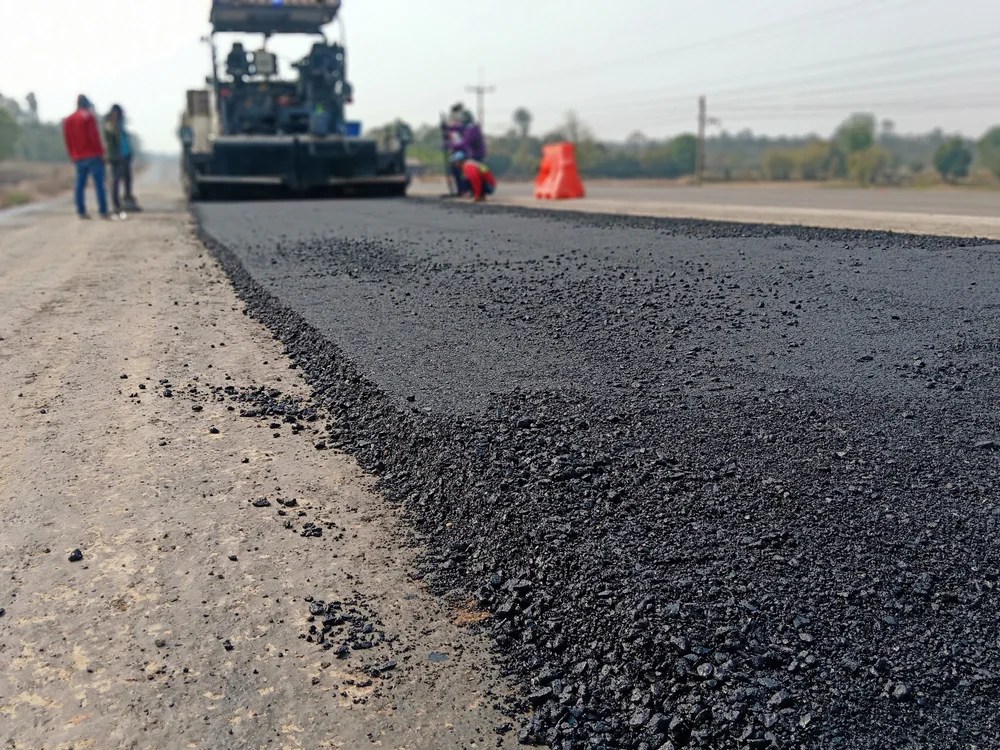
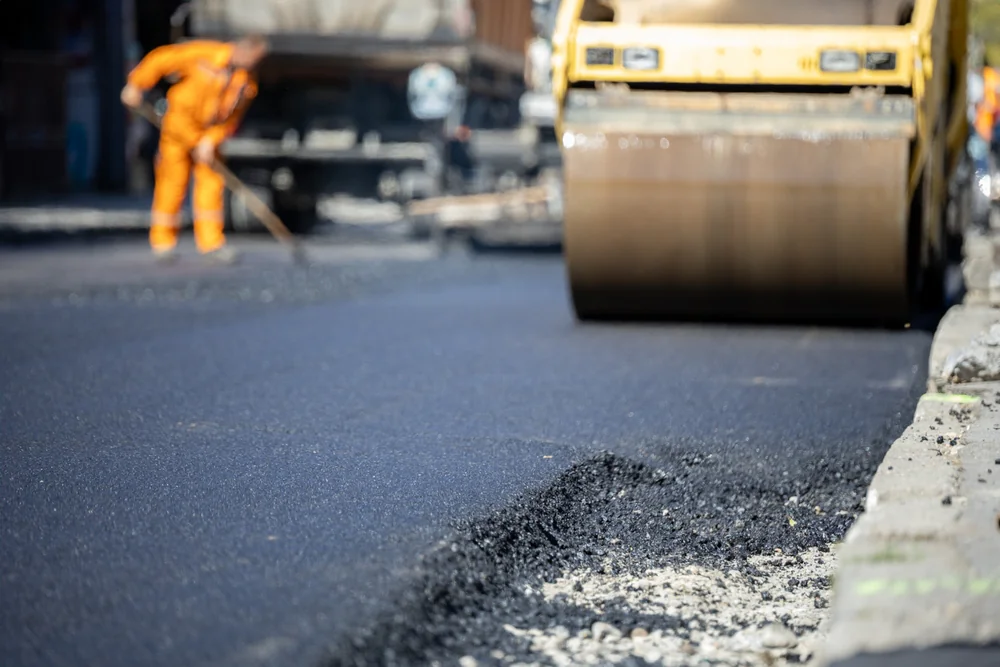
You get a surface that doesn’t crack apart in two years. You get drainage that actually works instead of pooling water that seeps into your foundation. You get a crew that treats your property like it matters.
Here’s what that looks like: your driveway holds up to Pennsylvania winters without turning into a patchwork of repairs. Your parking lot handles daily traffic without developing ruts or soft spots. Your investment actually lasts.
The difference comes down to preparation. Most problems start below the surface—poor subgrade work, inadequate base material, rushed compaction. Fix those, and the asphalt on top performs the way it should. Skip them, and you’re looking at failure within a year or two, no matter how good the top layer looks on day one.
We bring expertise rooted in 1948 to every project in Riegelsville. That’s 75+ years of understanding what works, what doesn’t, and how to handle the specific challenges that come with paving in this area.
Our approach is straightforward: one crew, one project, full attention. Not splitting time between three job sites. Not rushing to the next property. Your job gets the focus it deserves, whether it’s a residential driveway or a complex commercial lot.
Riegelsville sits along the Delaware River with its own drainage considerations and soil conditions. This isn’t a place for cookie-cutter solutions. Every property gets evaluated for its specific needs—slope, water flow, usage patterns, soil composition—then built accordingly. That’s how you end up with paving that actually performs in this environment.
It starts with the site evaluation. We examine your existing surface, check the base condition, identify drainage issues, and determine what your specific property needs. No generic estimates—actual assessment of your situation.
Next comes preparation. The existing surface gets removed if needed. The subgrade gets properly compacted and checked for soft spots. Any problem areas get addressed before moving forward. Then a proper aggregate base goes down—typically 6 to 8 inches for residential driveways, more for commercial applications—shaped to match the final contour and compacted thoroughly.
Drainage gets built into the design. Water needs somewhere to go, and that path gets planned before any asphalt goes down. Proper slope, effective runoff management, solutions for your property’s specific challenges.
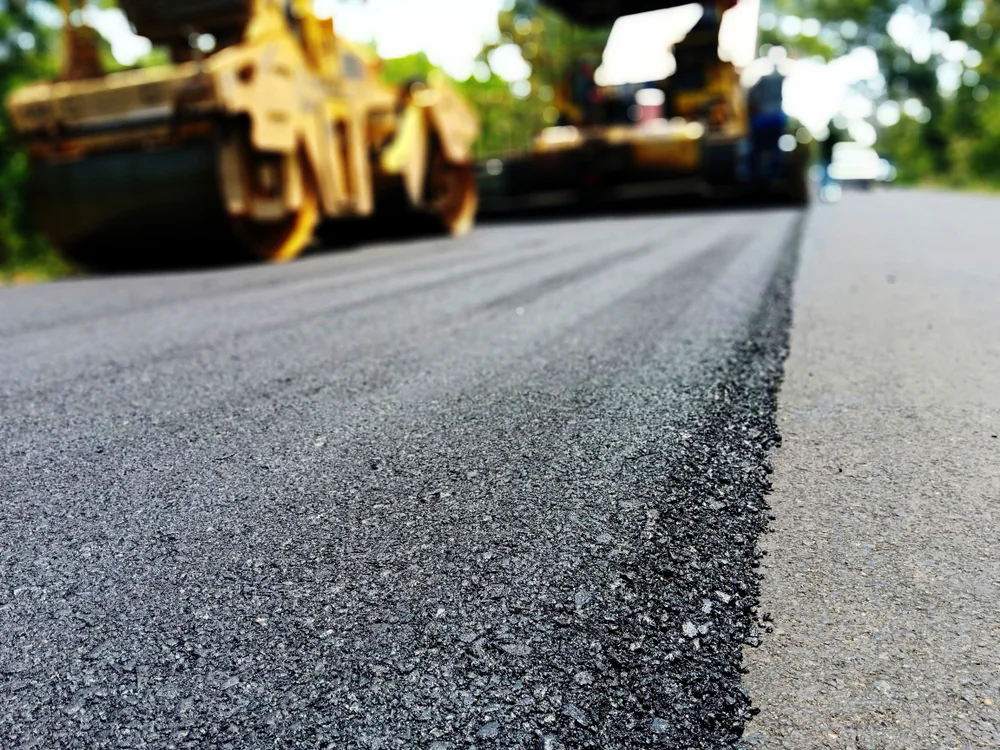
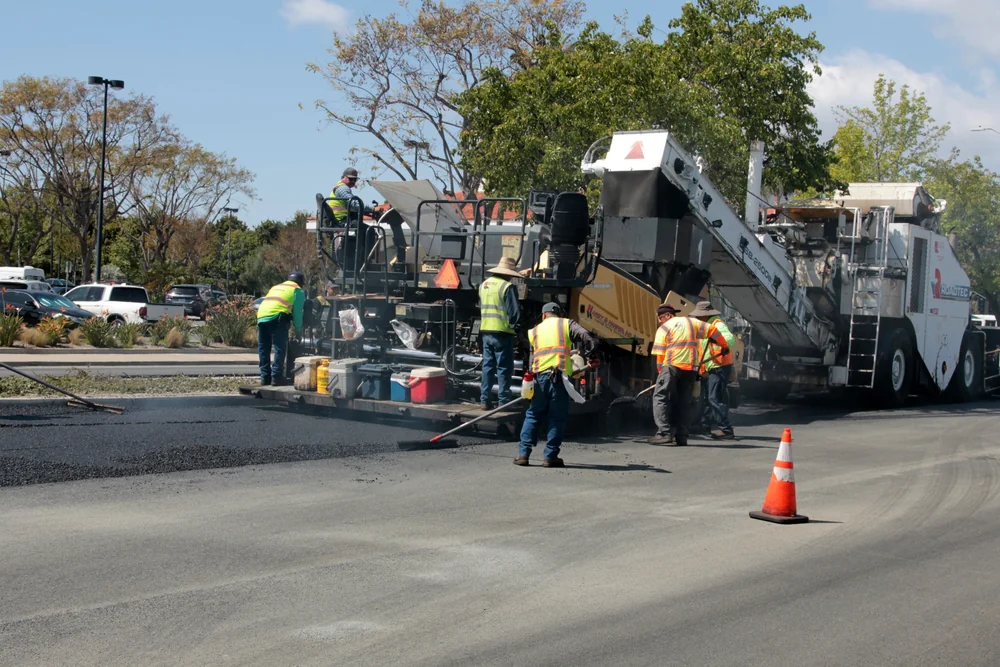
When conditions are right—warm enough for proper compaction, dry enough for good adhesion—the asphalt gets laid. Hot mix asphalt, not the cold patch material that fails under light use. Appropriate thickness for your needs: 2 to 4 inches for residential driveways, thicker for commercial lots handling heavier loads. Then proper compaction with the right equipment to achieve the density that prevents premature wear.
You get updates throughout. No disappearing for days. No surprises about timeline or cost. Clear communication about what’s happening and what comes next.
Ready to get started?
Residential driveway paving handles everything from basic replacements to complex installations with challenging grades or drainage requirements. Commercial parking lots get designed for the traffic they’ll actually see—delivery trucks, customer vehicles, whatever your business demands. Industrial paving accounts for heavy equipment and constant use.
Water management services address the drainage challenges common in this area. Riegelsville’s location along the Delaware River means many properties deal with water flow issues. We handle grading solutions, drainage system installation, and water diversion to protect your pavement investment.
In Riegelsville’s climate, proper installation timing matters. Spring and summer provide the temperatures needed for hot mix asphalt to compact correctly. Winter installations risk irregularities and poor performance. We schedule work when conditions support quality results, not just when it’s convenient.
The area’s historic character and residential nature mean aesthetics matter alongside function. Clean edges, smooth surfaces, professional appearance—not just functional paving but work that enhances your property’s look. For commercial properties in Riegelsville, that first impression matters when customers pull into your lot.
We also offer specialized discounts for seniors, military members, and first-time customers. Quality work doesn’t have to break your budget, and we back that up with options that make professional paving accessible.
Check for a few specific things that separate real contractors from scammers. First, legitimate contractors provide written estimates before starting work—not pressure tactics or demands for immediate decisions. They accept standard payment methods, not just cash. They offer contracts that spell out the scope of work, timeline, and costs.
Ask for references from recent jobs and actually call them. A real contractor has customers willing to vouch for their work. Check with the Better Business Bureau for complaints. Look for online reviews on platforms like Angie’s List or Google, but verify they’re from actual customers, not fake reviews.
Be wary of anyone showing up at your door claiming they have “leftover asphalt” from another job. That’s a classic scam. Hot mix asphalt cools quickly and becomes unworkable—someone driving around for hours with “leftover mix” is selling you material that won’t compact properly. Reputable contractors calculate their material needs carefully and rarely have substantial excess. They also don’t need to go door-to-door drumming up business—their reputation brings them work.
Costs vary based on several factors specific to your property. Size is the obvious one—contractors typically charge per square foot, and a larger driveway costs more. But thickness matters too. If you have heavy vehicles or multiple cars, you need thicker asphalt, which increases material and installation costs.
Your property’s existing condition affects the price. If the current base is solid, you might just need new asphalt on top. If the base has failed or was never done right, you’re looking at complete removal and reconstruction. Drainage problems add cost because they need to be fixed or they’ll just destroy your new pavement.
Location factors into pricing as well. Fuel costs, material availability, and local market rates in the Riegelsville area influence what contractors charge. Difficult access or challenging site conditions can increase labor costs.
Here’s what matters more than the exact number: get multiple written estimates from legitimate contractors. Compare what’s actually included—proper base preparation, adequate thickness, drainage solutions, not just the cheapest surface layer. The lowest bid often means corners cut somewhere. A detailed estimate that explains what you’re getting and why it costs what it does tells you more than a rock-bottom price with no explanation.
A properly designed and installed asphalt driveway or parking lot should last 20 years or more in Pennsylvania’s climate. A poorly done job can fail within a year. The difference comes down to the quality of installation and ongoing maintenance.
Pennsylvania’s freeze-thaw cycles test pavement. Water seeps into cracks, freezes, expands, and breaks apart the asphalt. That’s why proper drainage and a solid base matter so much—they prevent water from getting where it causes damage. Hot mix asphalt handles temperature fluctuations better than cold mix, which is why legitimate contractors use it for permanent installations.
The thickness of your asphalt affects longevity. Residential driveways typically need 2 to 4 inches of asphalt over a proper base. Commercial lots handling heavier traffic need more. Skimping on thickness to save money upfront just means earlier replacement.
Maintenance extends the life of your pavement. Sealcoating every few years protects the surface from UV damage and water infiltration. Filling cracks promptly prevents them from spreading. Addressing drainage issues before they undermine the base saves the entire structure. A well-maintained asphalt surface in Riegelsville can exceed its expected lifespan. Neglected pavement deteriorates faster, regardless of how well it was initially installed.
Watch the preparation work first—that’s where quality shows up or gets skipped. The subgrade should be free of vegetation and organic material, properly shaped to match the final contour, and thoroughly compacted. If you see soft spots or areas that give under weight, they need to be removed and replaced before any base material goes down.
The aggregate base should be placed in layers and compacted with proper equipment. For residential driveways, you’re typically looking at 6 to 8 inches of compacted crushed aggregate. Commercial projects need more depending on expected loads. Each layer gets compacted before the next goes down—not just dumped in one thick pile and rolled once.
Pay attention to drainage. Water should have a clear path away from the pavement. The surface should have at least a 2% slope to prevent pooling. If your property has drainage challenges, you should see solutions being installed—not just ignored.
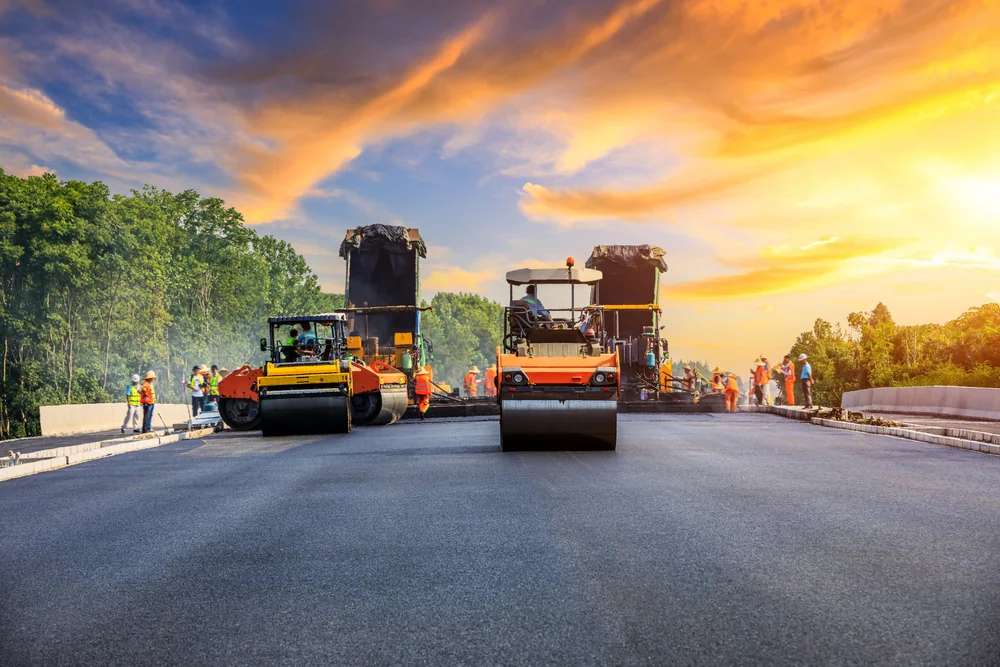
When the asphalt goes down, it should be hot mix asphalt, not cold patch material. The crew should work efficiently while the material is hot enough to compact properly. You’ll see them using appropriate rollers for the job size—not undersized equipment that can’t achieve proper compaction. The edges should be clean and properly compacted, not just left loose.
Throughout the process, the contractor should communicate what’s happening and address any questions. If they’re avoiding you or can’t explain what they’re doing, that’s a red flag.
Asphalt offers several advantages in Pennsylvania’s climate. It’s more flexible than concrete, so it moves with the natural settlement of the ground without cracking as easily. It handles freeze-thaw cycles better—while concrete can crack and spall from ice formation, properly installed asphalt is more resilient. You also don’t need to salt asphalt in winter, which is one less maintenance concern.
Cost-wise, asphalt is typically less expensive to install than concrete. It’s also easier and less expensive to repair if problems do develop. A section of damaged asphalt can be cut out and replaced relatively simply. Concrete repairs are more complicated and often more visible.
Asphalt can be installed and ready to use faster than concrete, which needs extended curing time. If you need your driveway back in service quickly, asphalt delivers. Maintenance is straightforward—periodic sealcoating protects the surface and keeps it looking good.
Concrete has its advantages too—it can last longer in some situations and doesn’t need sealcoating. But for Riegelsville’s climate, typical residential use, and balancing cost with performance, asphalt is usually the practical choice. It’s why you see it used for most driveways and parking lots in the area—it works, it lasts, and it makes sense economically.
Our one-job-at-a-time approach sets us apart. Most contractors run multiple crews across several job sites simultaneously. That means split attention, crews rushing to get to the next location, and less oversight on each individual project. We dedicate our full crew to your project until it’s complete. You get our full attention, not whatever time we can spare between other commitments.
Our philosophy treats every client the same regardless of project size or budget. A small residential driveway gets the same care and professionalism as a large commercial lot. That’s not standard in this industry—many contractors prioritize bigger jobs and treat smaller projects as fillers. Here, your project matters, period.
Custom solutions for each property’s specific needs replace cookie-cutter approaches. Riegelsville properties have different drainage patterns, soil conditions, and usage requirements. We evaluate what your specific site needs and design accordingly, rather than applying the same standard solution to every job.
Our roots go back to 1948—that’s 75+ years of accumulated knowledge about what works and what doesn’t. Combined with modern techniques and equipment, that experience translates to reliable results. The five-star reviews and industry recognition back up our quality claims with documented customer satisfaction.
Transparent communication throughout the project means you know what’s happening, when it’s happening, and why. No disappearing for days. No surprise costs. No vague answers. Just clear updates and straightforward information about your project.
Other Services we provide in Riegelsville