
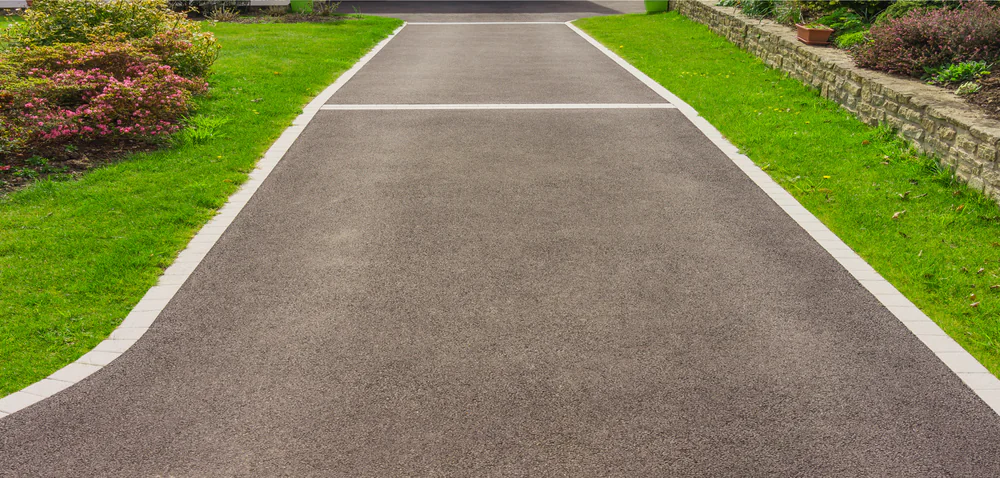
You’re not paying for asphalt. You’re paying for a surface that doesn’t crack after the first winter, doesn’t pool water after every storm, and doesn’t need to be redone in five years because someone cut corners you couldn’t see.
Flemington’s weather doesn’t mess around. Hot summers expand the ground. Freezing winters contract it. Spring rains test your drainage. If the base isn’t right, if the grading isn’t precise, if the compaction isn’t thorough—you’ll know. You’ll see it in the cracks, the dips, the water that won’t drain.
Proper driveway paving means your asphalt does its job without you thinking about it. You pull in, you pull out, and it holds up year after year. That’s what happens when the process is done right and the crew actually cares about the outcome.
We bring expertise that goes back to 1948—decades of hands-on experience in residential and commercial paving throughout Flemington and Hunterdon County. We’re not a crew that rushes through your driveway to get to the next job. It’s one project at a time, full attention, owner on-site.
What that means for you: no surprises, no excuses, no disappearing after the deposit clears. Just transparent communication, custom solutions for your property’s specific needs, and work that reflects what happens when a company actually treats every client like they matter.
Flemington homeowners and business owners have options. We’ve built our reputation on five-star reviews, industry recognition, and a straightforward philosophy: treat every project with care, solve problems instead of covering them up, and stand behind the work.
First, the old surface comes out. If your driveway is cracked, uneven, or failing, it gets removed completely—asphalt, concrete, whatever’s there. Starting with a clean slate matters because you can’t build something solid on top of something broken.
Next comes grading and drainage. This is where a lot of contractors get lazy, and it’s where you pay for it later. The ground gets leveled and sloped precisely so water moves away from your driveway, not into it. Pooling water is the enemy of asphalt. Proper grading prevents it.
Then the base goes in. This is the foundation—the layer that keeps your asphalt from cracking when the ground shifts with temperature changes. It’s compacted, tested, and built to handle New Jersey’s freeze-thaw cycles. Most driveway failures start here, which is why this step gets the attention it deserves.
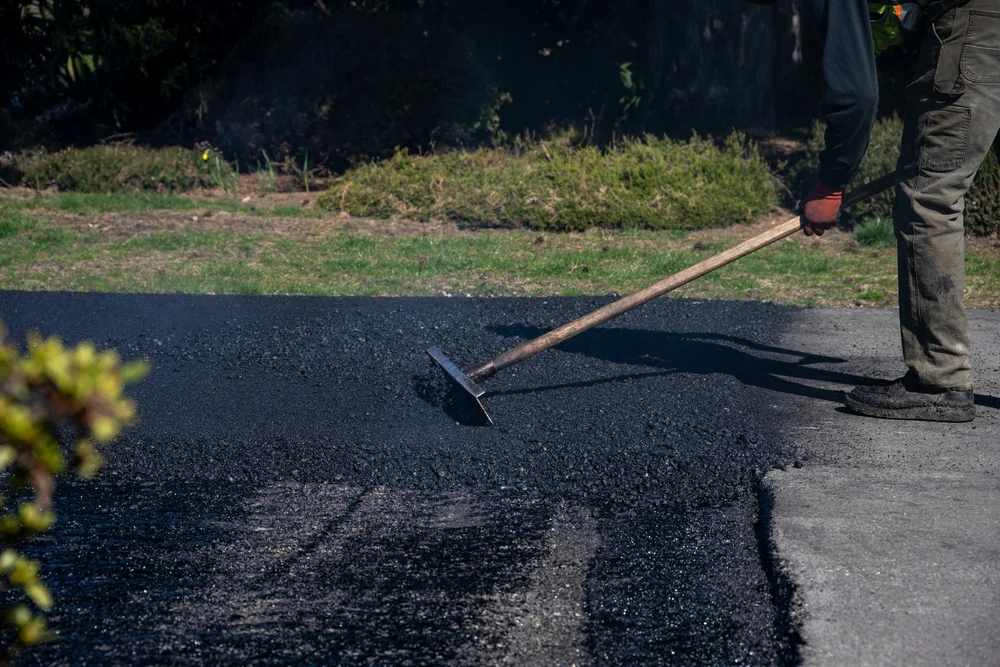
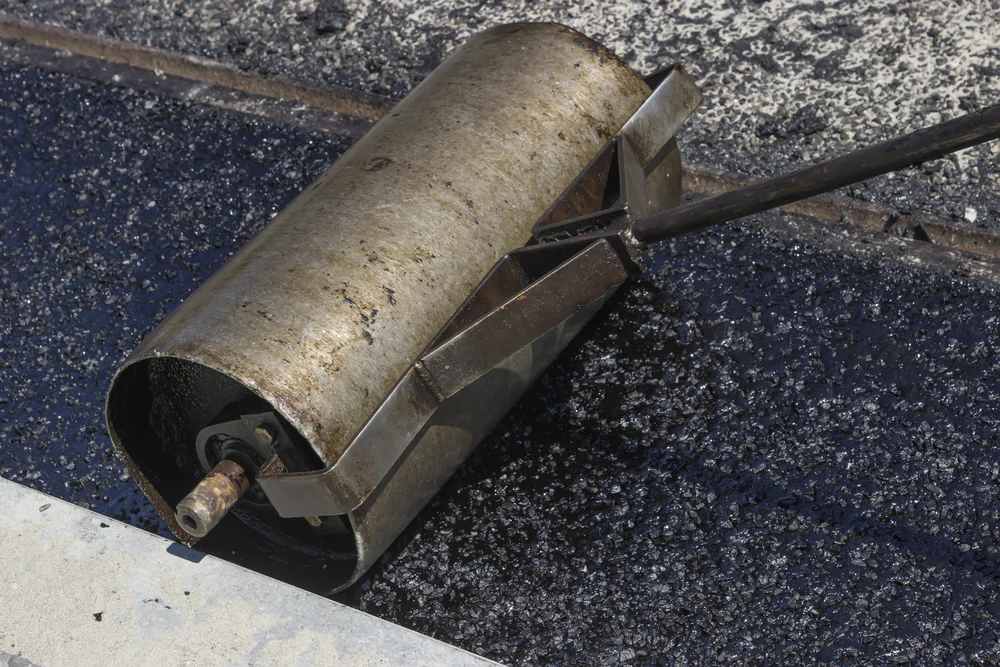
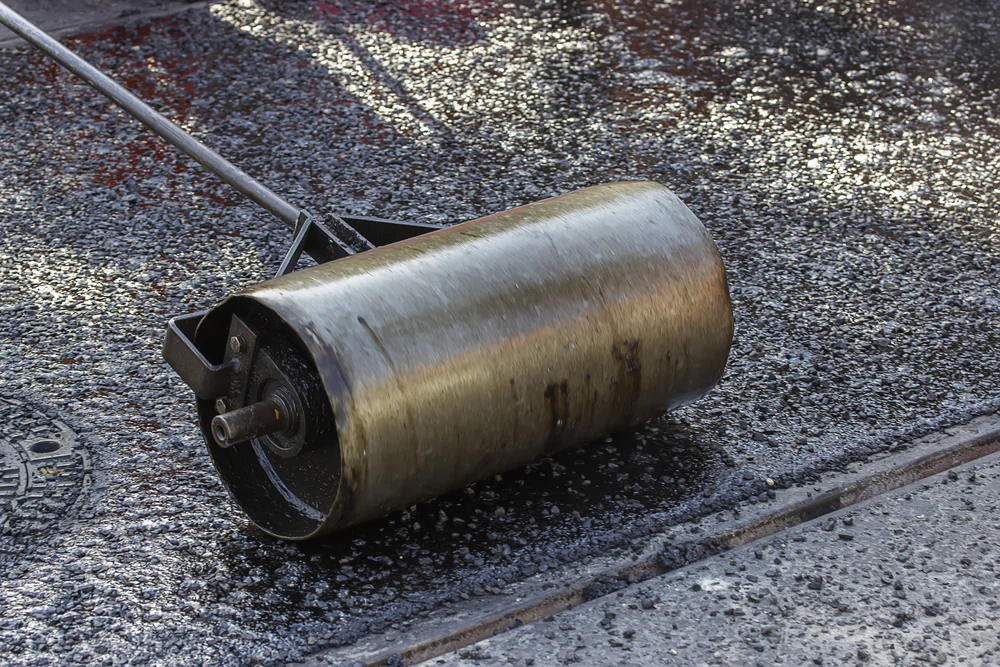
After that, the asphalt gets laid. Hot mix asphalt is applied in layers, spread evenly, and compacted with heavy rollers to create a smooth, durable surface. The edges get sealed where new asphalt meets existing surfaces to prevent water intrusion.
Finally, we clean up, walk you through the finished project, and give you guidance on when you can drive on it and how to maintain it. You’re left with a driveway that looks clean, drains properly, and is built to last.
Ready to get started?
A properly installed asphalt driveway in Flemington starts with understanding your property. Every site is different—different drainage patterns, different soil conditions, different connections to existing surfaces. We evaluate your specific situation and build a custom solution instead of using a one-size-fits-all approach.
You get proper excavation and removal of old materials. You get precision grading that accounts for water runoff and prevents pooling. You get a compacted base designed to handle ground movement from temperature swings. You get hot mix asphalt applied at the right thickness, compacted correctly, and finished with attention to detail at every transition point.
For Flemington homeowners, this means a driveway that handles the weather extremes Hunterdon County throws at it. Summers here get hot—asphalt needs to withstand expansion without becoming soft or damaged. Winters get cold—your driveway needs a base that won’t shift when the ground freezes and thaws. Spring brings rain, which tests your drainage every single time.
You also get transparent communication throughout the process. No guessing when the crew will show up. No wondering what’s happening next. No surprise costs that weren’t discussed upfront. Just clear updates, honest answers, and a team that treats your property with the same care they’d want for their own.
We also handle commercial paving and parking lot installation for Flemington businesses. The same attention to drainage, base preparation, and quality materials applies whether it’s a residential driveway or a commercial parking area. The goal is always the same: a surface that performs well, lasts long, and reflects the quality you paid for.
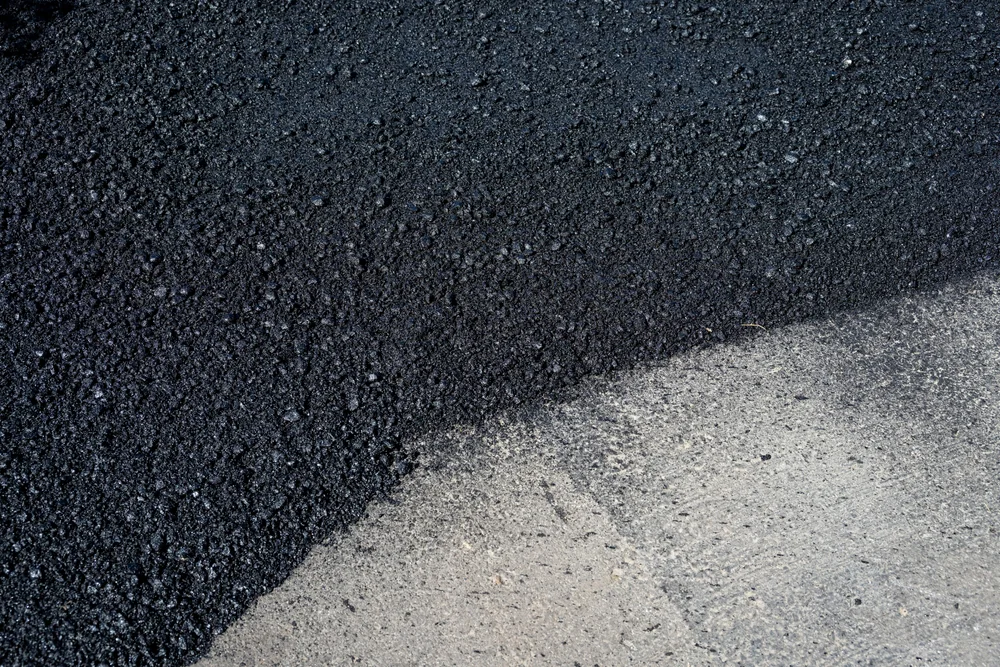
Most residential driveway installations take two to three days from start to finish, but the timeline depends on your specific project. If the old driveway needs to be removed, that’s typically day one. Grading, base preparation, and compaction happen next. The asphalt itself goes down on the final day.
Weather plays a role. Asphalt needs to be installed when temperatures are consistently above 50 degrees for proper curing and compaction. Rain delays things. Extreme heat can too. A reliable contractor will tell you upfront if conditions aren’t right instead of rushing the job.
The size and complexity of your driveway also matter. A straightforward rectangular driveway moves faster than one with curves, multiple entry points, or drainage challenges that need custom solutions. We give you a realistic timeline during the estimate so you know what to expect, and our crew keeps you updated if anything changes.
The difference is in what you can’t see. A cheap paving job skips or rushes the base preparation, uses thinner asphalt layers, doesn’t compact properly, and ignores drainage. It looks fine for a year or two, then starts failing. You’ll see cracks, dips, and potholes because the foundation wasn’t built to handle the stress.
Quality paving starts with proper excavation and a well-compacted base that won’t shift when the ground freezes and thaws. The base is what keeps your driveway stable through New Jersey’s temperature swings. Skimp here, and you’ll pay for it later in repairs or full replacement.
Quality paving also means adequate asphalt thickness—usually two to three inches for residential driveways. Thinner than that, and you don’t have enough material to withstand traffic and weather. Proper compaction with heavy rollers ensures the asphalt is dense and durable, not soft and prone to damage. Attention to grading and drainage prevents water from pooling and seeping under the surface, which is one of the fastest ways asphalt fails. The upfront cost is higher, but the long-term value is significantly better. You’re not repaving every five years. You’re getting a driveway that lasts.
If you see water pooling on your current driveway or near your foundation after it rains, you have drainage issues. If you notice erosion along the edges of your driveway or wet spots that take days to dry, that’s another sign. These problems won’t fix themselves, and new asphalt won’t solve them unless the grading is corrected first.
Proper drainage means your driveway is sloped so water runs off toward the street, a drainage system, or another appropriate area—not toward your house or garage. Even a slight slope makes a huge difference. A good paving contractor evaluates your property’s drainage patterns during the estimate and designs the grading to direct water where it needs to go.
In Flemington, spring rains and winter snow melt put drainage to the test. If water sits on your driveway or seeps underneath the asphalt, it weakens the base and accelerates cracking and pothole formation. Addressing drainage during paving installation is far less expensive than dealing with the damage later. We include drainage evaluation and solutions as part of every driveway project because it’s that important to long-term performance.
Sometimes, but not always. An overlay—paving new asphalt directly over the old surface—can work if your existing driveway is structurally sound with only minor surface damage. If the base is solid, drainage is adequate, and there are no major cracks or settling, an overlay saves time and money compared to full removal and replacement.
However, if your current driveway has deep cracks, potholes, significant settling, or base failure, an overlay just covers up problems temporarily. You’ll see those issues come through the new asphalt within a year or two because the underlying problems haven’t been fixed. In those cases, removal and proper reinstallation is the only way to get a driveway that lasts.
Drainage is another consideration. If your existing driveway doesn’t drain properly, adding more asphalt on top won’t fix it—it might even make it worse by raising the surface without correcting the slope. An honest contractor will evaluate your current driveway and tell you whether an overlay makes sense or if you need full replacement. We assess each property individually and recommend the approach that gives you the best long-term result, not just the quickest sale.
You can typically drive on new asphalt within 24 to 48 hours after installation, but you need to be careful during the first few days. The asphalt is technically drivable once it cools and hardens, but it’s still curing and hasn’t reached full strength yet. Avoid sharp turns, heavy loads, or parking in the same spot repeatedly during the first week.
Full curing takes longer—usually several months depending on weather conditions. During this time, the asphalt continues to harden and gain strength. You’ll want to avoid things like motorcycle kickstands, jack stands, or heavy equipment that concentrates weight on small areas, as these can leave impressions while the surface is still curing.
Your contractor should give you specific guidance based on the weather conditions during your installation and the thickness of the asphalt laid. Hotter temperatures mean the asphalt stays softer longer. Cooler temperatures help it harden faster. We provide clear instructions on when you can resume normal use and what precautions to take during the curing period so you don’t accidentally damage your new driveway before it’s fully set.
Driveway paving costs in Flemington typically range from $7 to $13 per square foot for new asphalt installation, but your actual cost depends on several factors. The size of your driveway is the biggest variable—a small single-car driveway costs less than a large multi-car driveway with turnaround space. The condition of your existing surface matters too. If extensive excavation and base work are needed, that adds to the cost compared to a straightforward overlay.
Site-specific challenges also affect pricing. Poor drainage that requires correction, difficult access for equipment, or the need to work around landscaping or utilities can increase labor and time. Additional features like decorative edging, thicker asphalt for heavy vehicles, or complex layouts with curves and angles also impact the final cost.
The best way to get an accurate number is to request an on-site estimate. A reputable contractor will evaluate your property, discuss your needs and preferences, and provide a detailed quote that breaks down what you’re paying for. Be wary of estimates that seem significantly lower than others—they often indicate shortcuts in materials, thickness, or base preparation that will cost you more in the long run. We provide transparent estimates that reflect the quality of work and materials you’re actually getting, along with any available discounts for seniors, military, or first-time customers.
Other Services we provide in Flemington