
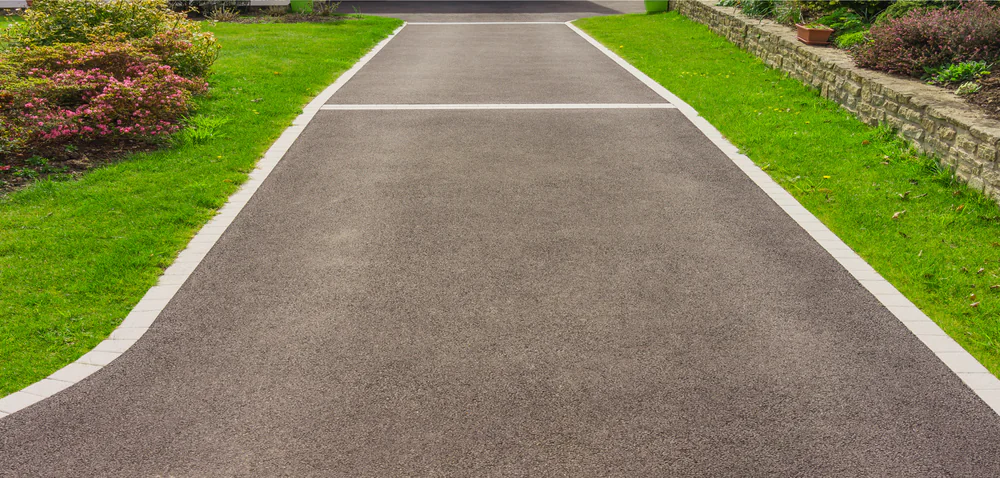
A properly installed driveway means no more water pooling near your foundation. No more worrying whether the surface will hold up through another brutal winter. No more patching the same spots year after year.
When the base is built right and drainage is designed correctly from the start, your driveway becomes one less thing to worry about. You pull in after work, and the surface is smooth. Rain runs off where it should. Snow melts evenly.
That’s what happens when a crew takes the time to do it right instead of rushing to the next job. Your property looks better. The investment actually lasts. And you’re not calling someone back in two years to fix what should have been done properly the first time.
We bring family tradition dating back to 1948 to every driveway in Lawrence. That’s over 75 years of understanding what works in New Jersey’s climate and what fails.
The difference shows in how our crew approaches your project. One job at a time. Full attention on getting your base prepared correctly, your drainage sloped properly, and your asphalt installed to last decades, not just years.
Lawrence properties deal with the same challenges across Mercer County—clay soils that shift, freeze-thaw cycles that crack inferior work, and weather that tests every installation. Our approach accounts for these local conditions in every project, whether it’s a residential driveway near Lawrenceville Main Street or a commercial lot closer to Quaker Bridge Mall.
First, any existing surface comes out completely. If your old driveway is cracked and settling, there’s usually a reason underneath. That gets addressed before anything new goes down.
Next comes grading and base preparation—the part that determines whether your driveway lasts 10 years or 30. The ground gets sloped so water runs away from your house and garage, not toward them. A compacted gravel base goes in, typically 4-6 inches depending on your soil conditions. This base handles the freeze-thaw movement that destroys driveways with weak foundations.
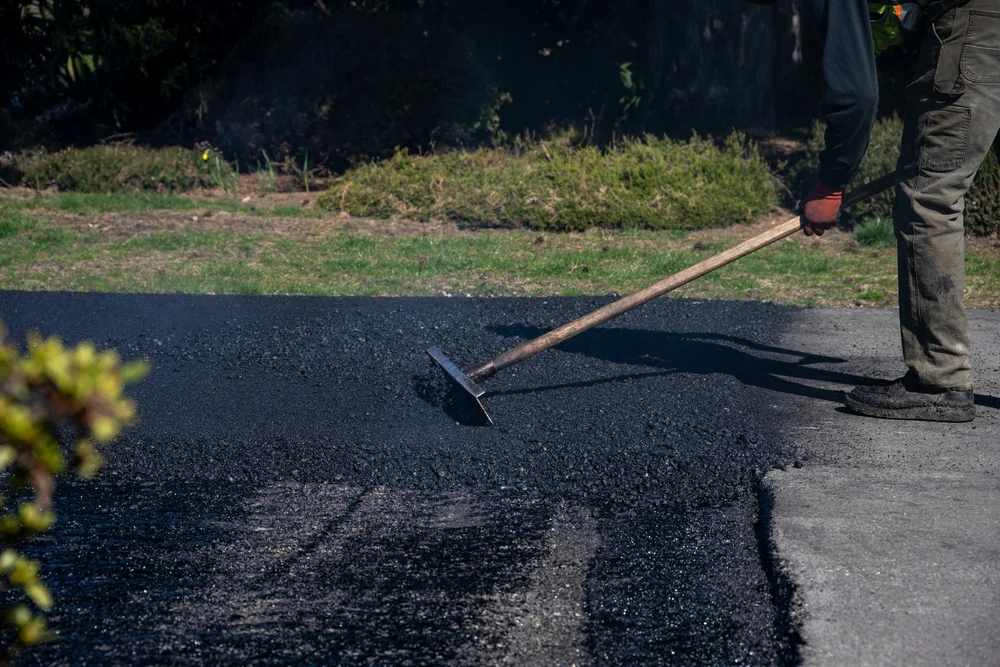
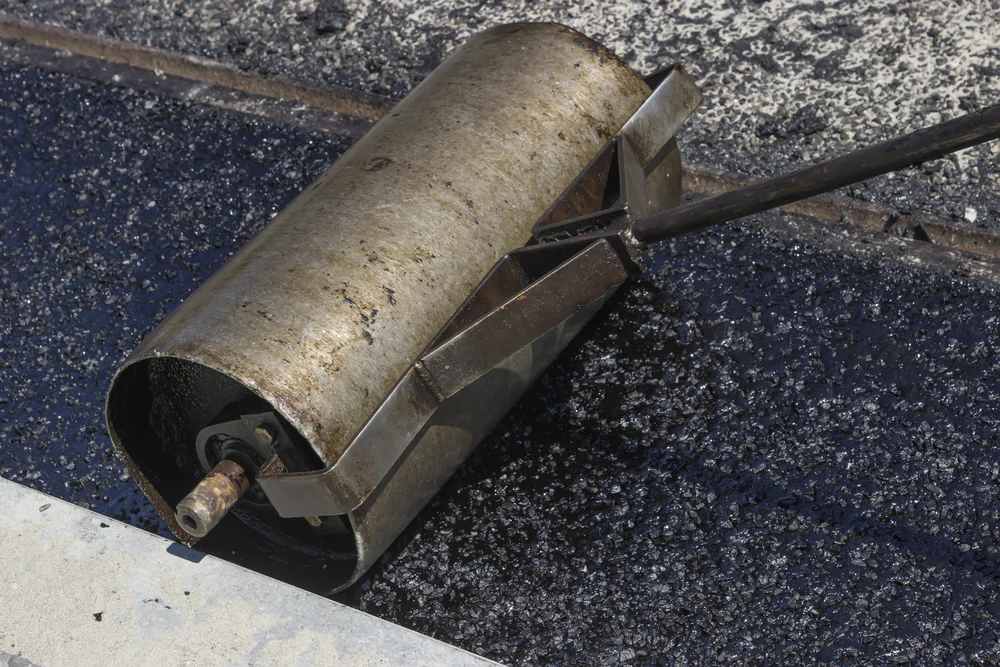
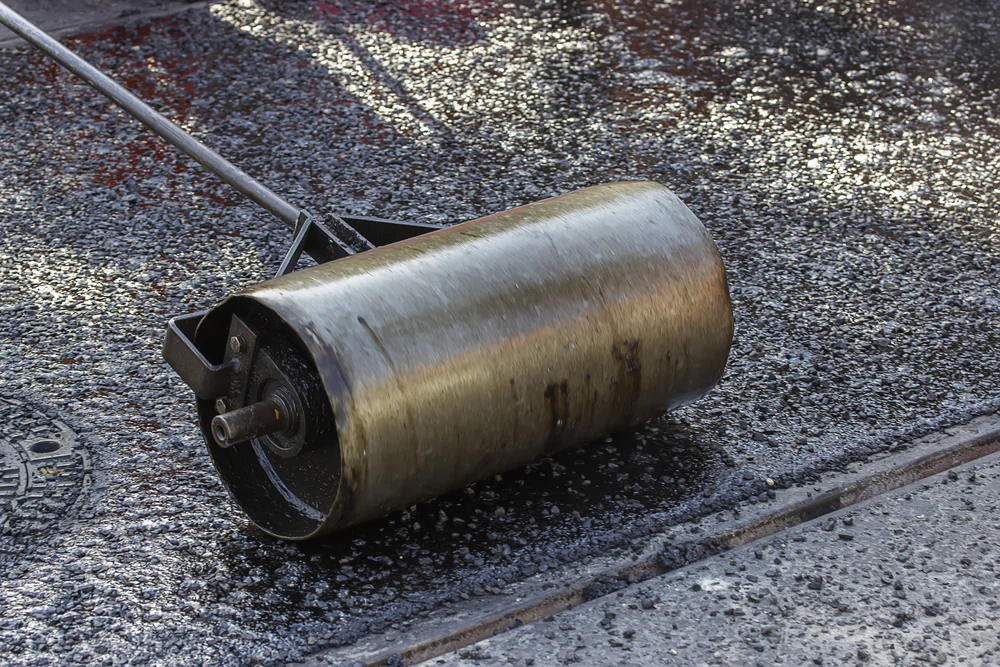
Then the asphalt installation happens. Hot mix asphalt goes down in layers, usually 2.5 to 3 inches for residential driveways, and gets compacted with heavy rollers to create a smooth, dense surface. Our crew pays attention to transitions where your new driveway meets the street or existing pavement—these connection points need to be graded correctly so water doesn’t collect.
The entire process for a typical residential driveway takes one to two days, depending on size and site conditions. After installation, you’ll need to stay off the new asphalt for at least 24-48 hours while it cures.
Ready to get started?
Your driveway paving project starts with a site assessment that looks at drainage patterns, soil conditions, and how water currently moves across your property. This isn’t a quick glance—it’s figuring out what your specific property needs to prevent problems down the road.
The installation includes complete removal of old materials, proper base construction with compacted aggregate, precise grading for water runoff, and professional asphalt application. In Lawrence’s climate, these details matter more than in areas without harsh winters.
South Jersey’s weather pattern—hot summers reaching into the 90s, cold winters with frequent freeze-thaw cycles, and significant rainfall throughout the year—means your driveway needs to handle expansion, contraction, and water infiltration. Properties near Mercer Meadows or along Lawrence Township’s tree-lined streets often deal with additional considerations like root systems and shade patterns that affect how asphalt cures and weathers.
We also provide guidance on maintenance timing. In this region, sealcoating every 2-3 years protects against UV damage and water penetration. Cracks should be filled promptly, especially before winter, to prevent water from getting under the surface and causing bigger problems when it freezes.
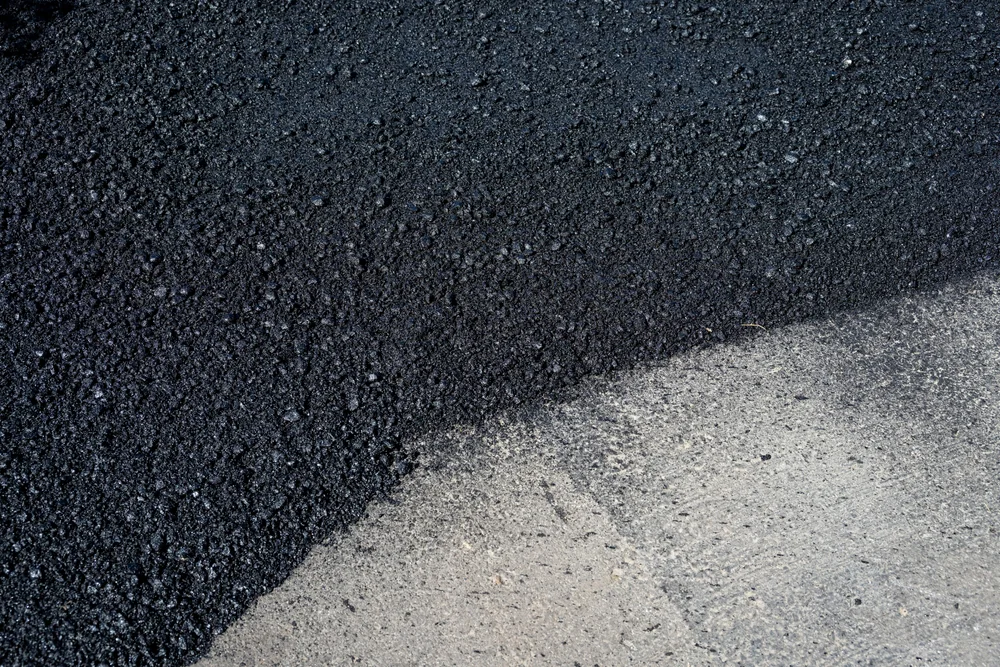
Most residential driveway projects take one to two days from start to finish. Day one typically involves removing your old surface if needed, preparing and grading the base, and installing the compacted aggregate foundation. Day two covers the asphalt installation and compaction.
The timeline can extend if your property has drainage issues that need correction or if the existing base requires more extensive repair. Weather also plays a role—asphalt needs temperatures above 50°F to cure properly, which is why most paving happens between late spring and early fall in New Jersey.
After we finish, you’ll need to keep vehicles off the new asphalt for 24-48 hours depending on temperature and humidity. The surface may feel firm sooner, but giving it proper curing time prevents indentations and ensures the asphalt compacts fully.
A residential driveway in Lawrence should have at least 3 inches of compacted asphalt over a 4-6 inch compacted gravel base. The base thickness depends on your soil type—clay soils common in Mercer County typically need the full 6 inches to prevent settling and shifting.
Some contractors cut corners by installing only 2 inches of asphalt or skipping proper base preparation entirely. This might look fine initially, but it won’t hold up to New Jersey’s freeze-thaw cycles. Water gets into thin asphalt more easily, freezes, expands, and creates cracks that spread quickly.
The base layer is actually more important than the asphalt thickness. A weak or improperly compacted base will cause even thick asphalt to crack and settle. That’s why the base preparation phase takes significant time—it’s building the foundation that determines whether your driveway lasts 10 years or 30 years.
Driveway paving costs in Lawrence typically range from $5,500 to $12,000 for standard residential projects, with most homeowners paying $8-12 per square foot including excavation and proper base work. The wide range comes down to specific site conditions, driveway size, and what needs to happen before new asphalt goes down.
A small driveway in good condition that just needs resurfacing costs less than a larger driveway where the old surface needs complete removal and the base requires rebuilding. Properties with drainage problems or access challenges add to the cost because they require more time and materials to address correctly.
Be cautious of quotes that seem too good to be true—they usually are. Contractors who significantly undercut market rates often skip critical steps like proper base preparation or use thinner asphalt than recommended. You’ll pay less upfront but end up with a driveway that needs replacement years sooner than it should. Getting it done right the first time costs more initially but saves money over the driveway’s lifespan.
Water is the biggest enemy of any asphalt driveway, especially in Lawrence’s climate. When water pools on or under your driveway, it creates problems that compound over time. In winter, that water freezes, expands, and cracks the asphalt from below. In summer, standing water weakens the base and leads to soft spots that eventually become potholes.
Proper drainage means grading your driveway with a slight slope—typically 1-2% grade—so water runs off toward appropriate areas, not toward your foundation or garage. The base layer also needs to promote drainage, which is why compacted aggregate works better than solid materials that trap water.
Lawrence properties often deal with clay soils that don’t absorb water quickly, making surface drainage even more critical. If your current driveway has areas where water sits after rain, that’s a sign the grading wasn’t done correctly. Fixing drainage issues during installation prevents years of maintenance headaches and extends your driveway’s lifespan significantly.
Wait at least six months to a year after installation before applying the first sealcoat. New asphalt needs time to cure fully—the oils in fresh asphalt have to oxidize and harden before sealcoating provides any benefit. Sealcoating too early can actually trap those oils and prevent proper curing.
After that initial waiting period, plan to sealcoat every 2-3 years in South Jersey’s climate. Sealcoating protects against UV damage from summer sun, prevents water penetration, and resists chemical damage from oil, gas, and road salt that’s common in New Jersey winters.
The best time for sealcoating in Lawrence is late spring through early fall when temperatures stay consistently above 50°F and rain isn’t forecast for at least 24 hours. The sealcoat needs warm, dry conditions to cure properly. Regular sealcoating can extend your driveway’s life from 15-20 years to 25-30 years, making it one of the most cost-effective maintenance steps you can take.
We focus on one job at a time instead of juggling multiple projects. When our crew is at your property, that’s where our attention stays—not split between your driveway and two other jobs across town. This approach means better quality control and more careful execution of every step.
We also bring 75+ years of family experience dating back to 1948, which means we’ve seen what works long-term in New Jersey’s climate and what fails. That knowledge shows up in details like base preparation, drainage design, and material selection that other contractors might overlook.
Every client gets treated the same way regardless of project size or budget—the same attention to detail, the same transparent communication, and the same commitment to finding the right solution for that specific property. We also offer specialized discounts for seniors, military members, and first-time customers, and maintain five-star reviews on Angie’s List that reflect our focus on building long-term relationships rather than rushing through jobs.
Other Services we provide in Lawrence