
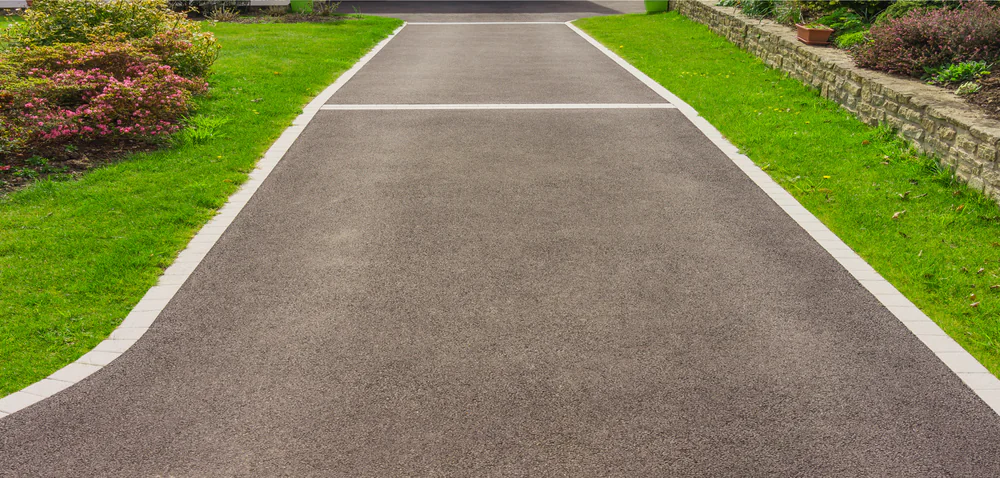
You’re not looking for the cheapest driveway. You’re looking for one that won’t crack, buckle, or drain poorly two winters from now.
That’s where most paving jobs go wrong. Contractors skip the base work, use whatever asphalt grade keeps the price low, and move on before the problems show up. You’re left dealing with water pooling, frost heave, and repairs that cost more than doing it right the first time.
A properly installed asphalt driveway in Trenton, NJ starts below the surface. The sub-base gets graded for drainage. The materials match the soil conditions. The crew doesn’t rush the compaction. When those steps happen correctly, your driveway handles New Jersey’s freeze-thaw cycles, summer heat, and heavy use without falling apart. You get decades of performance instead of a few good years followed by constant maintenance.
We bring industry experience that goes back to 1948. That’s not a marketing line—it’s decades of learning what works in Mercer County’s climate and what doesn’t.
We focus on one project at a time. That means our full crew is on your property, not split between three jobs trying to finish before the asphalt cools. Every driveway gets the same level of attention whether it’s a small residential installation or a commercial parking lot.
Trenton property owners deal with humid summers, cold winters, and soil that shifts. We account for those conditions in every estimate and every installation. Our approach is straightforward: assess the property, explain what’s needed, provide transparent pricing, and execute the work without shortcuts. Five-star reviews on Angie’s List and repeat clients prove that method works better than high-pressure sales and lowball quotes.
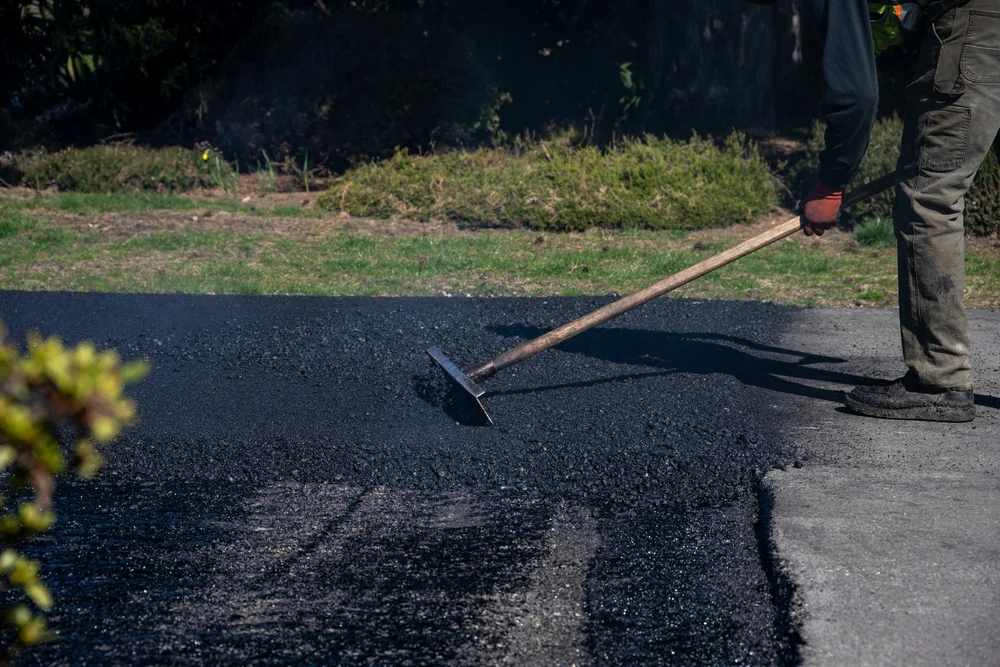
The process starts with removing your old driveway. Heavy equipment breaks up the existing asphalt or concrete, and the debris gets hauled away. That gives us a clean slate to work with.
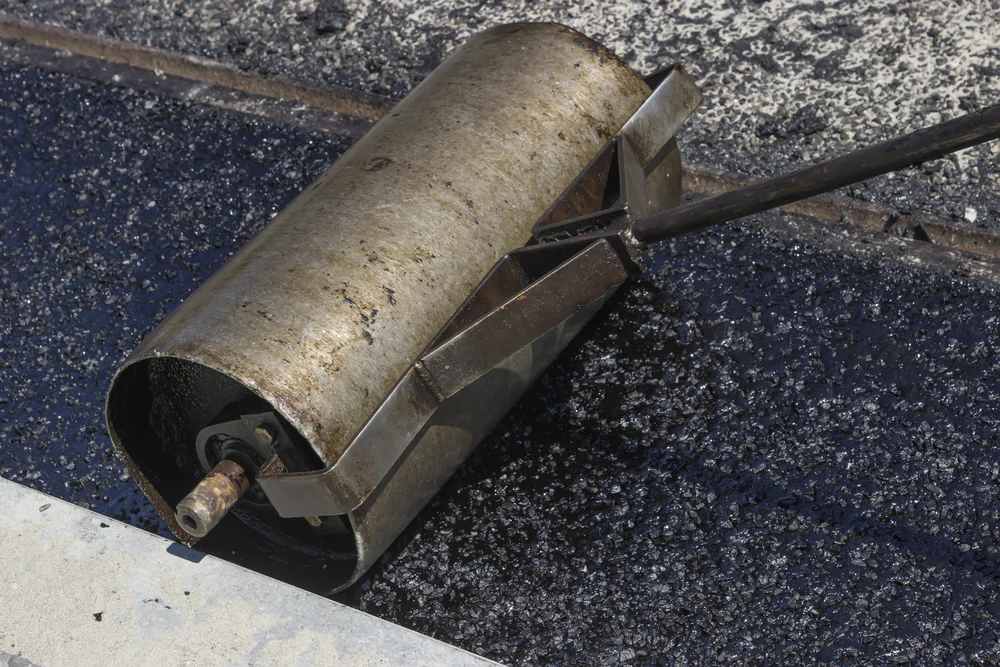
Next comes the most important part: preparing the sub-base. This step determines how long your driveway lasts. The ground gets graded so water drains away from your property instead of pooling on the surface. Soft spots in the soil get identified and reinforced. The base material—usually crushed stone—goes down in layers and gets compacted with heavy rollers. Skipping or rushing this step is how driveways fail early.
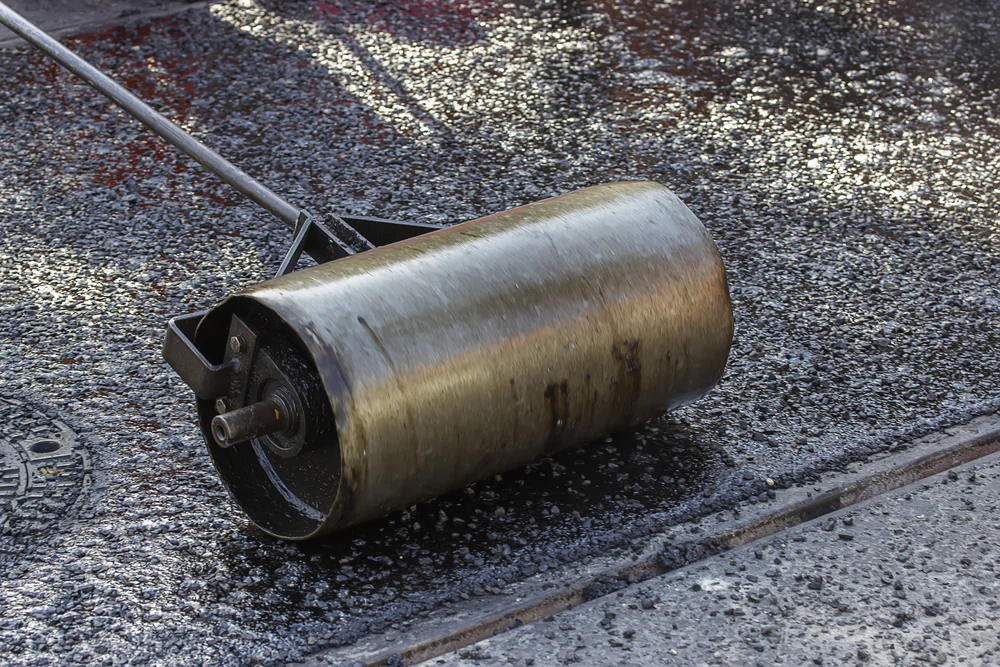
Once the base is solid and properly graded, the asphalt goes down. Hot-mix asphalt gets delivered, spread evenly, and compacted while it’s still hot. We pay attention to transitions where your new driveway meets the street or existing pavement. Those joints need to be smooth and graded correctly so water doesn’t collect and cause damage. The entire surface gets rolled smooth, and within a day or two, you can drive on it. Full curing takes longer, but your driveway is functional almost immediately.
Ready to get started?
Driveway paving in Trenton, NJ includes more than just asphalt. You’re paying for proper drainage design, quality base materials, skilled labor, and equipment that does the job right.
The base preparation accounts for New Jersey’s soil conditions. Clay-heavy soil needs deeper base material—usually 6 to 8 inches of compacted crushed stone. Sandy soil requires less, but still needs proper compaction. The asphalt itself should be at least 3 inches thick over a solid base. Anything thinner won’t hold up to regular use and seasonal temperature swings.
Trenton’s climate creates specific challenges. Summers get hot enough to soften asphalt if it’s low quality. Winters bring freeze-thaw cycles that crack poorly installed driveways. Water is the biggest enemy—it seeps into small cracks, freezes, expands, and turns minor issues into major repairs. That’s why proper grading and drainage matter more than anything else. A driveway that channels water away from your foundation and off the surface will outlast a cheaper installation by years.
We use high-grade asphalt with less recycled material. We compact each layer thoroughly. We don’t skip steps to finish faster. The result is a driveway that looks good and performs well for 20 to 30 years with basic maintenance like sealcoating every few years.
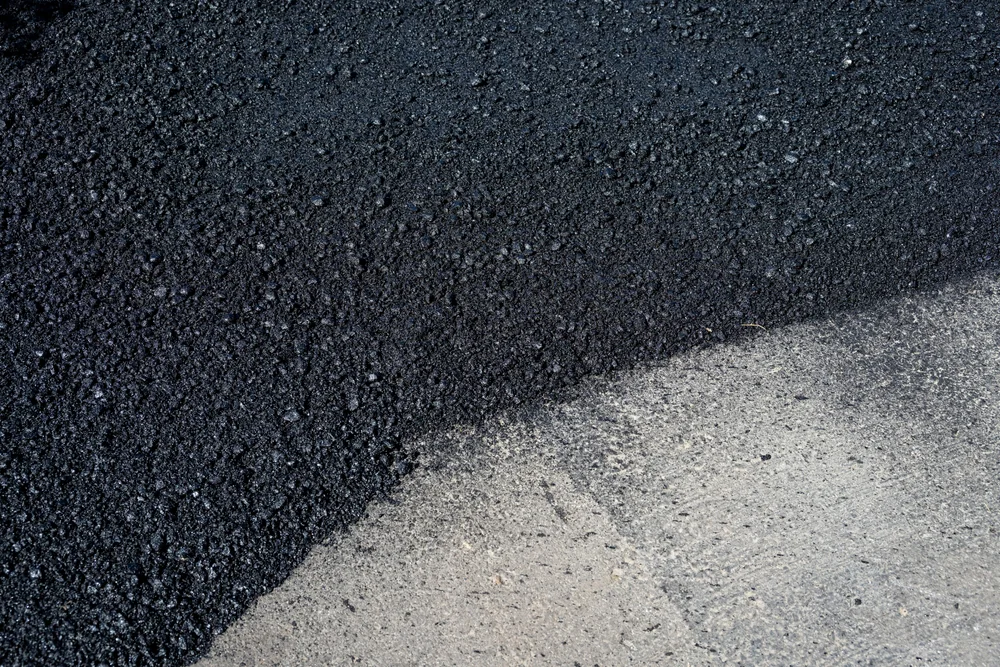
Most residential driveway paving in Trenton, NJ costs between $7 and $15 per square foot, including materials and labor. That puts a standard 600-square-foot driveway somewhere between $4,200 and $9,000.
The price depends on what’s involved. If your current driveway has a solid base and just needs new asphalt on top, that’s less expensive than tearing everything out and starting from scratch. Properties with drainage problems, soft soil, or significant grading needs cost more because the prep work is more involved. The thickness of the asphalt, the quality of materials, and the condition of your existing surface all factor into the final number.
Be cautious of quotes that seem too low. Contractors cut costs somewhere—usually by skipping base prep, using low-grade asphalt, or rushing the compaction. Those shortcuts save money upfront but cost you more in repairs within a few years. A detailed, written estimate that breaks down materials, labor, and site prep gives you a clearer picture of what you’re actually getting.
A properly installed asphalt driveway in New Jersey lasts 20 to 30 years. That assumes correct base preparation, quality materials, and regular maintenance like sealcoating every 2 to 3 years.
New Jersey’s climate is tough on asphalt. Hot summers, cold winters, and frequent freeze-thaw cycles all take a toll. Water is the main problem—it gets into small cracks, freezes, expands, and creates bigger cracks. Poor drainage accelerates this process. A driveway that doesn’t channel water away properly might only last 10 to 15 years before it needs major repairs or replacement.
The base is what determines longevity. If the sub-base was built correctly with proper compaction and drainage, the asphalt on top will hold up. If the base was rushed or done incorrectly, you’ll see cracks, buckling, and soft spots much sooner. Regular maintenance extends the life of your driveway significantly. Filling small cracks before they spread, applying sealcoat to protect against UV damage and water penetration, and addressing drainage issues early all add years to your investment.
Start with licensing and insurance. Any legitimate paving contractor should provide proof of both without hesitation. Insurance protects you if someone gets hurt on your property or if equipment damages something. If a contractor refuses to show documentation or tries to skip this step, walk away.
Experience matters more than price. Ask how long they’ve been in business and request references from recent projects. A contractor with a solid reputation in Trenton will have customers willing to vouch for their work. Check online reviews on platforms like Angie’s List, Google, and the Better Business Bureau. Look for patterns—do they communicate clearly? Do they finish on schedule? Do they stand behind their work if problems arise?
Get everything in writing. The estimate should detail what’s included: removal of old pavement, base preparation, asphalt thickness, grading, and any additional work. Vague estimates leave room for surprise charges later. Ask about the materials they use—high-grade asphalt costs more but lasts longer. Find out if they do the work themselves or subcontract it out. Companies that use their own trained crews typically deliver more consistent results.
Yes, but only if the existing driveway is in decent condition. If your current asphalt has minor cracks and surface wear but the base underneath is still solid, an overlay can work. The new asphalt layer—usually 2 to 3 inches thick—goes directly on top of the old surface.
This approach doesn’t work if your driveway has major problems. Large cracks, potholes, significant buckling, or drainage issues mean the base has failed. Paving over a bad base just hides the problem temporarily. Within a year or two, the same issues will show up in the new asphalt. You’ll end up paying twice—once for the overlay and again for the full replacement you should have done initially.
We’ll inspect your existing driveway and tell you honestly whether an overlay makes sense or if you need a complete tear-out and reinstall. The inspection checks for soft spots, drainage problems, and the overall condition of the base. If the base is solid and the surface damage is minimal, an overlay saves money and still gives you a durable result. If the base has failed, there’s no shortcut that works long-term.
Late spring through early fall is ideal for asphalt paving in Trenton, NJ. Asphalt needs warm temperatures to cure properly—generally above 50 degrees Fahrenheit. Cold weather prevents proper compaction and can compromise the quality of the installation.
Most paving contractors in New Jersey work from April through October. Summer is the busiest season, so if you’re planning a project, schedule it early. Waiting until late summer or early fall can sometimes get you better pricing because demand drops slightly, but you risk running into weather delays if temperatures drop unexpectedly.
Avoid winter paving unless it’s an emergency repair. Even if a contractor is willing to work in cold weather, the asphalt won’t cure correctly. You’ll end up with a surface that’s more prone to cracking and doesn’t last as long. If you’re planning ahead, contact us in early spring to get on the schedule. That gives you the best selection of dates and ensures the work gets done during optimal conditions.
Sealcoating is the most important maintenance task. Apply a quality sealant every 2 to 3 years to protect the asphalt from UV rays, water penetration, and chemical damage from oil or gas spills. Sealcoating isn’t just cosmetic—it adds years to your driveway’s lifespan by preventing the asphalt from breaking down.
Fill cracks as soon as you notice them. Small cracks turn into big cracks when water gets in and freezes. A tube of crack filler costs a few dollars and takes minutes to apply. Ignoring cracks for a year or two can lead to potholes and base damage that require expensive repairs.
Keep your driveway clean. Sweep off debris, remove oil stains promptly, and make sure water drains properly. If you notice pooling water, address it before it causes bigger problems. Avoid parking heavy equipment or trucks in the same spot repeatedly—constant weight in one area can create depressions. With basic maintenance, your asphalt driveway in Trenton, NJ will look good and perform well for decades.
Other Services we provide in Trenton