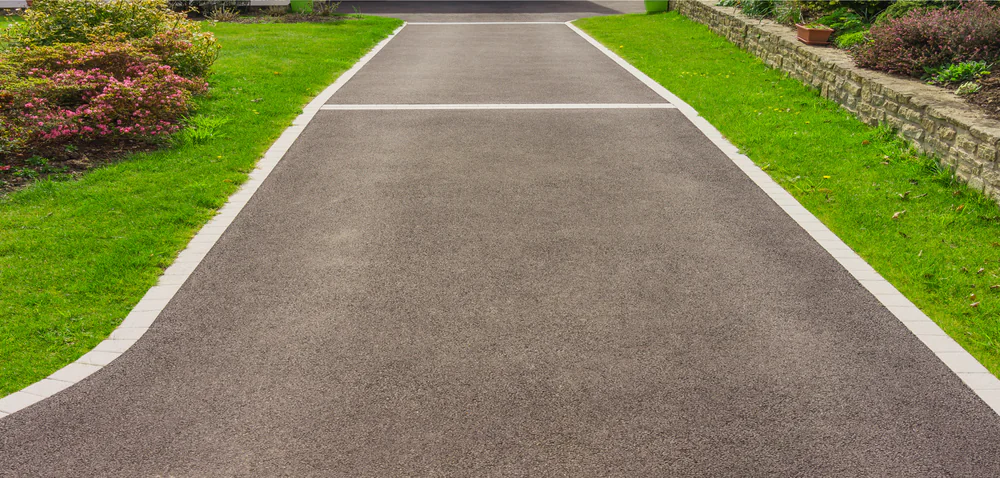
You’re not just paying for fresh asphalt. You’re paying for a surface that handles Pennsylvania winters without cracking apart in three years. One that drains properly so you’re not dealing with ice patches or water pooling near your foundation.
The difference is in what happens before the asphalt goes down. Proper grading. Base prep that actually supports the weight of your vehicles. Drainage solutions that account for how water moves across your property—not just where it sits today.
When it’s done right, your driveway becomes one less thing to worry about. No more avoiding that sunken spot. No more explaining to guests why half of it looks like a patchwork quilt. Just a clean, durable surface that does its job for 15 to 20 years or more.
We’ve been in the paving business since 1948. That’s not a tagline—it’s three generations of learning what works and what doesn’t when you’re laying asphalt in Pennsylvania.
We operate with a simple philosophy: one job at a time, full attention on your project, and no cutting corners to get to the next one. Whether you’re a homeowner in Bedminster replacing a cracked driveway or a business owner needing a parking lot that can handle commercial traffic, you get the same level of care.
You’ll work directly with people who know the local climate, understand how Somerset County properties drain, and have seen what happens when contractors skip steps. Our goal isn’t just to get your driveway paved—it’s to build something that holds up and a relationship that lasts beyond the final invoice.
First, we evaluate your property. Not just where the driveway goes, but how water moves, where the grade needs adjustment, and what kind of base will support your specific use. If there’s an old driveway, we remove it properly—not just pave over it hoping for the best.
Next comes the base work. This is where most problems start if it’s done wrong. We prep and grade the base to ensure proper drainage and stability. If your property has water management issues, we address them here—before the asphalt goes down and it’s too late to fix.
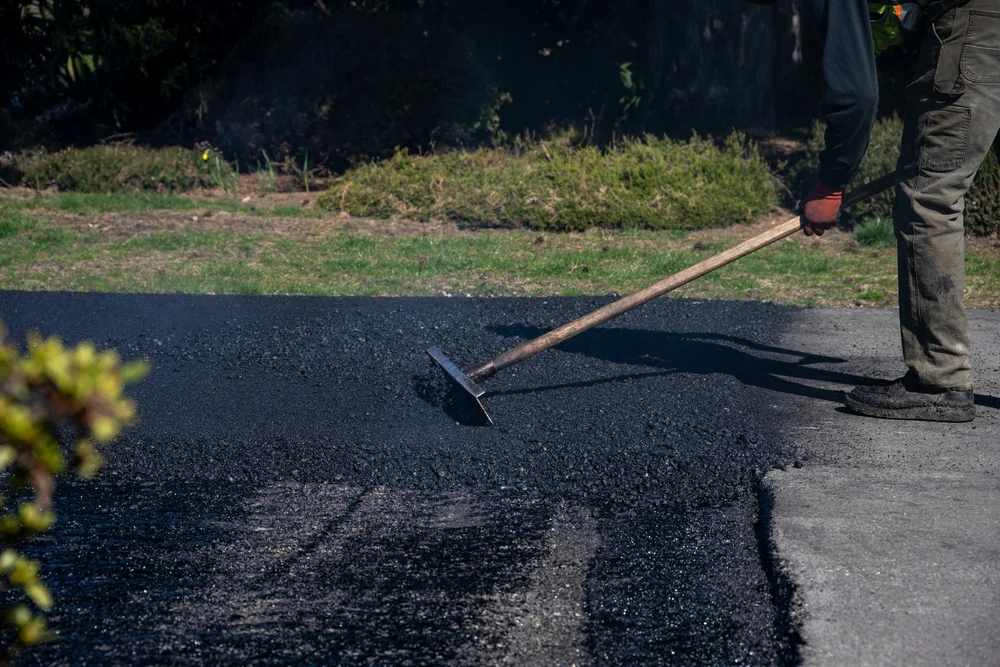
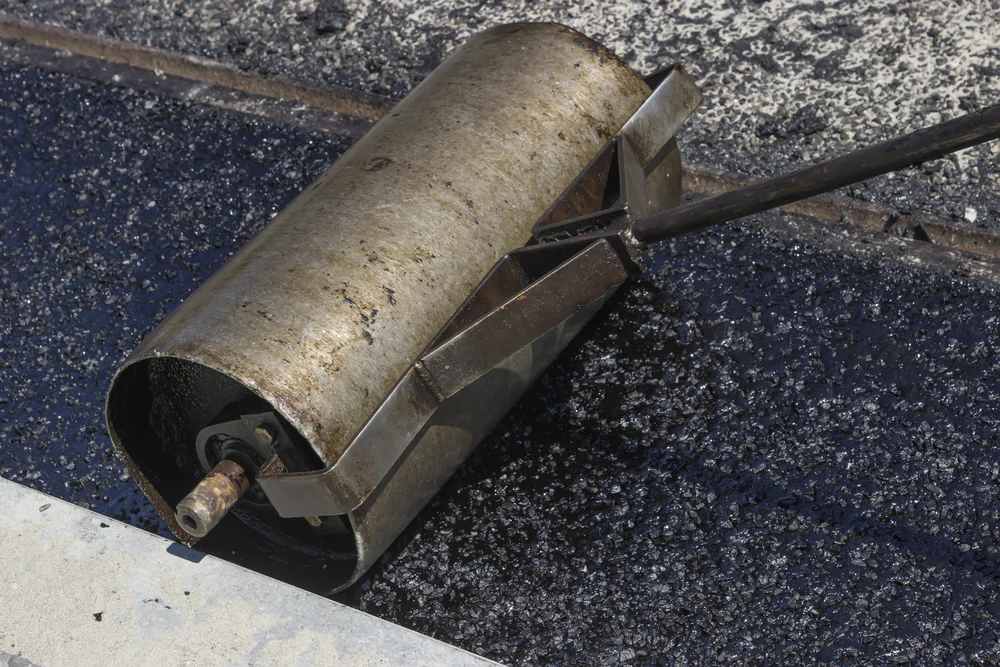
Then the asphalt gets laid at the right temperature, compacted correctly, and finished to the specifications we discussed during planning. No surprises. No shortcuts. You’ll know the timeline, what to expect each day, and when you can use your new driveway.
After the installation, you’ll get guidance on maintenance—when to sealcoat, what to watch for, and how to get the most life out of your investment. The relationship doesn’t end when we leave.
Ready to get started?
Every driveway paving project includes proper site evaluation, old surface removal if needed, base preparation and grading, drainage solutions tailored to your property, quality asphalt installation, and final compaction and finishing. You’re not paying for just the asphalt—you’re paying for the expertise that makes it last.
For Bedminster properties, drainage is critical. Somerset County gets its share of rain and snow, and Pennsylvania’s freeze-thaw cycles will find every weakness in poorly installed asphalt. That’s why water management isn’t an add-on—it’s built into our process. We look at how water currently moves across your property and design solutions that prevent pooling, ice buildup, and the foundation issues that come with bad drainage.
You’ll also get options that make sense for your property. Decorative edging, Belgian block borders, or connections to walkways—whatever fits your vision and budget. And if you’re a senior, military member, or first-time customer, specialized discounts are available. We focus on finding the right solution for your property, not upselling you on things you don’t need.
A properly installed asphalt driveway in Bedminster should last 15 to 20 years, sometimes longer with regular maintenance. The key word there is “properly installed.” Pennsylvania’s freeze-thaw cycles are tough on asphalt, so the base prep and drainage work matter more here than in milder climates.
If the base isn’t compacted correctly or drainage isn’t addressed, you’ll start seeing cracks and settling within a few years. That’s not the asphalt failing—it’s the foundation underneath. When water gets trapped under the surface and freezes, it expands and pushes the asphalt up. When it thaws, everything settles unevenly. Do that a few dozen times and you’ve got a mess.
Sealcoating every 2 to 3 years adds significant life to your driveway by protecting the surface from UV damage, water penetration, and the chemicals that come off your car. It’s not optional if you want to hit that 20-year mark. Think of it like changing the oil in your car—skip it and you’ll pay for it later.
It depends on how much damage you’re dealing with and what’s causing it. If you’ve got a few small cracks or one sunken area, patching or resurfacing might buy you several more years. But if more than 25% of your driveway is cracked, settling, or showing alligator-pattern damage, replacement usually makes more financial sense.
Here’s the real question: is the damage cosmetic or structural? Surface cracks from normal wear can be repaired. But if the base is failing—meaning water got underneath and compromised the foundation—patching is just putting a band-aid on a bigger problem. You’ll end up patching again next year, and the year after, until you finally replace it anyway.
We’ll walk your property, look at the damage, and tell you what makes sense. If repair will get you another 5 to 7 years of solid use, that’s worth considering. If you’re going to be patching every season, replacement saves you money and headaches in the long run. The evaluation should be straightforward: here’s what’s wrong, here’s what it’ll take to fix it, and here’s how long that fix will realistically last.
Asphalt and blacktop are essentially the same material—both use a mixture of aggregate and bitumen as a binder. The terms are often used interchangeably, though “blacktop” sometimes refers to the finer, smoother finish you see on residential driveways, while “asphalt” might describe the coarser mix used for roads and commercial lots.
What matters more than the name is the quality of the mix and how it’s installed. You want hot-mix asphalt laid at the proper temperature and compacted with the right equipment. Some contractors use recycled asphalt or cold-mix for patches, which is fine for temporary repairs but not for a full driveway installation.
The finish you choose affects both appearance and durability. A finer mix gives you that smooth, dark surface that looks great and is easier to seal. A coarser mix might be better for heavy commercial use or areas with significant vehicle traffic. For most residential driveways in Bedminster, a quality hot-mix asphalt with proper compaction gives you the best combination of appearance, durability, and value.
Most residential driveway paving projects in Bedminster range from $3 to $7 per square foot, depending on the scope of work, site conditions, and materials. A standard two-car driveway might run anywhere from $3,000 to $8,000 or more if there’s significant prep work, drainage issues, or decorative elements involved.
But here’s the thing: square footage alone doesn’t tell the whole story. If your property has drainage problems, needs significant grading, or requires removal of an old deteriorated driveway, those factors add to the cost. A simple overlay on a solid existing base costs less than a full-depth installation with base prep and water management solutions.
The best way to get an accurate number is to have us evaluate your specific property. Any contractor giving you a price over the phone without seeing the site is guessing—and that guess rarely works in your favor. You want a detailed estimate that accounts for prep work, materials, labor, and any site-specific challenges. And if one bid is significantly lower than others, ask why. Chances are they’re cutting corners somewhere, and you’ll pay for it when the driveway fails in three years.
Late spring through early fall—roughly May through October—is the ideal window for asphalt paving in Pennsylvania. Asphalt needs warm temperatures to be installed properly, and you want the ground conditions to be dry and stable.
Cold weather is the enemy of asphalt installation. The material cools too quickly, making it difficult to compact properly. If it’s not compacted correctly, you’ll have a driveway that’s more prone to cracking and deterioration. Most contractors won’t pave if temperatures are consistently below 50 degrees, and for good reason.
That said, scheduling during peak season means you’re competing with other projects. If you’re planning a driveway installation, reach out in early spring to get on the schedule for late spring or summer. That gives you time to evaluate contractors, get estimates, and pick a timeframe that works for your schedule. Waiting until August and expecting a crew the next week usually doesn’t work—good contractors are booked out during prime paving season.
No—actually, you should wait. New asphalt needs time to cure before sealcoating, typically 6 to 12 months depending on weather conditions and how much use the driveway gets. Sealcoating too early can trap oils in the asphalt that need to evaporate as part of the curing process.
Once that first year is up, sealcoating every 2 to 3 years is one of the best things you can do to extend your driveway’s life. It protects the surface from UV rays, prevents water from seeping into small cracks, and shields against the oil, gas, and chemicals that drip from vehicles. Think of it as a protective layer that takes the beating so your asphalt doesn’t have to.
The cost of sealcoating is minimal compared to the cost of premature replacement. A driveway that’s sealcoated regularly can last 20+ years. One that’s ignored might start deteriorating in 10. The math is pretty straightforward: spend a few hundred dollars every few years on maintenance, or spend thousands on replacement a decade early. Most homeowners choose the former once they understand what’s at stake.
Other Services we provide in Bedminster