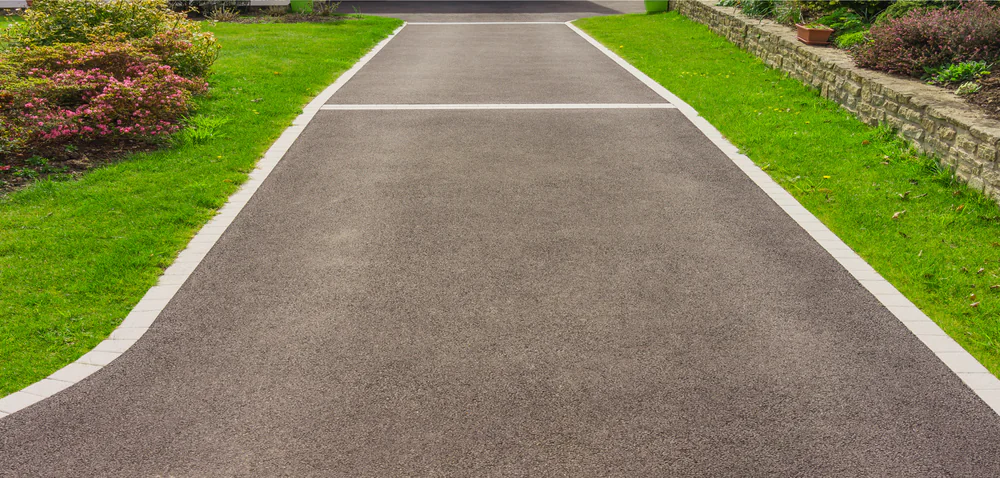
A properly paved driveway doesn’t just look better. It drains water away from your foundation instead of pooling near your garage. It holds up through freeze-thaw cycles without turning into a pothole minefield every spring. And it adds real value to your property when you eventually sell.
The difference comes down to what happens before the asphalt even shows up. A stable, compacted base. Proper grading for drainage. Enough thickness to handle your vehicles without settling or cracking. These aren’t extras—they’re what separates a driveway that lasts 20 years from one that fails in five.
When the job’s done right, you’re not calling someone back next season to patch cracks or fix drainage problems. You’re just using your driveway the way it’s supposed to work.
We’ve been handling asphalt work in the Trevose area with a straightforward approach: one crew, one job at a time. No rushing off to the next project while yours sits half-finished. Our roots in the paving industry go back to 1948, and that kind of staying power doesn’t happen by accident.
What you get is a team that knows Bucks County’s soil conditions, understands how Pennsylvania’s weather beats up asphalt, and has seen every drainage challenge your property could throw at us. We treat your driveway like it matters—because to us, it does. Whether you’re a homeowner fixing a cracked-up driveway or a business owner needing a parking lot, you’re getting the same level of attention.
Trevose properties deal with temperature swings from the mid-20s to the mid-80s, plus freeze-thaw cycles that destroy poorly installed asphalt. Our approach accounts for all of it, with clear communication and no surprises along the way.
First, the existing surface gets removed if it’s beyond repair—no paving over problems that’ll just come back. The base gets excavated and graded to handle drainage properly. This is where most cheap jobs fall apart, but it’s also where the longevity of your driveway gets built in.
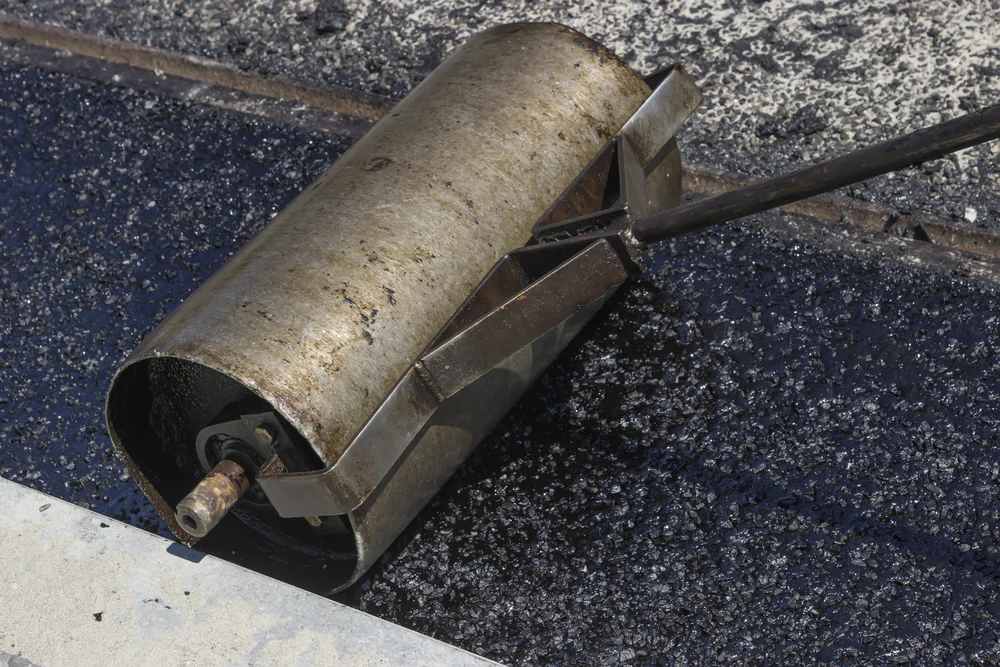
Next comes 4 to 8 inches of compacted gravel base, depending on your soil and what the driveway will be supporting. This base gets compacted with a vibratory roller, not just spread and hoped for. Proper compaction prevents settling, which prevents cracking.
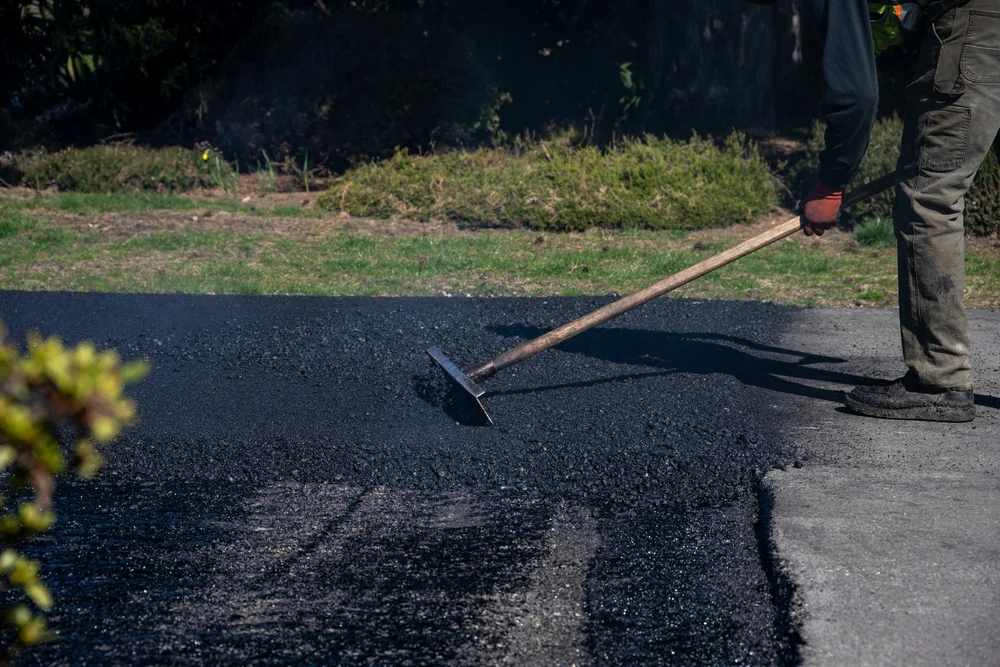
Then the asphalt goes down hot—usually 2.5 to 3 inches after compaction for residential driveways. It’s applied with paving equipment, not by hand, and compacted immediately while it’s still hot. The edges get finished clean, and the whole surface is graded so water runs off instead of sitting. Within a day or two, you can drive on it. Within 6 to 12 months, it should be sealed to protect against the elements.
Ready to get started?
A complete driveway paving project includes removal of the old surface if needed, excavation and grading for proper drainage, installation of a compacted gravel base, and application of hot-mix asphalt to the right thickness. You also get edge work, compaction, and a surface that’s ready to use in 24 to 48 hours.
In Trevose and surrounding Bucks County areas, drainage is critical. The region gets 42 to 48 inches of rain per year, and water is asphalt’s worst enemy. We build in proper slope and grading so water moves away from your home and doesn’t sit on the surface. If your property has specific drainage challenges, solutions like French drains or catch basins can be integrated during installation.
The local climate also means your driveway faces 25 to 35 freeze-thaw cycles every year. Water gets into cracks, freezes, expands, and tears the asphalt apart. That’s why base prep and thickness matter so much here. A driveway installed to handle Pennsylvania’s conditions will outlast one that’s just paved thin and cheap. You’re looking at 15 to 30 years of life with proper maintenance versus 3 to 5 years before major repairs with a shortcut job.
Driveway paving in Trevose typically runs $5 to $13 per square foot for a complete new installation, depending on site conditions, materials, and the amount of prep work required. A standard two-car driveway around 640 square feet would cost roughly $4,500 to $14,000. That range accounts for differences in base preparation, asphalt thickness, drainage needs, and whether the old surface needs full removal or can be overlaid.
If you’re just doing an overlay on an existing driveway in good condition, costs drop to around $3 to $7 per square foot since there’s less excavation and base work. But overlays only make sense if the current driveway has solid bones—no major cracks, no settling, no drainage problems. If the base is failing, an overlay just covers up issues that’ll resurface quickly.
The cheapest bid isn’t always the best value. Contractors cutting corners on base prep, asphalt thickness, or insurance can quote lower, but you’ll pay for it later in repairs or full replacement. A detailed estimate should break down excavation, base material, asphalt thickness, grading, and any drainage work so you know exactly what you’re getting.
Late spring through early fall gives you the best conditions for asphalt paving in Pennsylvania. You want consistent temperatures above 50°F, ideally in the 60 to 70-degree range, so the asphalt stays workable long enough for proper compaction and curing. Late spring and early summer hit that sweet spot most reliably in the Trevose area.
Fall is also a solid choice—September through early November often brings stable weather and lower humidity, which helps the asphalt cure properly. You also might find better availability and pricing since demand drops off compared to the spring rush. Just avoid late fall when overnight temps start dipping too low, as cold ground and air can prevent proper bonding and compaction.
Winter paving is possible but tricky. Frozen ground and low temperatures make it hard for asphalt to cure correctly, and you risk poor adhesion or premature cracking. If you need emergency repairs in winter, it can be done, but plan major installations for warmer months. Your contractor should be honest about weather limitations rather than pushing a job during conditions that’ll compromise quality.
A properly installed asphalt driveway in Trevose should last 15 to 30 years with regular maintenance. The lifespan depends heavily on three things: quality of the base, thickness of the asphalt, and how well you maintain it. Pennsylvania’s freeze-thaw cycles are brutal on asphalt, so proper installation and upkeep make a huge difference.
Maintenance means sealing the driveway within the first 6 to 12 months after installation, then resealing every 2 to 3 years. Sealcoating protects against water infiltration, UV damage, and chemicals like oil or salt. You also want to fill cracks as soon as they appear—small cracks let water in, which freezes and expands, turning minor issues into major structural damage.
If your driveway wasn’t installed correctly—thin asphalt, poor base, bad drainage—you might see problems in just 3 to 5 years. Extensive cracking, potholes, or settling are signs the base is failing, and at that point, patching won’t cut it. You’re looking at replacement. That’s why getting it done right the first time matters more than saving a few hundred dollars upfront.
Start with licensing and insurance. A legitimate contractor carries liability and workers’ compensation insurance, protecting you if someone gets hurt on your property or equipment damages your home. Ask to see proof—don’t just take their word for it. Unlicensed contractors might quote lower because they’re skipping insurance costs, but that risk falls on you.
Look for experience with projects like yours and a solid local reputation. Check reviews on platforms like Angie’s List, Google, or the Better Business Bureau. Ask for references and actually call them. A contractor who’s been around for years and has verifiable happy customers is a safer bet than someone who just started or can’t provide references.
Get at least three detailed written estimates that break down the scope of work: excavation, base material and thickness, asphalt type and thickness, grading, drainage, and timeline. Compare apples to apples—a low bid might mean thinner asphalt, a skimpy base, or corners cut on prep work. Ask about warranties on both materials and workmanship. And watch for red flags: door-to-door solicitation, pressure for cash payment, deals that sound too good to be true, or contractors who can’t provide clear answers about their process.
Yes, sealing your asphalt driveway is critical in Pennsylvania’s climate. Sealcoating creates a protective barrier against water, UV rays, oil, gas, and salt—all of which break down asphalt over time. In Trevose, where you’re dealing with heavy rain, freeze-thaw cycles, and temperature extremes, skipping sealcoating is asking for premature failure.
You should seal a new driveway within 6 to 12 months after installation, once the asphalt has fully cured. After that, reseal every 2 to 3 years depending on traffic and weather exposure. If your driveway looks faded or grayish instead of deep black, or if water soaks in rather than beading up on the surface, it’s time to reseal.
Sealcoating costs around $3 to $7 per square foot, which is a fraction of what you’d pay to repair or replace a driveway that’s been neglected. It also improves curb appeal—a freshly sealed driveway looks clean and well-maintained. Think of it as routine maintenance, like changing your car’s oil. Skip it, and you’ll pay for it later in bigger repairs.
It depends on the condition of your existing driveway. If the current asphalt has a solid base, only minor surface cracks, and no drainage or settling issues, an overlay can work. An overlay involves milling off the top layer and applying fresh asphalt over the existing base, which costs less than full removal and replacement—usually $3 to $7 per square foot versus $5 to $13 for a complete redo.
But if your driveway has deep cracks covering more than 30% of the surface, potholes, significant settling, or water pooling, an overlay just masks problems that’ll come back quickly. Those issues indicate the base is failing, and no amount of new asphalt on top will fix a bad foundation. In those cases, full removal and proper base reconstruction is the only way to get a driveway that lasts.
We’ll assess your existing driveway honestly and tell you whether an overlay makes sense or if you’re better off starting fresh. Be wary of anyone who pushes an overlay when your driveway clearly needs replacement—they’re either trying to save themselves work or don’t know what they’re doing. Either way, you’ll end up paying twice when the overlay fails.
Other Services we provide in Trevose