You’re not looking for the cheapest patch job that cracks in two winters. You want a parking lot that handles your traffic, drains properly, and doesn’t become a liability when potholes start forming. That means proper base preparation, the right asphalt thickness for your usage, and a contractor who knows how New Jersey weather tears up subpar work.
A well-installed parking lot does more than look clean. It protects your property value, keeps customers and tenants safe, and saves you from expensive emergency repairs when water damage spreads beneath the surface. Whether you’re managing a commercial property in Delaware Township or need a residential driveway that can handle multiple vehicles, the installation process matters more than most people realize.
When the job’s done right, you’re looking at 15 to 20 years of solid performance with basic maintenance. When it’s rushed or done by someone without the right equipment, you’re looking at problems within a few seasons. That’s the difference between an investment and a headache.
We’ve been in the paving business since 1948, serving Delaware, NJ and the surrounding Hunterdon County area with the kind of work that holds up year after year. This isn’t a crew that shows up with leftover asphalt and disappears when the weather changes. We’re a family operation that’s built our reputation on treating every parking lot—whether it’s a 10-car residential setup or a 100-space commercial property—with the same level of care.
The difference shows in the details. Owner oversight on every project. Equipment that’s maintained and updated. Transparent estimates that don’t balloon halfway through the job. We work on one project at a time, so your job gets full attention instead of being squeezed between three other sites. That approach has earned us five-star reviews and repeat clients who know what reliable work looks like.
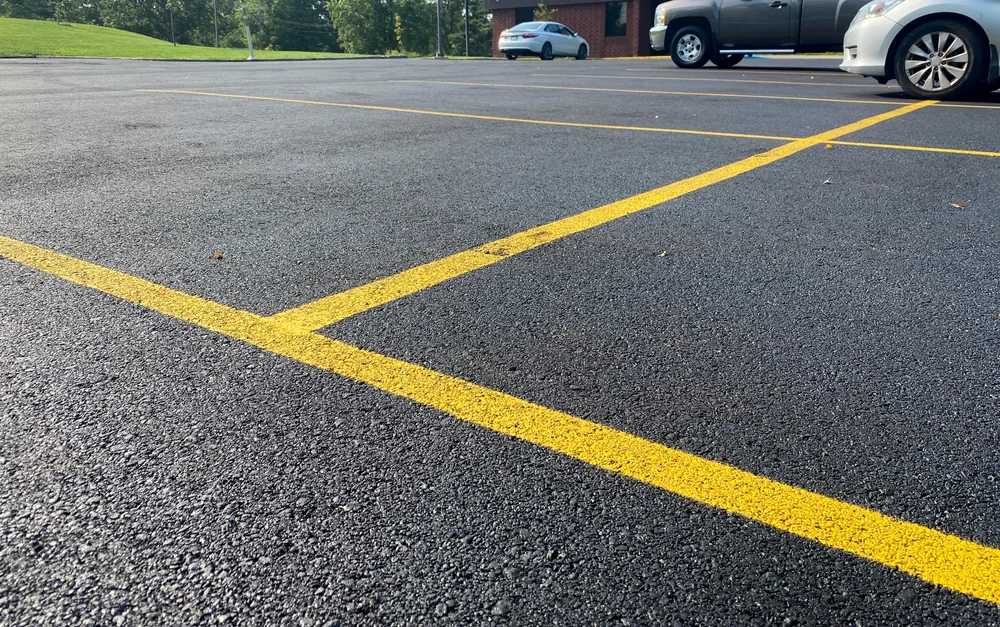
First, the site gets assessed. That means checking drainage, testing soil stability, and identifying any issues that could cause problems later. If water pools in certain areas or the ground isn’t level, those get addressed before any asphalt goes down. Skipping this step is how you end up with a parking lot that sinks or cracks within a year.
Next comes excavation and base preparation. Old pavement or unstable material gets removed, and a solid gravel base gets installed—usually 8 to 12 inches, compacted in layers. This is the foundation that supports everything above it. Without a proper base, even the best asphalt won’t hold up under traffic and weather.
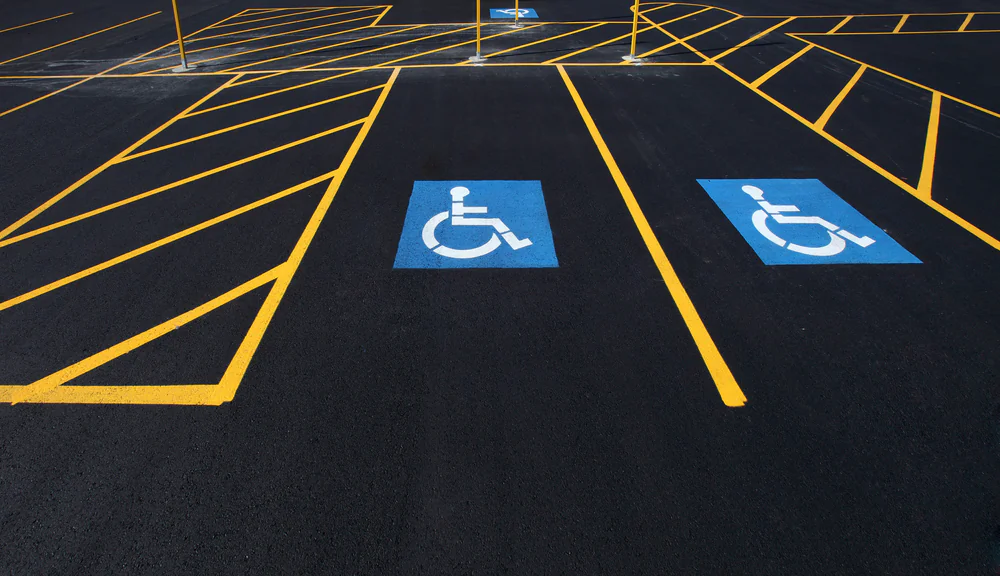
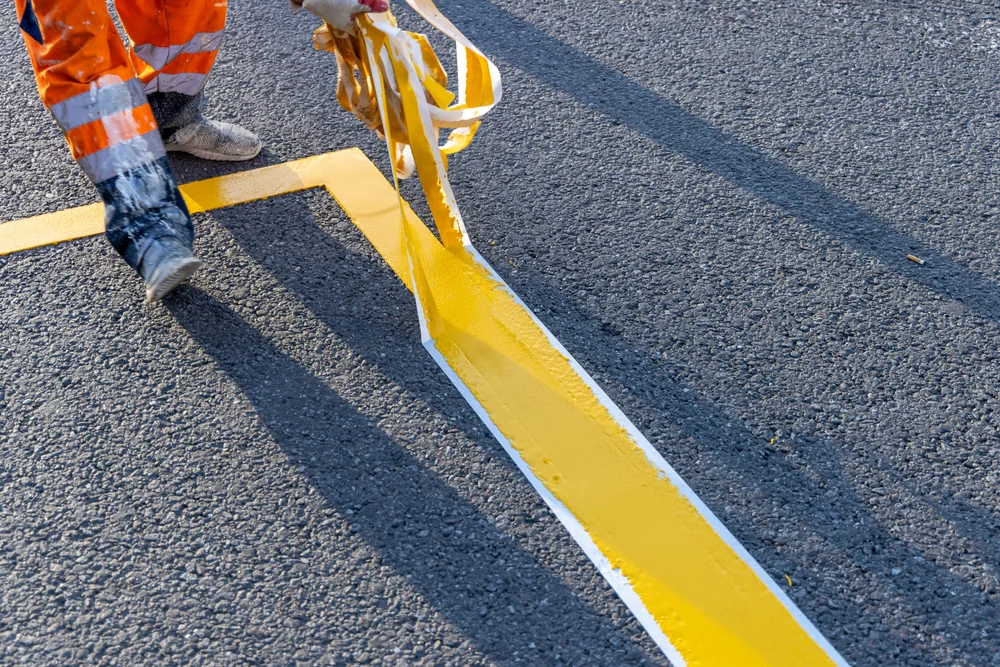
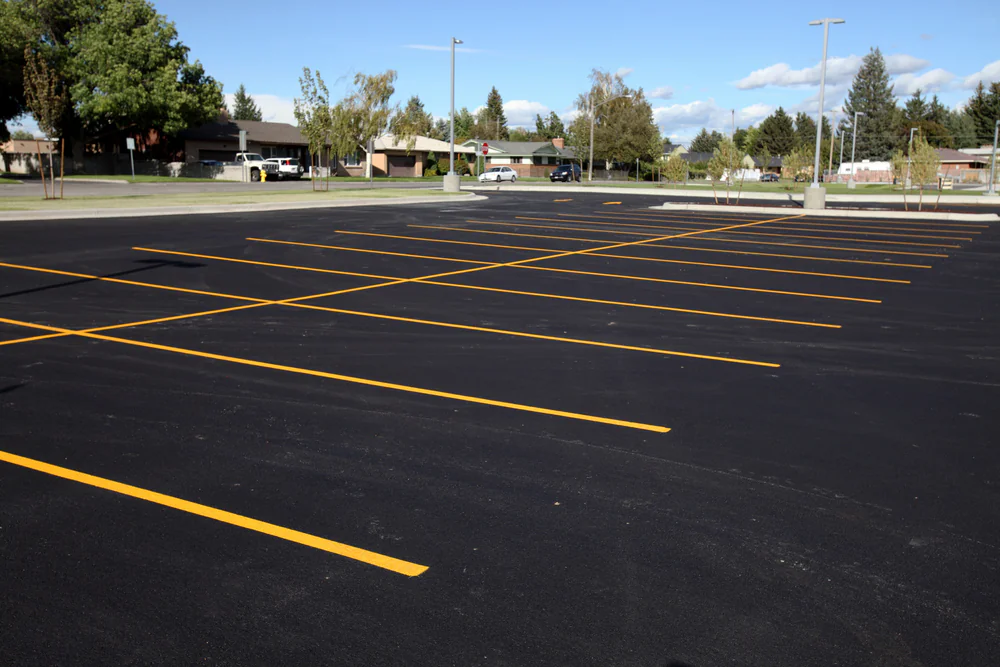
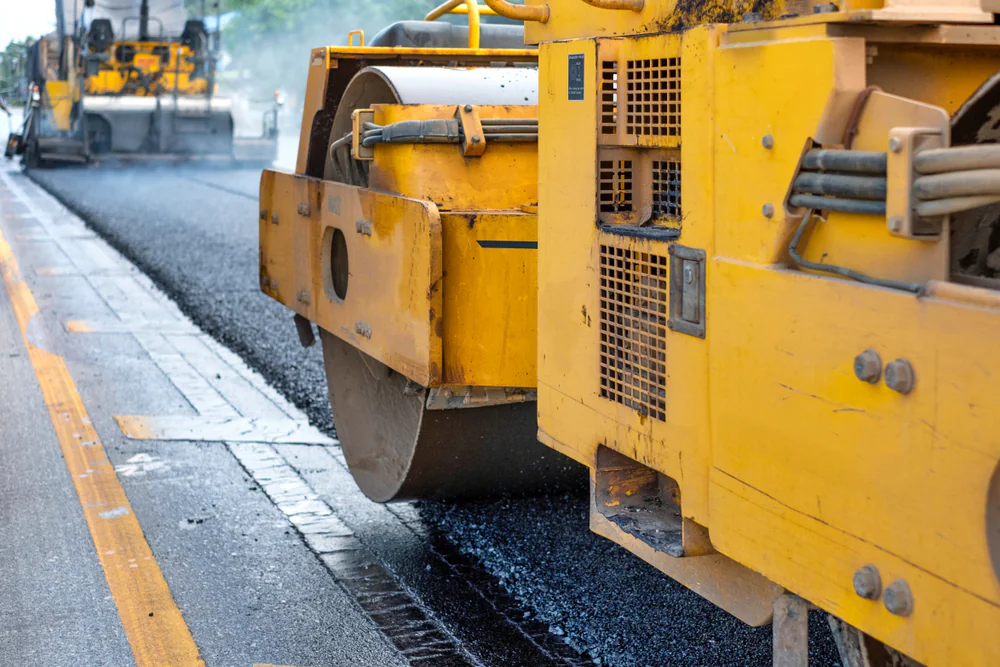
Then the asphalt gets laid in two layers: a binder course for strength and a top layer for smoothness. We use rollers to compact it while it’s still hot, ensuring a dense, durable surface. After it cures, line striping gets applied for parking spaces, traffic flow, and ADA-compliant markings. The whole process for a medium-sized lot typically takes three to seven days, depending on weather and site conditions. Rain can delay things, but rushing through wet conditions only leads to poor results.
Ready to get started?
Parking lot paving in Delaware, NJ isn’t just about laying down asphalt. It includes site grading to manage water runoff, proper drainage solutions to prevent pooling and foundation damage, and base installation that can support the weight and traffic your lot will see. For commercial properties, that also means ADA-compliant striping, accessible parking spaces with proper dimensions, and signage that meets local regulations.
Delaware Township sits in Hunterdon County, where winters bring freeze-thaw cycles that crack inferior asphalt. Water seeps into small cracks, freezes, expands the pavement, and leaves potholes when it thaws. That’s why the quality of your installation matters more here than in milder climates. We account for these local conditions during the base prep and asphalt mix selection.
You’ll also get guidance on maintenance schedules. Sealcoating every two to four years protects against UV damage and extends your pavement’s life by three to five years. Crack filling should happen annually to prevent small issues from becoming expensive repairs. Line striping might need refreshing every few years as traffic wears it down. These aren’t upsells—they’re the difference between a 15-year parking lot and one that needs replacement in 10.
Asphalt parking lot paving typically runs between $2 and $4.50 per square foot in Delaware, NJ, covering both materials and labor. That means a 10,000 square foot lot—enough for about 30 cars with driving lanes—would cost somewhere between $20,000 and $45,000. The range depends on site preparation needs, asphalt thickness, drainage work, and whether you’re starting from scratch or resurfacing an existing lot.
If your site has drainage issues, unstable soil, or requires significant grading, expect costs on the higher end. Commercial properties often need thicker asphalt to handle heavier traffic, which also increases the price. Add-ons like curbing, ADA-compliant striping, and signage will factor into your total as well.
Resurfacing an existing lot costs less—usually $1 to $3 per square foot—because you’re adding a new layer over a stable base rather than rebuilding from the ground up. That’s a good option if your current pavement is structurally sound but showing surface wear. The key is getting a detailed estimate that breaks down each cost so you know exactly what you’re paying for and why.
A typical parking lot paving project in Delaware Township takes three to seven days for a medium-sized lot, depending on weather and site complexity. That includes site prep, base installation, asphalt paving, and line striping. Smaller lots might be done in two to three days, while larger commercial projects can take a week or more.
Weather plays a big role. Rain delays the process because asphalt needs dry conditions to properly compact and cure. Temperatures also matter—paving works best when it’s above 50 degrees, which is why most projects happen between April and November in New Jersey. We’ll postpone work rather than rush through poor conditions and compromise quality.
Site preparation takes up a good chunk of the timeline. If the ground needs extensive grading, drainage systems need installation, or old pavement needs removal, that adds time upfront. But skipping or rushing those steps leads to problems later. Once the asphalt is down, you’ll need to stay off it for at least 24 to 48 hours before light traffic, and a few days before heavy use. Full curing takes longer, but you won’t need to close your lot for weeks.
It depends on the condition of your existing pavement. If your parking lot has surface cracks, minor potholes, and general wear but the base is still solid, resurfacing makes sense. That means milling off the top layer and applying fresh asphalt over the existing base. It costs less than full replacement—usually $1 to $3 per square foot—and extends your lot’s life by 10 to 15 years.
Full replacement is necessary when you have deep cracks, widespread potholes, drainage problems, or a failing base layer. If water pools in multiple areas, the pavement is sinking, or you’re constantly patching the same spots, the structural foundation is compromised. At that point, resurfacing just covers up problems that will resurface quickly. You’ll need excavation, new base installation, and complete repaving.
We’ll assess your lot and tell you honestly which option makes sense. Some contractors will push for full replacement when resurfacing would work fine, while others might suggest a patch job that won’t last. We explain what we’re seeing, show you the problem areas, and give you options with realistic timelines for each. That’s how you make a decision based on your lot’s actual condition, not a sales pitch.
Sealcoating is the big one. Every two to four years, you’ll want to apply a protective seal that shields the asphalt from UV rays, water infiltration, and chemical spills like oil and gas. It costs between $0.14 and $0.25 per square foot and can extend your pavement’s life by three to five years. Think of it like painting a deck—it’s preventive care that saves you from bigger repairs.
Crack filling should happen annually. Small cracks let water seep beneath the surface, where it freezes in winter, expands, and creates potholes. Filling them early costs $0.50 to $3 per linear foot and stops that cycle before it starts. It’s a quick fix that prevents expensive problems.
Line striping fades over time from traffic and weather. Refreshing it every few years keeps your parking spaces clearly marked and maintains a professional appearance. For commercial properties, that also means staying compliant with ADA regulations. Beyond that, keep your lot clean—sweep away debris, remove oil stains promptly, and ensure drainage systems stay clear. Regular inspections catch small issues before they become major repairs. With consistent maintenance, your asphalt parking lot should last 15 to 20 years or more.
Check their license and insurance first. A legitimate paving contractor in New Jersey will have a business license, liability insurance, and workers’ compensation coverage. Ask to see proof and verify it’s current. If they hesitate or make excuses, walk away. Unlicensed contractors are common in the paving industry, especially transient crews that move through the area offering “leftover asphalt” deals.
Look at their track record. How long have they been in business? Do they have local references you can contact? Can they show you completed projects in Delaware Township or nearby areas? A contractor with decades of experience and a stable local presence is far more reliable than someone who just showed up this season. Check online reviews on platforms like Angie’s List, HomeAdvisor, or Google, but also ask for direct references.
Get a detailed written estimate that breaks down costs for materials, labor, site prep, and any additional work like drainage or striping. Legitimate contractors provide transparent pricing and explain what you’re paying for. Be wary of estimates that seem too good to be true—they usually are. Also ask about the process: what equipment they’ll use, how they’ll handle site prep, what thickness of asphalt they’ll install, and what kind of warranty they offer. A professional will answer these questions clearly and confidently.
Asphalt costs less upfront—typically $2 to $4.50 per square foot compared to $4 to $7 for concrete. It’s also faster to install and ready for use within a few days. Asphalt handles freeze-thaw cycles better than concrete because it’s more flexible, which matters in New Jersey winters. When small cracks do appear, they’re easier and cheaper to repair with asphalt.
Concrete lasts longer—often 30 to 40 years compared to asphalt’s 15 to 20 years—and requires less frequent maintenance. It holds up better under extremely heavy loads, which is why you see it more often in industrial settings or areas with large trucks. Concrete also reflects more light, which can reduce lighting costs at night. But it’s more expensive to install, takes longer to cure before you can use it, and costs more to repair when it does crack.
For most commercial and residential parking lots in Delaware, NJ, asphalt makes more sense. It’s cost-effective, durable enough for typical traffic, and easier to maintain. Concrete might be worth considering if you’re building something meant to last 30+ years with minimal maintenance, or if you’re dealing with exceptionally heavy vehicles. But for standard parking lot use, asphalt delivers the best balance of performance, cost, and longevity.
Other Services we provide in Delaware