You need a surface that holds up under real conditions. Not one that cracks after two winters or develops potholes by spring.
When the sub-base is engineered correctly and drainage is designed properly from day one, your asphalt parking lot handles Pennsylvania’s freeze-thaw cycles without buckling. Water runs off the surface instead of seeping into the foundation. The pavement stays smooth, safe, and professional-looking for 20+ years with routine maintenance.
That’s the difference between asphalt paving done right and asphalt paving done fast. No shortcuts on the foundation work. No guessing at drainage slopes. Just a commercial paving installation that performs exactly how you need it to—without turning into a constant expense or safety liability.
Your first impression matters. So does avoiding trip hazards, vehicle damage claims, and the headache of dealing with deteriorating pavement every few years.
We bring over 75 years of asphalt paving experience to Ivyland and the surrounding Bucks County area. Our roots go back to 1948, and that foundation still guides how every paving installation gets handled today.
Here’s what actually makes the difference: one crew, one project at a time. Your parking lot gets full attention from start to finish. No juggling multiple job sites. No rushing off to the next property before yours is completed to standard.
Ivyland properties face specific challenges—brutal freeze-thaw cycles that crack inadequate sub-bases, heavy seasonal rainfall that exposes poor drainage design, and daily traffic loads that reveal sloppy compaction work. We understand these local conditions because we’ve spent decades working throughout southeastern Pennsylvania, handling everything from small retail lots to large industrial facilities and commercial complexes.
First, the old surface comes out completely. If your existing asphalt or concrete is failing, it gets demolished and removed down to stable ground. This creates a clean foundation to build from—no patching over problems.
Next comes grading and sloping for drainage. This step determines where water goes when it rains. The ground gets precisely shaped so rainfall runs off your parking lot instead of pooling in low spots or against building foundations. Poor drainage is the fastest way to destroy even well-installed asphalt, so this part matters more than most property owners realize.
Then the sub-base goes in. This is your foundation layer—typically 6 to 8 inches of crushed aggregate that’s compacted in multiple passes. In Pennsylvania, the sub-base also functions as a frost barrier during winter months. If this layer isn’t thick enough or properly compacted, the asphalt above it will crack and fail prematurely no matter how good the surface looks initially. We proof roll the sub-base with loaded dump trucks to identify any weak spots before moving forward with asphalt installation.
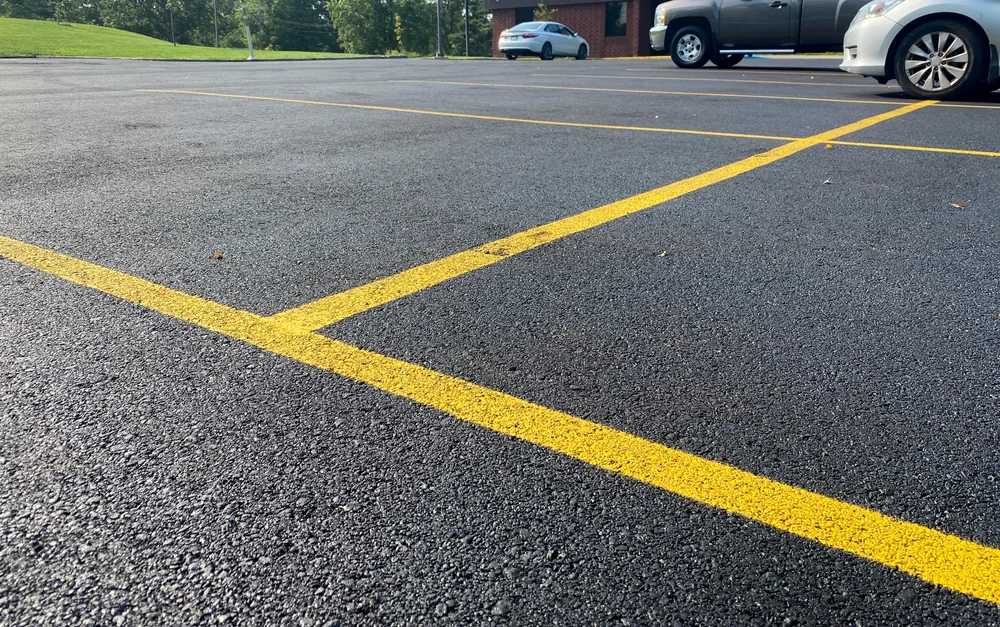
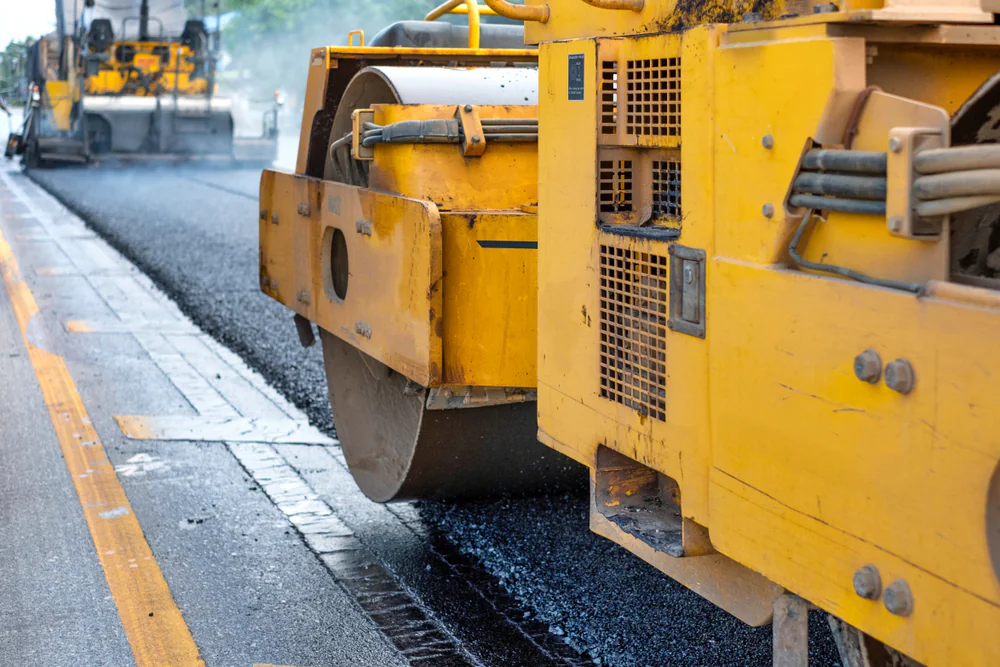
After the base proves solid, the binder layer gets applied. This is a thicker asphalt layer that adds structural strength to handle traffic loads. Finally, the surface course goes down—the smooth top layer you actually see and drive on. Both asphalt layers are compacted thoroughly while still hot to eliminate air pockets and ensure proper density throughout.
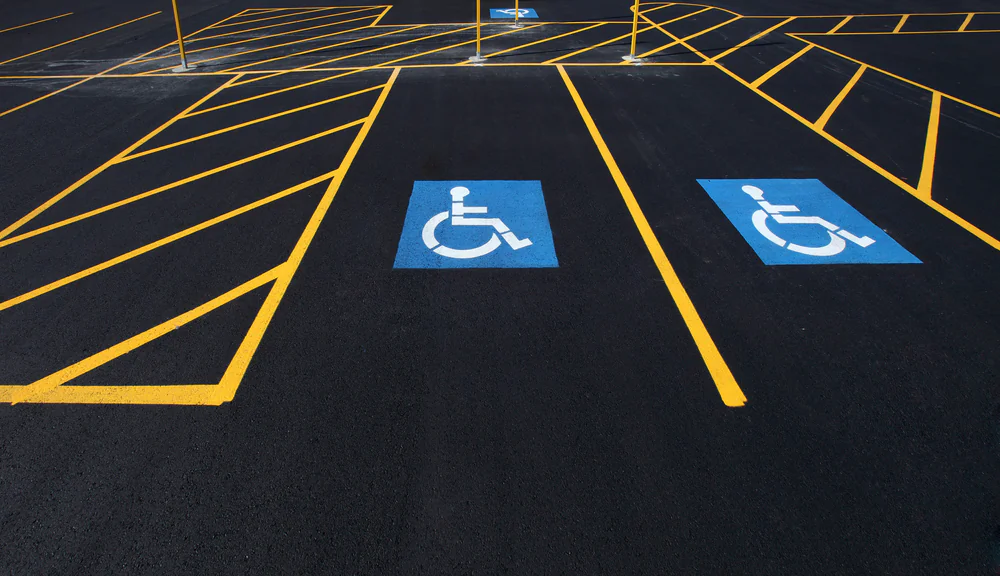
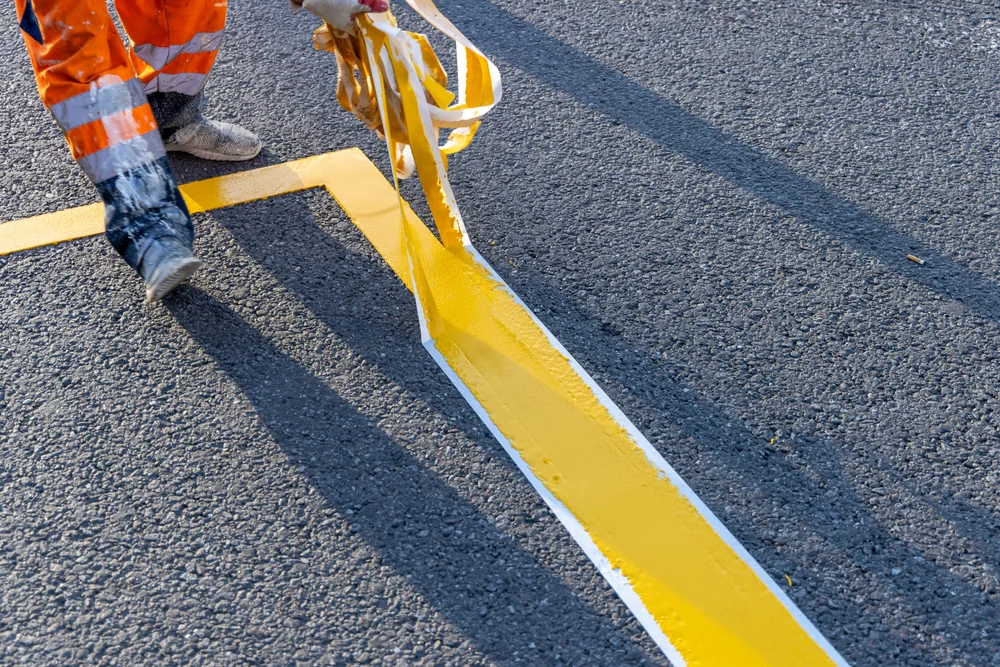
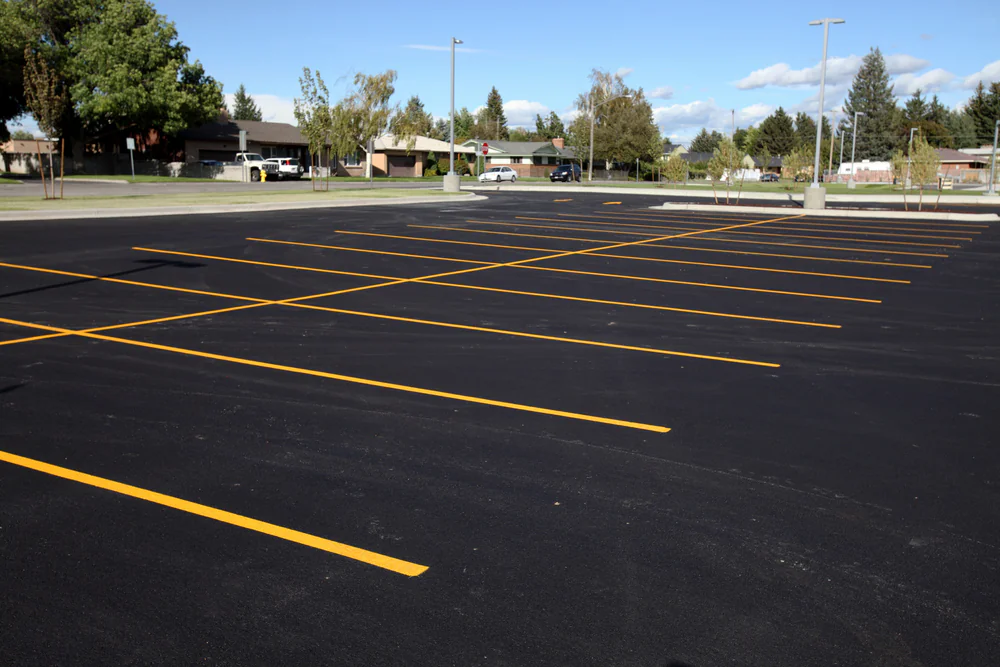
The final steps involve creating clean transitions where new pavement meets existing surfaces, finalizing edges and curbing, and adding line striping for traffic flow and ADA-compliant accessible spaces if your project requires them. The entire paving installation process is designed around one goal: a parking lot that holds up under real-world Pennsylvania conditions for decades, not just years.
Ready to get started?
A professional parking lot paving project includes more than just asphalt. It starts with a thorough site evaluation to assess drainage requirements, traffic patterns, soil conditions, and what’s failing with your current pavement. Every property presents different challenges, and the installation approach needs to match what your specific site actually requires.
We handle the complete scope: demolition and removal of deteriorated pavement, precision grading to direct water away from structures and parking areas, sub-base preparation with proper compaction testing, asphalt paving using quality materials mixed and applied at correct temperatures, and final compaction to lock everything in place. When your commercial paving project needs it, services also include line striping, ADA-compliant accessible parking spaces, curbing and edging work, and comprehensive water management solutions.
In Ivyland and throughout Bucks County, properties deal with substantial rainfall and dramatic temperature swings between seasons. That’s why drainage planning isn’t optional—it’s the foundation of any paving installation that’s going to last. We design each project to handle Pennsylvania’s climate realities, ensuring water moves off the surface efficiently and doesn’t compromise the sub-base structure over time.
You also get transparent communication throughout the entire process. Clear timelines before work starts, honest assessments about what your property needs versus what it doesn’t, and regular updates so you know exactly what’s happening and when the parking lot will be ready for use. Our crew focuses entirely on your project until completion, which means faster turnaround and significantly better attention to detail than contractors juggling multiple jobs simultaneously across different sites.
For qualifying customers, we offer specialized discounts for seniors, military members, and first-time clients. The goal is making quality asphalt paving accessible while maintaining the high standards that have defined our work since 1948.
Commercial parking lots typically need at least 4 inches of asphalt to handle regular vehicle traffic without premature failure. That’s usually split into two layers: a thicker binder course for structural support and a surface course for the finished driving surface.
The exact thickness depends on what the lot will handle daily. Light-duty commercial areas serving passenger vehicles might be fine with 3 to 4 inches total. Parking lots serving heavy vehicles, regular delivery trucks, or high-volume traffic often need 5 to 6 inches or more. The sub-base thickness matters just as much as the asphalt itself—usually 6 to 8 inches of compacted aggregate material.
In Pennsylvania, you also need to account for freeze-thaw cycles that wreak havoc on inadequate pavement. A properly designed and installed sub-base acts as a frost barrier, which helps prevent the cracking and heaving that happens when water freezes underneath the asphalt surface. Skimping on thickness to save money upfront almost always leads to premature failure and significantly more expensive repairs down the road.
Most commercial parking lot paving projects take anywhere from a few days to two weeks, depending on size, complexity, and existing conditions. A small business lot might be completed in 3 to 5 days. Larger facilities with extensive prep work, drainage corrections, or phased installations to keep portions of the lot operational can take longer.
The timeline breaks down into distinct stages. Demolition and removal of old pavement usually take 1 to 2 days. Grading, sub-base preparation, and compaction testing add another 2 to 3 days. Asphalt installation itself is often completed in a day or two, but the surface needs time to cool and cure before it’s ready for full traffic loads.
Weather plays a significant role too. Asphalt needs to be installed when temperatures are consistently above 50 degrees Fahrenheit for proper compaction and curing. Rain delays can push timelines back. We plan around these factors and keep clients updated throughout the process if conditions affect the schedule. The focus is always on doing the paving installation correctly rather than rushing to hit an arbitrary deadline that compromises quality.
Water infiltration is the main culprit behind premature parking lot failure. When water seeps into small cracks or works its way through the asphalt surface, it reaches the sub-base layer underneath. In Pennsylvania, that water freezes during winter, expands with significant force, and creates pressure that literally breaks apart the pavement structure. When it thaws in spring, voids are left behind where the material shifted. This freeze-thaw cycle repeats every winter, and the damage compounds rapidly.
Poor drainage design makes everything deteriorate faster. If water pools on the surface instead of running off efficiently, it has constant opportunity to work its way down through any weak points. Potholes form when the sub-base erodes or shifts beneath the asphalt, causing the surface layer to collapse into the void created below.
Inadequate sub-base preparation during initial installation is another major cause of early failure. If the base layer isn’t thick enough, properly compacted in stages, or constructed from appropriate aggregate materials, it simply can’t support the asphalt above it under traffic loads. Stress points fail quickly. That’s why we spend substantial time and attention on foundation work—it’s the difference between a parking lot that lasts 5 years and one that performs well for 25 years or more.
It depends entirely on the condition of what’s already there. If the existing asphalt is structurally sound with only surface wear and minor cosmetic issues, an overlay can work effectively. This involves adding a new layer of asphalt on top after thorough cleaning and surface preparation. Overlays are faster and less expensive than complete removal and replacement.
But if the current pavement has significant cracking, multiple potholes, obvious drainage problems, or clear signs of base failure underneath, an overlay just covers up the issues temporarily. The structural problems underneath will continue worsening and eventually telegraph through the new surface within a year or two. In those cases, full removal and replacement is the only real solution that makes financial sense.
We evaluate each property individually during the site assessment. Sometimes a partial removal approach is the right call—completely removing and rebuilding the worst sections while overlaying areas that are still structurally sound. The honest recommendation depends on what your parking lot actually needs for long-term performance, not what’s easiest or fastest to sell. A proper evaluation considers current pavement condition, sub-base stability, drainage system performance, and how many more years of service life you need from the investment.
You can walk on new asphalt within 24 hours of installation. Light vehicle traffic is usually safe after 48 to 72 hours. But the asphalt continues curing for several weeks after installation, so it’s best to avoid heavy loads, sharp steering turns, and parking vehicles in the exact same spots repeatedly during the first week or two.
The surface will feel firm and look ready quickly, but full structural strength develops over time as the asphalt cools completely and hardens to its final density. During the initial curing period, hot summer weather can make the surface slightly more susceptible to scuffing marks or impressions from heavy vehicles, trailer jacks, or dumpsters.
For commercial properties where shutting down the entire parking lot isn’t practical, phased installations can keep portions of the lot operational while paving work continues in other sections. This approach minimizes disruption to your business operations and customer access. We work directly with property owners and managers to plan access routes and staging areas in ways that balance project efficiency with keeping your business running as normally as possible throughout the installation process.
The single most important maintenance task is crack sealing. Even properly installed asphalt will develop small cracks over time from normal temperature fluctuations and minor settling. Sealing these cracks as soon as they appear prevents water from penetrating underneath and causing exponentially bigger structural problems. In Pennsylvania’s harsh climate, annual inspections and prompt crack filling are smart investments that extend pavement life significantly.
Sealcoating is the other major maintenance requirement for asphalt parking lots. This protective layer shields the asphalt surface from UV damage, water penetration, and chemical deterioration from oil and gasoline spills. Most commercial parking lots should be sealcoated every 3 to 5 years, starting about 6 to 12 months after initial installation once the asphalt has fully cured and off-gassed.
Beyond those two critical items, keep the surface clean and functional. Sweep away debris regularly and remove oil stains promptly before they penetrate and soften the asphalt. Make sure drainage systems and catch basins stay clear so water doesn’t pool on the surface. Address any damage quickly before minor issues turn into major repairs requiring extensive work. A properly installed parking lot with consistent preventive maintenance can easily last 20 to 25 years or more before needing complete replacement.
Other Services we provide in Ivyland