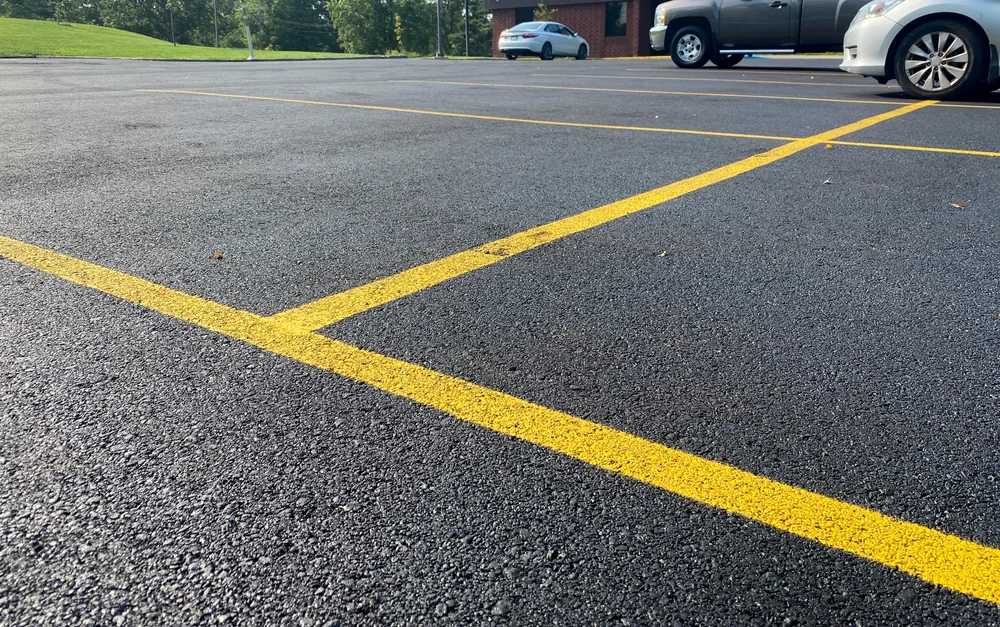
You’re not just getting fresh asphalt. You’re getting a surface that drains properly, holds up to Pennsylvania winters, and doesn’t start cracking within two years because someone skipped the base work.
When parking lot paving is done right, you stop worrying about liability issues from potholes. You stop fielding complaints about water pooling near the entrance. Your property looks like you care about it—because you do.
That matters more than most people realize. Your parking lot is the first thing customers see. If it’s crumbling, faded, or full of patches, they’re forming opinions before they walk through your door. A well-maintained lot says you run a tight operation. It also protects your investment by lasting 20+ years instead of needing a redo in five.
We have roots in the paving industry going back to 1948. That’s not a marketing line—it’s decades of hands-on experience dealing with everything from residential driveways to complex commercial and industrial projects across Perkasie and Bucks County.
Our approach is simple: one project at a time, full crew attention, no cutting corners. Every job gets the same level of care whether it’s a small business parking lot or a large commercial property. We treat every client like the top client, which means transparent communication, personalized solutions, and workmanship that holds up year after year.
Local property owners in Perkasie know Pennsylvania’s climate is tough on asphalt. Between freeze-thaw cycles, heavy rain, and temperature swings, parking lots take a beating. That’s exactly why proper installation matters—and why we focus on doing it right the first time, backed by five-star reviews and a reputation built on reliability.
First, the site gets evaluated. Drainage patterns, soil conditions, existing surface issues—all of it gets assessed before any equipment shows up. If there’s old asphalt or concrete, it’s removed completely. No paving over problems.
Next comes grading and sloping. This step determines how water flows off your lot. Get this wrong, and you’ll have standing water that seeps into cracks and destroys your pavement from underneath. Pennsylvania gets 42-48 inches of precipitation annually, so drainage isn’t optional.
The sub-base is where most contractors either prove themselves or fail you. This layer supports everything above it. It needs to be compacted properly, thick enough for your traffic load, and stable enough to handle Bucks County’s 25-35 freeze-thaw cycles each year. We don’t skip the proof roll—a loaded truck drives over the entire base to identify soft spots before any asphalt goes down.
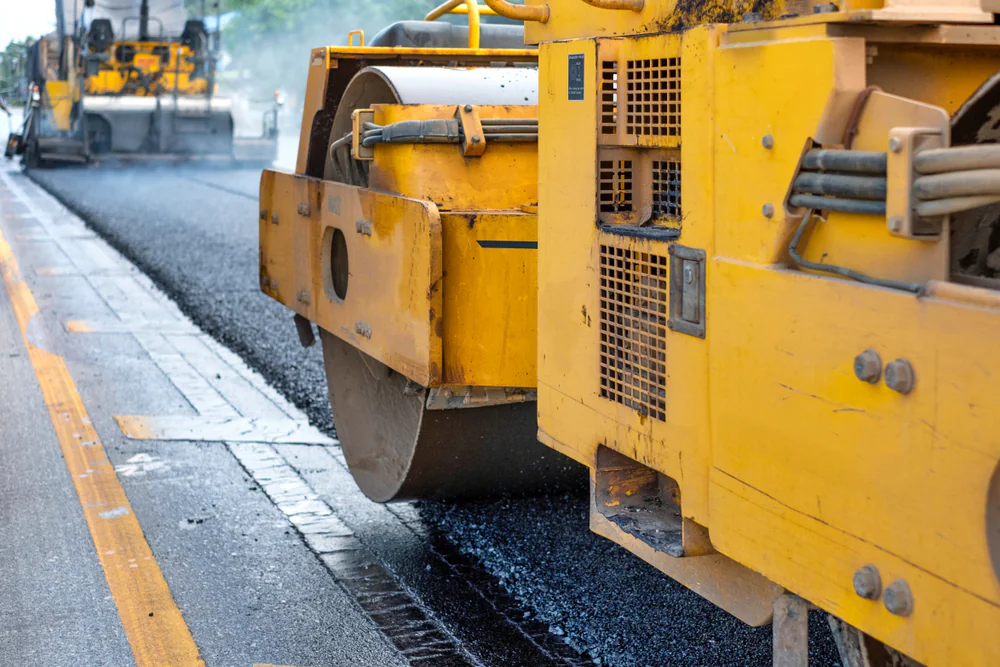
Then comes the binder layer and surface course. Hot-mix asphalt is applied at the right temperature, spread evenly, and compacted with rollers to eliminate air pockets. Joints where new asphalt meets existing surfaces get sealed properly to prevent water infiltration.
The whole process takes anywhere from a few days to a couple weeks depending on size and complexity. But when it’s done, you’ve got a parking lot built to last—not one that’ll need major repairs in three years.
Ready to get started?
Every parking lot paving project starts with a site evaluation and detailed estimate. No surprises, no hidden fees. You’ll know exactly what’s happening and why before work begins.
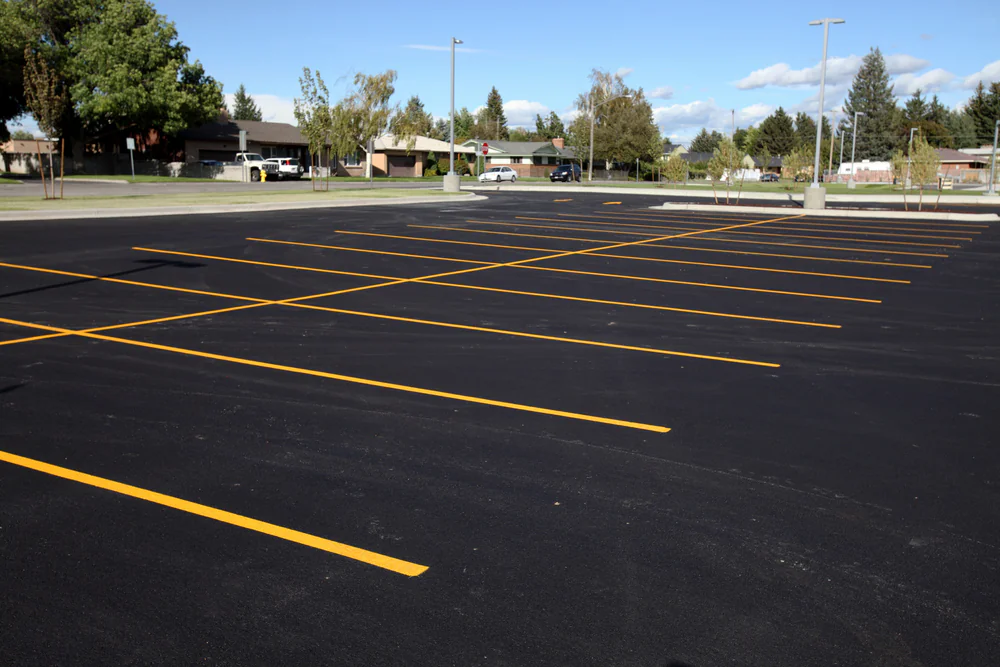
The scope includes complete surface removal if needed, proper grading for drainage, a compacted aggregate base that can handle your traffic load, and asphalt installation with both binder and surface layers. Joints get sealed, edges get finished, and the entire surface is compacted to specifications.
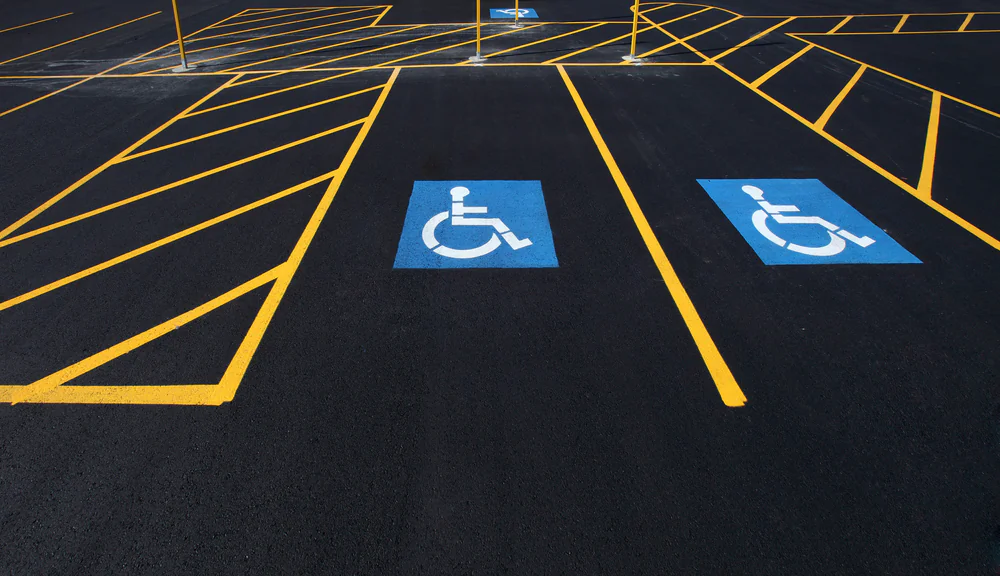
For commercial properties in Perkasie, ADA compliance matters. Accessible parking spaces, proper slopes, and compliant striping aren’t just good practice—they’re required. We handle those details as part of the project, not as expensive add-ons you discover later.
Bucks County’s climate creates specific challenges. Temperature swings stress pavement materials. Winter brings freeze-thaw cycles that expand and crack poorly installed asphalt. Spring and fall deliver heavy rain that tests drainage systems. Local contractors who understand these conditions build parking lots differently than someone just following a generic checklist.
Post-installation, you’ll get clear guidance on maintenance. Sealcoating every 2-4 years protects against water, UV damage, and chemicals. Crack filling prevents small issues from becoming expensive problems. With proper care, your parking lot paving investment lasts 20-25 years or more—which is exactly what you’re paying for.
Most parking lot paving projects in Perkasie take anywhere from three days to two weeks, depending on size and complexity. A small commercial lot might be done in under a week. Larger properties with extensive prep work, drainage corrections, or phased installations to keep parts of the lot operational will take longer.
Weather plays a role too. Asphalt installation requires temperatures above 50°F for proper curing, and rain delays are sometimes unavoidable. Reputable contractors build realistic timelines into their estimates rather than promising unrealistic deadlines that lead to rushed, subpar work.
The timeline includes demolition and removal of old surfaces, site preparation and grading, base installation and compaction, asphalt application, and final finishing. Each step needs adequate time to be done correctly. Trying to rush the process—especially base compaction or asphalt curing—creates problems down the road that cost far more than the time saved.
An overlay means applying new asphalt over your existing surface. It’s less expensive and faster than full replacement, but only works if your current parking lot has a stable foundation. If you’ve got widespread cracking, drainage issues, or base problems, an overlay just covers up issues temporarily—they’ll resurface within a few years.
Complete replacement involves removing the old asphalt down to the base, addressing any underlying problems, and building the parking lot from scratch. It costs more upfront but gives you a properly engineered surface that lasts 20+ years instead of limping along for five.
The decision comes down to the condition of your existing lot. Surface cracks and minor wear are candidates for overlay. Alligator cracking, potholes, standing water, or a lot that’s already been overlaid multiple times needs full replacement. An honest contractor evaluates your specific situation and recommends the option that makes financial sense long-term, not just the one with the highest profit margin.
Parking lot paving in Perkasie typically runs $3-7 per square foot for asphalt, with most commercial projects landing in the $4-6 range depending on specifications. A 10,000 square foot lot generally costs between $30,000-$60,000 for complete installation including proper base work, drainage, and finishing.
Several factors affect your specific cost. Site preparation requirements—if you need extensive grading, drainage corrections, or soil stabilization, costs increase. Asphalt thickness matters too; commercial lots need 3-4 inches of compacted asphalt to handle traffic loads, while lighter-use areas can use less. Accessibility for equipment, ADA compliance requirements, and whether you need milling before overlay all impact the final number.
The lowest bid isn’t always the best value. Contractors who cut corners on base preparation, use thinner asphalt than specified, or skip proper compaction save money on your project—but you’ll pay for it in premature failure and expensive repairs. Quality installation costs more upfront but lasts decades instead of years. Get detailed estimates that break down exactly what’s included so you’re comparing apples to apples.
Water is asphalt’s biggest enemy. When it seeps through cracks into the base layer, it weakens the foundation. During Pennsylvania’s freeze-thaw cycles, that trapped water expands when it freezes, creating more cracks and accelerating deterioration. Standing water on the surface also breaks down the asphalt binder over time, leading to that faded, deteriorated look.
Proper drainage starts with grading and sloping during installation. The parking lot needs to be angled so water flows toward drains, catch basins, or designated runoff areas—not toward your building or into low spots where it pools. Most lots need a 2% slope minimum for effective drainage.
Beyond surface grading, the base layer needs to allow water that does penetrate to drain away rather than sitting under your pavement. This might involve installing drainage pipes, catch basins, or permeable base materials depending on your site conditions. In Bucks County where annual rainfall hits 42-48 inches, drainage isn’t a detail you can skip. Parking lots with poor drainage fail years earlier than properly engineered ones, no matter how good the asphalt installation was.
A properly installed parking lot in Perkasie should last 15-25 years with appropriate maintenance. Commercial lots with heavy traffic might need resurfacing around the 15-20 year mark, while lighter-use lots can push 25+ years before replacement. The key phrase is “with appropriate maintenance”—neglected parking lots can deteriorate in as little as 5-7 years.
Maintenance starts with sealcoating every 2-4 years. This protective layer shields your asphalt from water, UV rays, oil, and chemicals that break down the binder. It’s not just cosmetic—regular sealcoating can extend your pavement’s lifespan by 25% or more, adding 5-7 years of use.
Crack filling should happen promptly whenever you notice cracks forming. Small cracks let water infiltrate the base layer, leading to bigger problems. Fill them early and they’re inexpensive fixes. Wait until they’ve turned into potholes and you’re looking at costly repairs. Regular inspections—at least twice yearly plus after severe weather—help you catch issues before they escalate. Between sealcoating, crack maintenance, and addressing drainage or pothole issues as they arise, you protect your investment and get decades of use from your parking lot paving.
Start with experience in your specific area. Pennsylvania’s climate creates unique challenges—freeze-thaw cycles, heavy precipitation, temperature extremes. A contractor who understands Bucks County conditions builds parking lots differently than someone following a generic playbook. Ask how long they’ve been working locally and request references from similar projects.
Detailed estimates matter more than you might think. Vague quotes with lump-sum pricing hide what’s actually included. You want breakdowns showing base preparation, asphalt thickness, drainage work, and finishing. This lets you compare contractors accurately instead of just picking the lowest number and hoping for the best.
Pay attention to their process. Do they conduct site evaluations before quoting? Do they explain why certain steps are necessary? Contractors who take time to educate you about proper installation are usually the ones who actually do proper installation. Red flags include pressure to decide immediately, prices significantly below other quotes without clear explanation, or reluctance to provide references.
Finally, look for contractors who focus on quality over volume. Companies juggling multiple simultaneous projects spread crews thin and rush work. Contractors who commit full attention to one job at a time—like our approach—deliver better results. Check online reviews, ask about warranties, and trust your gut about whether they’re genuinely interested in solving your problem or just closing a sale.
Other Services we provide in Perkasie