You’re not just getting fresh asphalt. You’re getting a parking lot engineered for Pennsylvania’s freeze-thaw cycles, designed to handle your specific traffic loads, and installed to last decades instead of years.
That means fewer repair calls. No more emergency fixes when potholes appear after every winter. No more water pooling in your lot after storms. Your parking lot becomes an asset that works quietly instead of creating constant headaches and surprise expenses.
Your customers see smooth, professional pavement when they pull in—not cracks and patches that make your business look neglected. Your maintenance budget stops bleeding from constant repairs. And you’re not lying awake worrying about liability issues from damaged surfaces or trip hazards. Quality commercial paving handles the details that cheap work ignores—proper drainage systems, correct compaction, base preparation that actually supports the weight your lot carries daily.
We bring 75+ years of paving knowledge to every Richland commercial project. What started in 1948 has evolved into a paving company that combines proven techniques with modern equipment—and still treats every property owner like they’re the only client that matters.
Here’s what makes that different: when our crew shows up, they’re working on your project. Not splitting time between three other jobs. Not rushing to the next site. Your parking lot gets full attention until it’s done right. That one-job-at-a-time approach means better quality control, faster completion, and work that doesn’t drag on for weeks.
The Richland area faces freeze-thaw cycles, heavy rain, and weather conditions that destroy poorly installed pavement within a few years. We’ve been handling Pennsylvania conditions since 1948. We know what works, what fails, and how to build commercial surfaces that hold up under the specific challenges Bucks County properties face—from Route 309 commercial centers to industrial facilities throughout the region.
First comes site evaluation. Not a quick glance and a guess—an actual assessment of drainage issues, base condition, traffic patterns, and what your property specifically needs. If your lot can be resurfaced with an asphalt overlay, you’ll hear that. If the base is failing and needs complete replacement, you’ll hear that too. Honest assessment means you’re not paying for unnecessary work or skipping critical repairs that’ll cause problems six months later.
Next is preparation. Old pavement gets removed if necessary. The base is graded properly so water drains away from your building instead of pooling in low spots. Drainage systems are installed or repaired to handle Pennsylvania’s heavy rains. This step is where budget contractors cut corners to save a few hours. It’s also where pavement either lasts 20 years or fails in five.
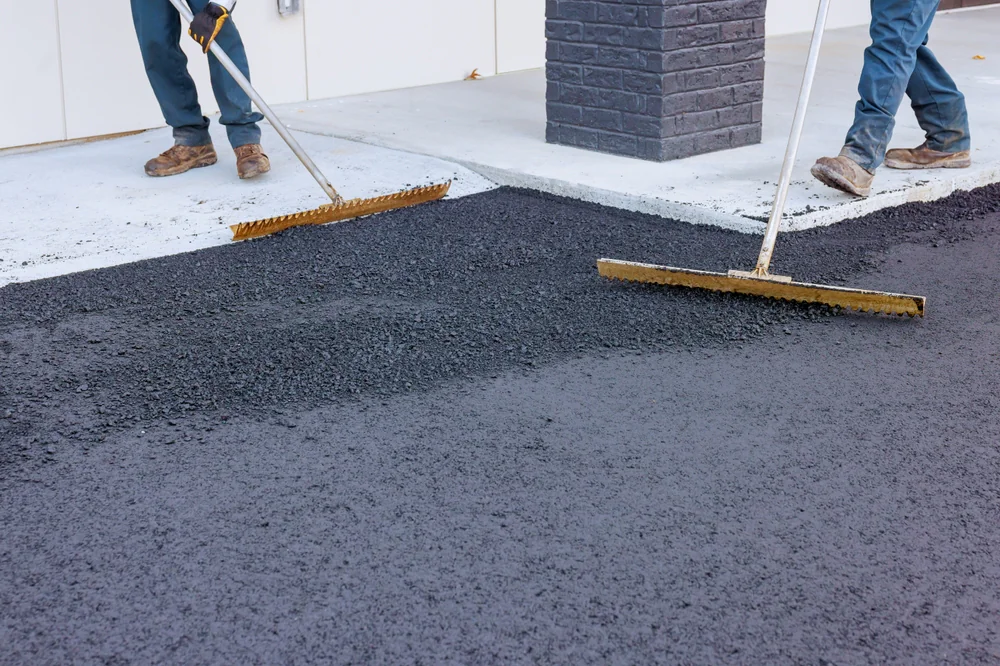
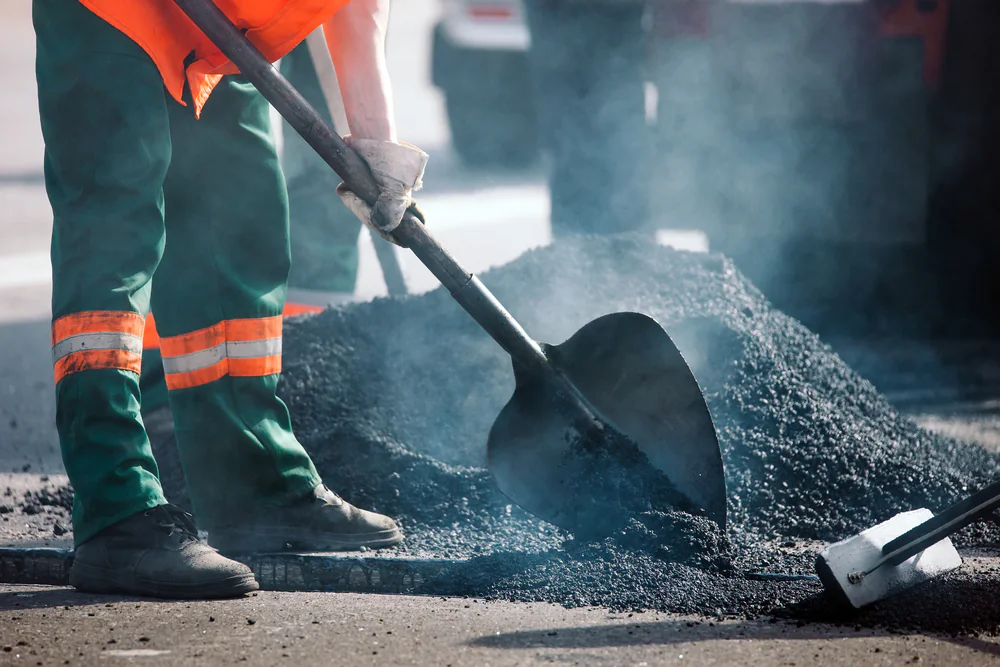
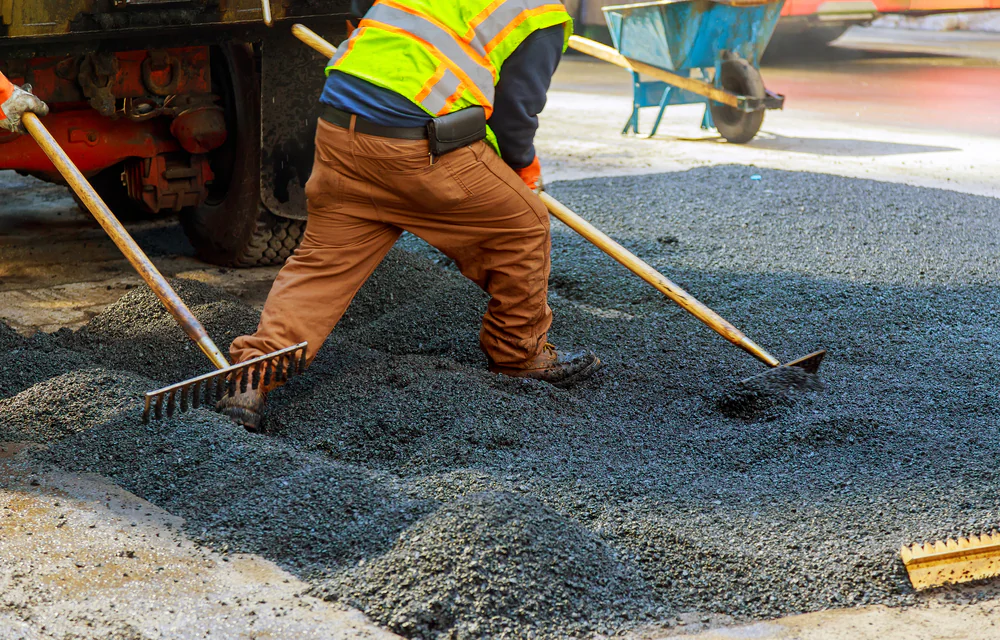
Then asphalt installation happens. The right thickness for your traffic loads—4 to 6 inches for heavy commercial use, not the 2-inch minimum that fails under stress. The correct mix designed for Pennsylvania weather. Proper compaction so the surface doesn’t settle unevenly or develop soft spots. Installation moves efficiently because our crew isn’t bouncing between multiple jobs—your project gets completed, not dragged out.
Finally come finishing touches. Line striping that’s clear and compliant. ADA-accessible parking spaces properly marked and positioned. Any curbing, signage, or parking bumpers your property needs. You get a parking lot that’s ready to handle business operations immediately, not a half-finished project waiting for follow-up work.
Ready to get started?
Commercial paving isn’t one-size-fits-all. A retail parking lot with steady car traffic faces different demands than an industrial facility where loaded delivery trucks drive daily. A medical office needs smooth, ADA-accessible surfaces. A warehouse distribution center needs pavement that handles heavy loads without cracking under pressure.
We handle new parking lot installation from the ground up—site preparation, base construction, drainage engineering, and asphalt paving designed for your specific property and traffic patterns. If your existing lot just needs resurfacing, an asphalt overlay adds a fresh layer over structurally sound pavement at a fraction of full replacement cost. For lots with significant damage—alligator cracking, base failure, severe drainage issues—complete removal and replacement rebuilds the parking lot from the base up, creating pavement engineered to last another 20+ years.
Richland’s commercial properties need pavement that handles local conditions. The retail centers along Route 309 see constant traffic. Office complexes throughout Bucks County need professional-looking surfaces that create positive first impressions. Industrial sites require heavy-duty pavement that won’t fail under truck traffic. Pennsylvania’s freeze-thaw cycles destroy inadequately installed asphalt. Water infiltration damages pavement from below. Poor drainage accelerates deterioration and creates standing water that drives customers away.
Our services also include asphalt milling to remove damaged surface layers efficiently, seal coating to protect against UV damage and moisture infiltration, crack sealing to prevent water from destroying your base, and line striping for proper traffic flow and safety compliance. It’s comprehensive commercial paving that addresses what your Richland property actually needs, not just surface-level fixes.
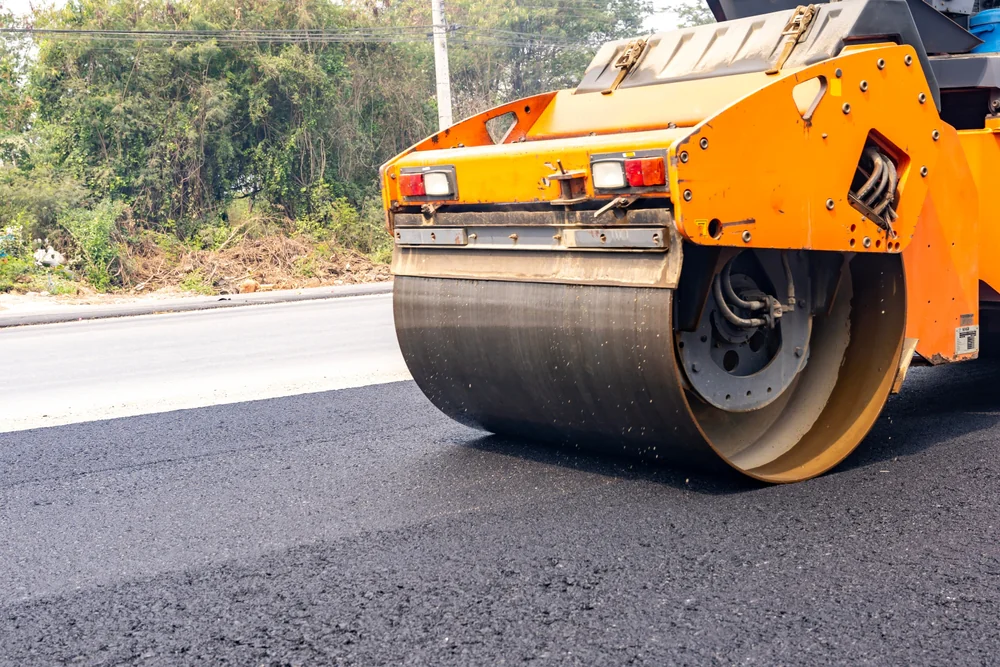
Timeline depends on project size and scope, but here’s what actually affects your operations: a typical parking lot overlay for a small to mid-size commercial property might take 2-4 days from start to finish. Larger parking lots or complete replacement projects take longer because old pavement and base material need removal before new installation begins—figure 5-10 days depending on size and complexity.
The bigger concern is usually access during construction. Can customers still reach your business? Can deliveries happen? Will you lose revenue because people can’t park? We schedule work to minimize disruption—phasing sections so part of your lot stays operational, working during off-hours or weekends if that makes sense for your business type, coordinating closely with your schedule instead of forcing you to work around ours.
New asphalt cures enough for light vehicle traffic within 24-72 hours depending on weather conditions, temperature, and mix specifications. Heavy truck traffic might need a few extra days before the pavement reaches full strength. You’ll know the timeline upfront, along with what to expect each day and when different areas will be accessible, so you can plan accordingly and communicate with customers instead of guessing when your parking lot will be functional again.
The answer depends entirely on what’s happening below the surface you can see. If your parking lot has some cracks and the surface looks worn but the base structure is still solid and stable, an overlay or resurfacing makes sense. You’re adding a new layer of asphalt over structurally sound pavement, which costs significantly less than full replacement and still delivers years of additional service life.
But if you’re seeing alligator cracking—that interconnected web-like pattern that indicates the base is failing—or significant settling where sections have sunk, or persistent water pooling that won’t drain properly, the base structure is compromised. Putting new asphalt over a failing base is like putting new carpet over rotted floorboards. It looks better temporarily but the underlying problem continues deteriorating, and you’ll be facing the same issues again within a few years.
An honest assessment examines base condition, drainage functionality, traffic patterns, and how the pavement is actually performing under your specific use. Sometimes strategic repairs address problem areas while the rest of the lot gets resurfaced. Sometimes the whole parking lot needs rebuilding from the base up. You’ll get a straight answer based on what your property actually needs for long-term performance, not what generates the biggest invoice or the cheapest quote.
Pennsylvania’s freeze-thaw cycles are particularly destructive to asphalt pavement. Water seeps into small cracks during rain, then freezes when temperatures drop and expands with tremendous force, then thaws and contracts as it warms—this cycle repeats dozens of times each winter, turning minor surface cracks into major structural damage. Poor drainage makes everything worse because standing water has constant opportunity to infiltrate the pavement and base layers.
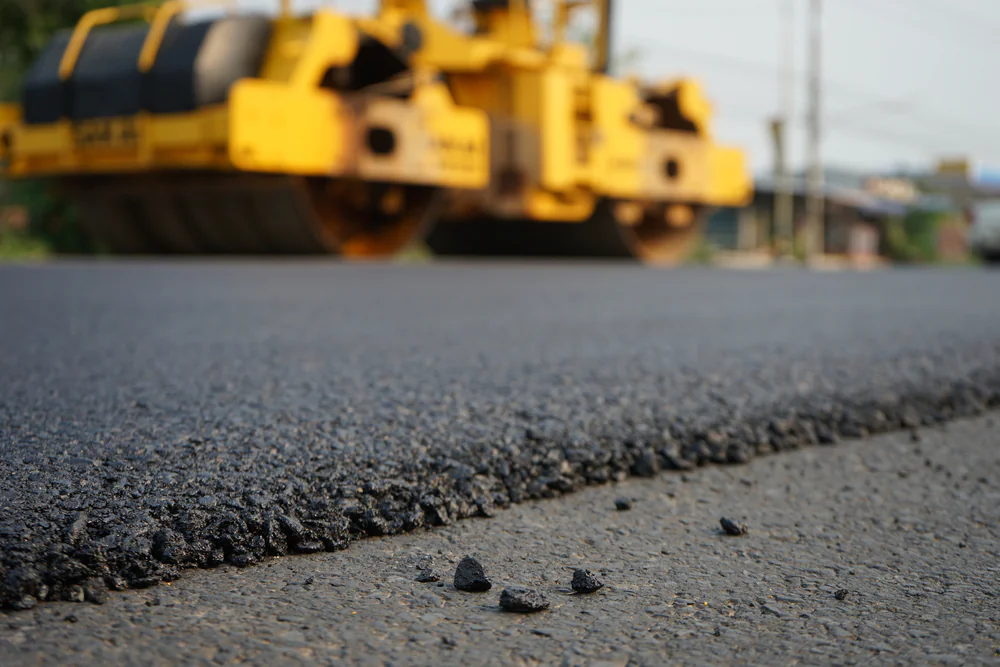
That’s exactly why installation technique matters so much in this region. Proper compaction during installation prevents water infiltration pathways. Correct drainage grading moves water off the surface quickly before it can seep into cracks. The right asphalt mix formulation handles temperature fluctuations without becoming brittle in winter cold or soft in summer heat. Adequate pavement thickness—4 to 6 inches for commercial traffic—supports heavy loads without cracking under stress points.
Commercial pavement installed correctly for Pennsylvania conditions typically lasts 15-25 years with proper maintenance. The same parking lot installed with shortcuts and cheap methods might fail in 5-8 years, requiring expensive repairs or complete replacement. Regular maintenance significantly extends lifespan—seal coating every 2-3 years protects against UV damage and moisture penetration, crack sealing prevents water infiltration before small issues become major problems. It’s not just about surviving Pennsylvania weather; it’s about engineering pavement specifically for these conditions from day one.
An asphalt overlay (also called resurfacing) involves milling off the top layer of damaged asphalt—typically 1-2 inches—and paving a fresh layer over the existing base structure. This approach works when the base is still solid and stable but the surface has worn, cracked, or faded from years of use and weather exposure. It’s faster than full replacement, costs significantly less, and gives you a smooth new surface without complete reconstruction.
Complete replacement means removing all existing asphalt down to the base, evaluating and repairing the base material if it’s compromised, addressing any drainage issues, and installing entirely new pavement built from the ground up. This becomes necessary when the base has failed from water damage or inadequate initial construction, when drainage problems have compromised the structure, or when existing pavement damage is too severe to support an overlay.
The decision isn’t about which option costs less upfront—it’s about which solution actually solves your problem and delivers long-term performance. An overlay on top of a failing base is wasted money because the underlying structural issues continue deteriorating underneath your new surface. Full replacement when an overlay would work fine is unnecessary expense. The right choice depends on honest assessment of your pavement’s structural condition, drainage functionality, and base integrity—not sales pressure or budget wishful thinking.
Yes, comprehensive commercial paving should include line striping and ADA compliance, but it’s important to clarify exactly what’s included in your specific project scope before work begins. Line striping for parking spaces, traffic flow arrows, stop bars, and safety markings should be part of a complete commercial paving job. ADA-compliant accessible parking spaces with proper dimensions, van-accessible spots, access aisles, ramps, and routes must be included to keep your property legally compliant and avoid fines or lawsuits.
Some paving contractors treat striping as an add-on service or separate contract. That approach creates coordination headaches, delays between when paving finishes and when your lot is actually functional for business, and potential confusion about who’s responsible for compliance issues. We handle everything in one coordinated project—asphalt installation, proper grading and drainage systems, line striping to current standards, ADA requirements correctly positioned and marked, and any signage or parking bumpers needed for a fully operational, compliant parking lot.
Make sure you’re completely clear on what’s included before signing any contract or work order. You shouldn’t face surprise additional charges for basic requirements like parking space lines, handicap symbols, or access aisle markings. A detailed scope of work document eliminates confusion and ensures your parking lot is complete, functional, and legally compliant when we finish the project.
The single most important maintenance step is seal coating every 2-3 years. This protective layer guards against UV damage that breaks down asphalt binder, prevents water infiltration that destroys pavement from below, protects against oil and chemical spills, and restores that dark black appearance that makes pavement look fresh and well-maintained. Seal coating is relatively inexpensive compared to the pavement life it adds—typically extending lifespan by 5-10 years when done consistently.
Crack sealing should happen as soon as you notice cracks forming in your parking lot. Small cracks are quick and inexpensive to seal with rubberized crack filler. Ignored cracks become major problems fast—water infiltrates through cracks, Pennsylvania’s freeze-thaw cycles expand the damage exponentially, and suddenly you’re looking at pothole repairs, base damage, or costly resurfacing. Catching issues early when they’re still minor prevents expensive emergency fixes later.
Keep your parking lot clean and watch for warning signs. Regular sweeping removes debris that can damage asphalt. Address oil spills promptly before they penetrate and weaken pavement. Pay attention to areas where water pools after rain—standing water indicates drainage problems that should be corrected before they cause structural damage to your base. Inspect for cracks, settling, or surface deterioration annually so you can address small issues before they become big expenses. Proper maintenance isn’t complicated or time-consuming, but it does require attention and consistent action. A well-maintained commercial parking lot can last 20-25 years or more. Neglected pavement might need complete replacement in half that time.
Other Services we provide in Richland