You need a parking lot that doesn’t crack apart after one winter or turn into a liability when customers pull in. What you’re really paying for is years of smooth operation—fewer complaints, fewer repairs, and a property that looks like you give a damn.
Good commercial paving means proper base prep, drainage that actually works, and asphalt thick enough to handle your traffic load. Not the bare minimum. Not corners cut to win a bid.
When it’s done right, you’re looking at 20 to 30 years of service with basic maintenance. That’s sealcoating every few years and addressing small cracks before they become big problems. The difference between a lot that lasts and one that fails early comes down to who’s doing the work and whether they’re thinking past next week.
We’ve been in this business since 1948. That’s not a typo—nearly 80 years of asphalt, grading, and site work across Ewing and the surrounding area.
Our approach is simple: one job at a time, full crew attention, and no juggling three projects at once. You get the same level of care whether you’re paving 10 spaces or 100. Every project gets walked, measured, and planned like it matters—because it does.
Ewing’s winters aren’t easy on asphalt, and we know it. Proper drainage, the right base depth, and attention to local conditions make the difference between pavement that holds and pavement that fails.
First, the site gets evaluated—not just measured, but checked for drainage issues, soil stability, and access. If there’s a problem with the ground, it gets addressed before any asphalt goes down.
Next comes excavation and grading. The existing surface gets removed if needed, the base gets compacted properly, and the site gets graded so water moves away from your building and off the lot. Asphalt can’t fix bad prep work, so this step matters more than most people realize.
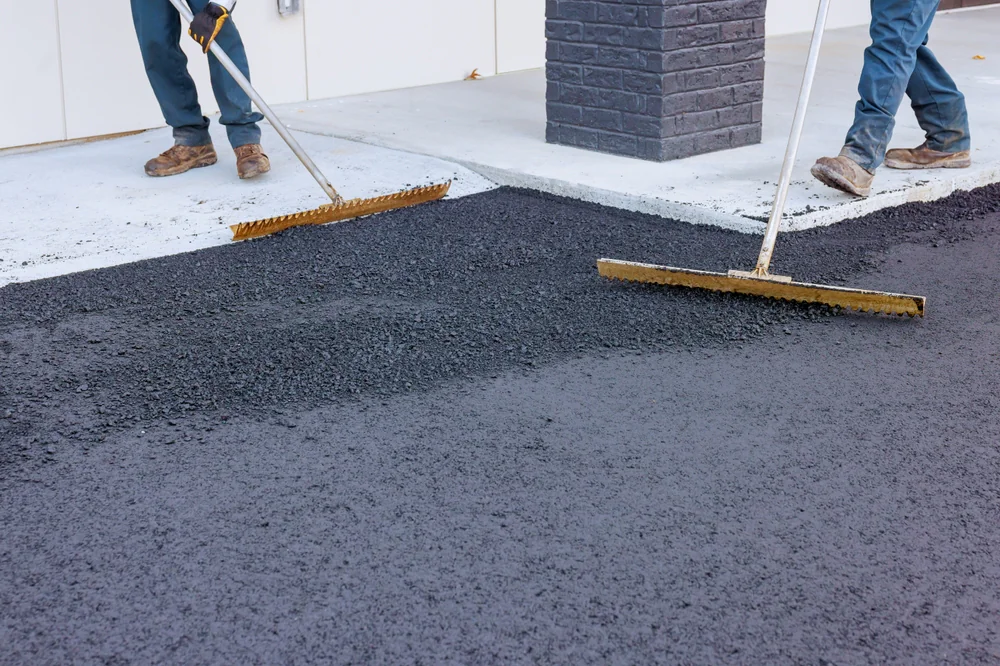
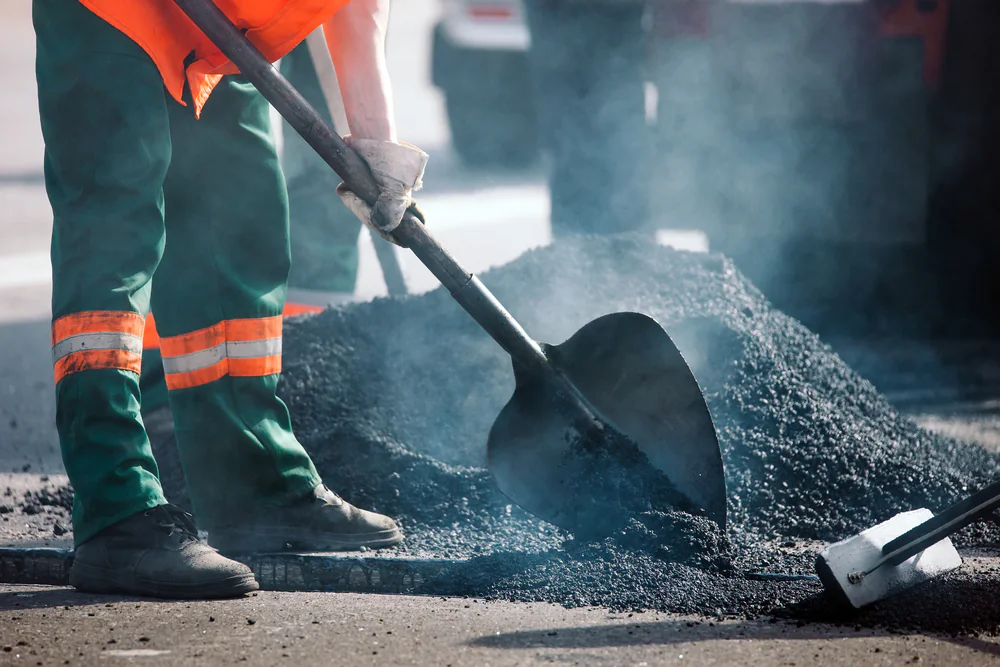
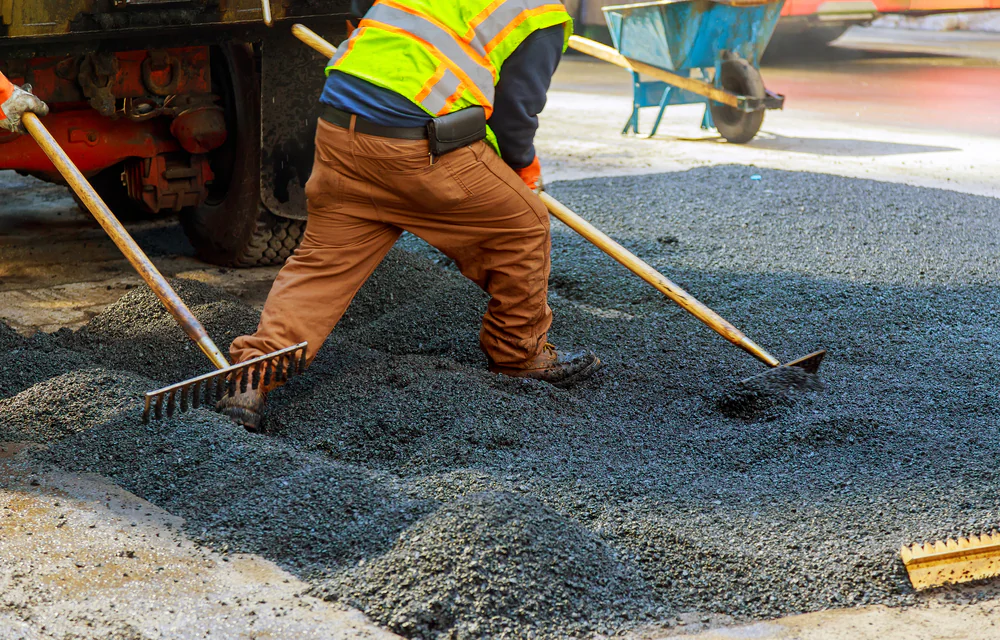
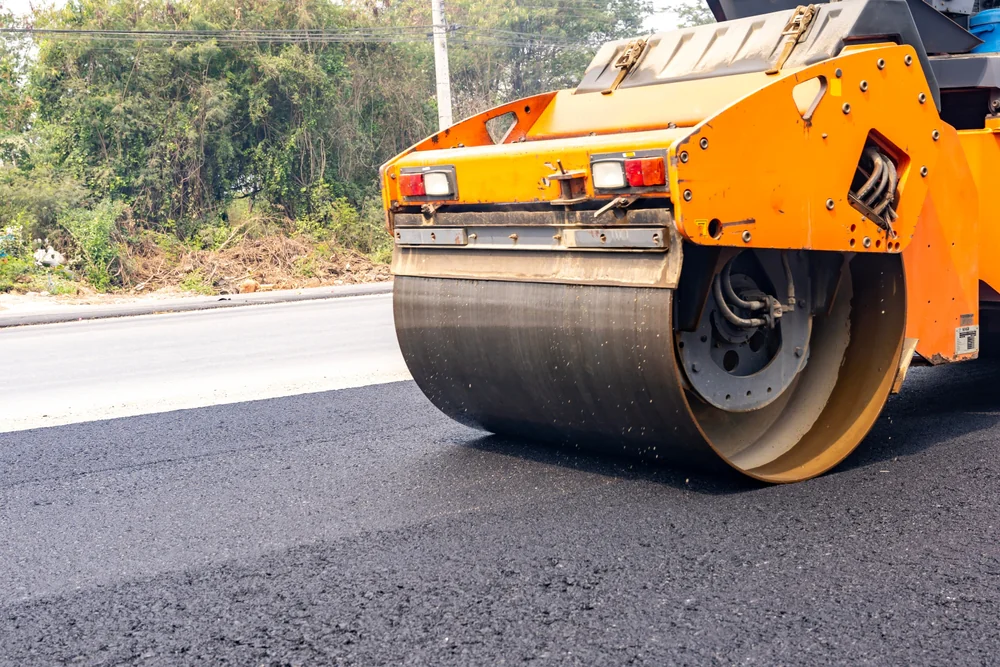
Then the asphalt goes in—hot mix, laid in layers, compacted to the right density. Thickness depends on your traffic. Light-duty car traffic needs less. Heavy trucks or delivery vehicles need more. We work fast but don’t rush the compaction, because that’s where durability comes from.
After the asphalt cures—usually 48 to 72 hours—striping goes in. Parking stalls, ADA spaces, arrows, stop bars. Everything gets marked to code so you’re compliant and your lot is functional from day one.
Ready to get started?
A commercial paving job isn’t just asphalt. It’s site prep, base work, grading, drainage, the asphalt itself, compaction, and finishing. We handle all of it, so you’re not coordinating five different contractors.
In Ewing, drainage is critical. Properties here deal with rain, snow melt, and freeze-thaw cycles that destroy poorly planned lots. We build in proper slope and install drainage solutions that move water off your pavement and away from your foundation.
ADA compliance is non-negotiable for commercial properties. That means accessible parking spaces at the right width, proper van-accessible spots, compliant ramps, and clear markings. We know the requirements and build them in from the start—no guesswork, no fines later.
You also get clear communication throughout the project. Updates on timing, any issues that come up, and what to expect next. No disappearing for days. No vague answers when you ask a question. Just straight talk about what’s happening on your property.
Most commercial paving in Ewing runs between $3 and $7 per square foot, depending on site conditions, asphalt thickness, and how much prep work is needed. A 50-space lot typically falls in the $45,000 to $150,000 range.
The variables that move the price are drainage issues, how much excavation is required, whether the existing base can be reused, and your traffic load. Heavy truck traffic needs thicker asphalt and a more robust base, which costs more upfront but saves you from early failure.
We provide clear, itemized quotes after walking your site. No ballpark guesses. No surprise charges later. You’ll know what you’re paying for and why before any work starts.
A properly installed asphalt parking lot lasts 20 to 30 years with regular maintenance. That means sealcoating every two to four years and fixing cracks as they appear. Skip the maintenance, and you’re looking at failure in 10 to 15 years.
The lifespan depends heavily on three things: base preparation, asphalt thickness, and drainage. If the base isn’t compacted right or water sits on the surface, the pavement breaks down faster. New Jersey winters accelerate that process.
We build lots to last the full 20 to 30 years. Proper base depth, correct asphalt thickness for your traffic, and drainage that actually works. The upfront investment pays off when you’re not repaving in a decade.
Site prep starts with clearing and excavation—removing old asphalt, concrete, or unstable soil down to a solid base. The ground gets tested to make sure it can support the weight of vehicles without settling.
Next is grading and base installation. The site gets graded for proper drainage slope, then a compacted stone base goes in—usually 6 to 12 inches depending on soil conditions and traffic load. This base is what keeps your asphalt from cracking and sinking.
Drainage solutions get built in during this phase. That might mean catch basins, French drains, or regrading to direct water away from the lot. In Ewing, this step is critical because water is the number one enemy of asphalt. Get the drainage wrong, and the lot fails early no matter how good the asphalt is.
Most commercial paving projects take one to two weeks from start to finish, depending on size and complexity. The asphalt itself cures in 48 to 72 hours, so you can have vehicles back on it within a few days.
We work with your schedule to minimize disruption. That might mean phasing the work so part of your lot stays open, working weekends, or starting early to avoid peak business hours. The goal is to get you back to full operation as quickly as possible.
You’ll get a clear timeline before work starts—what happens each day, when your lot will be closed, and when you can expect normal operations to resume. If weather or site conditions change the schedule, you’ll know immediately, not three days later.
Yes. Asphalt maintenance is what separates a 30-year parking lot from a 10-year parking lot. The two main tasks are sealcoating and crack repair.
Sealcoating should happen every two to four years depending on traffic and weather exposure. It protects the asphalt from UV damage, water penetration, and chemical spills. It’s a relatively inexpensive process that extends pavement life significantly.
Crack repair needs to happen as soon as you notice cracks forming. Small cracks let water in, which freezes and expands in winter, turning small problems into big ones. Filling cracks early costs a fraction of what repaving costs later. We can handle both sealcoating and crack repair, or you can work with a maintenance company—either way, don’t skip it.
Experience with local conditions matters more than most people realize. Ewing’s freeze-thaw cycles, soil types, and drainage challenges require specific solutions. A contractor who knows the area builds those solutions in from the start.
You also want a contractor who does their own work, not one who subcontracts everything out. We run our own crews, which means accountability, quality control, and clear communication throughout your project.
Finally, look for transparency in pricing and process. If a contractor can’t explain what they’re doing and why, or if the quote is vague and missing details, that’s a red flag. You should know exactly what you’re getting, what it costs, and how long it will take before you sign anything.
Other Services we provide in Ewing