You’re not looking for the cheapest asphalt contractor in Groveville. You’re looking for one who won’t have you calling back in three years because the surface is already failing.
Proper commercial paving starts below the surface. The sub-base determines whether your parking lot lasts 5 years or 25. Most premature failures happen because contractors rush the prep work or skip steps to save time. When the base isn’t stable and compacted correctly, the asphalt on top doesn’t stand a chance.
New Jersey’s freeze-thaw cycles don’t forgive shortcuts. Water seeps into weak spots, freezes, expands, and creates the kind of damage that turns into liability issues fast. Proper drainage and a solid foundation prevent that. So does using the right asphalt mix for your traffic load and climate conditions. Commercial properties need asphalt installation that accounts for heavy vehicles, constant use, and the reality of harsh winters. That means thicker applications in high-traffic zones, proper sloping for water runoff, and compaction that actually creates a dense, stable surface.
We bring 75+ years of combined industry knowledge to Groveville—expertise that goes back to 1948. That’s not just time in business. It’s generations of learning what works, what fails, and how to handle the specific challenges New Jersey throws at commercial properties.
Our approach is different. One project at a time. Full crew attention on your job until it’s done right. No juggling multiple sites or rushing to the next one. Every commercial property gets the same level of care, whether it’s a small business parking lot or a large industrial complex. That’s how we’ve built a five-star reputation on Angie’s List and why most of our new business comes from referrals.
Groveville sits in Mercer County, part of a region with diverse commercial needs—from retail centers near Hamilton to industrial facilities around Trenton and office complexes toward Princeton. Local properties face the same climate challenges: winter salt that breaks down asphalt, summer heat that can soften improperly mixed material, and the constant traffic that tests every square foot.
First, there’s an honest site assessment. Not a quick walk-around with a calculator. A real look at drainage, existing conditions, traffic patterns, and what your property actually needs. If there are potential issues, you hear about them upfront—not after the deposit clears.
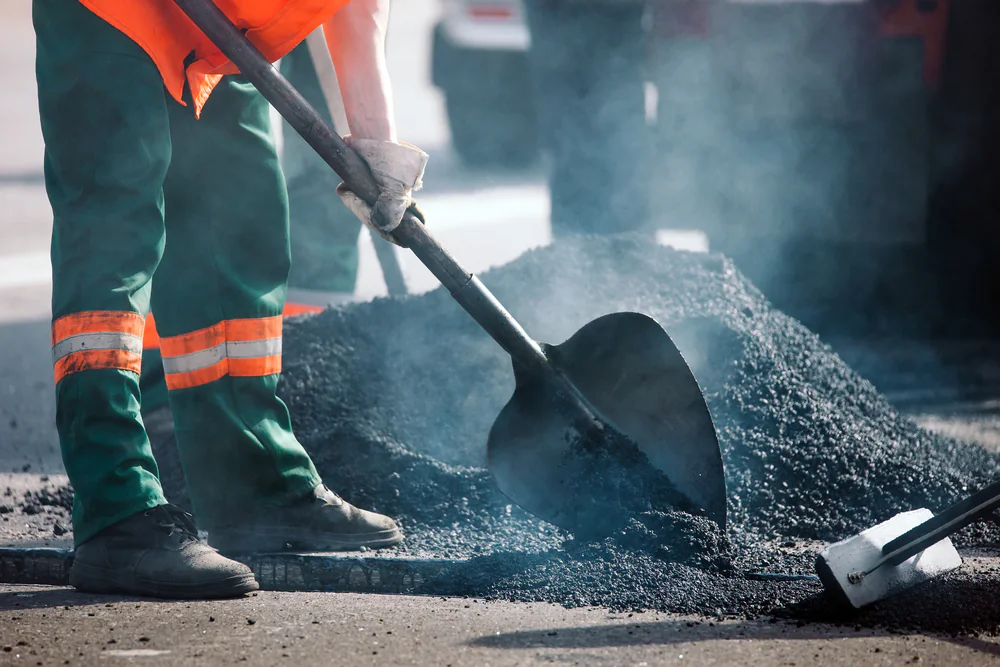
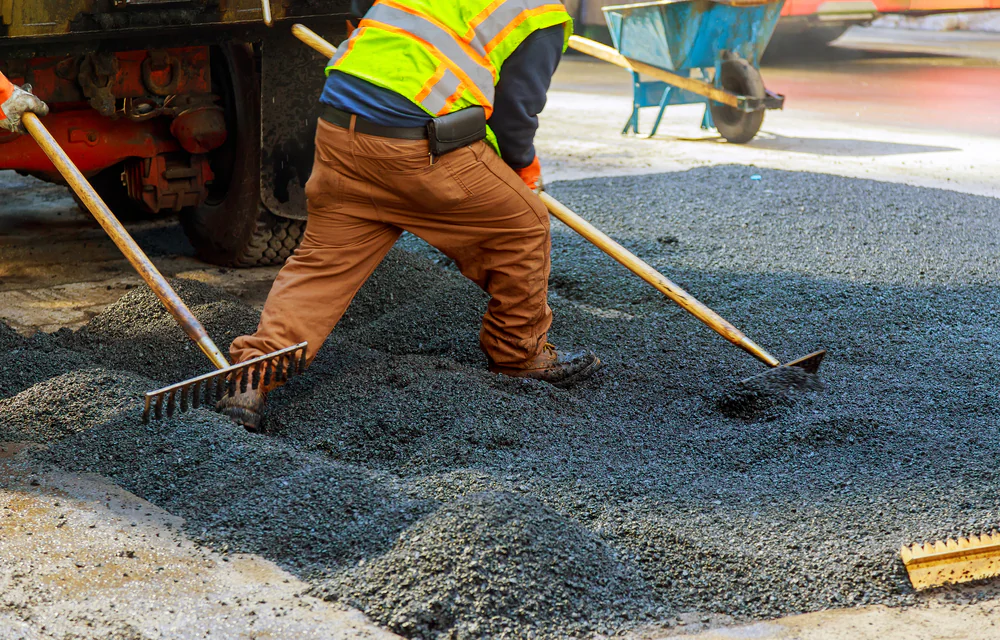
Next comes the prep work that most people never see but determines everything. Existing damaged asphalt gets removed down to stable ground. The sub-base gets graded, compacted, and tested to make sure it can support the new surface. Drainage gets addressed so water moves away from the pavement instead of pooling and causing damage. This phase takes time because there are no second chances once asphalt goes down.
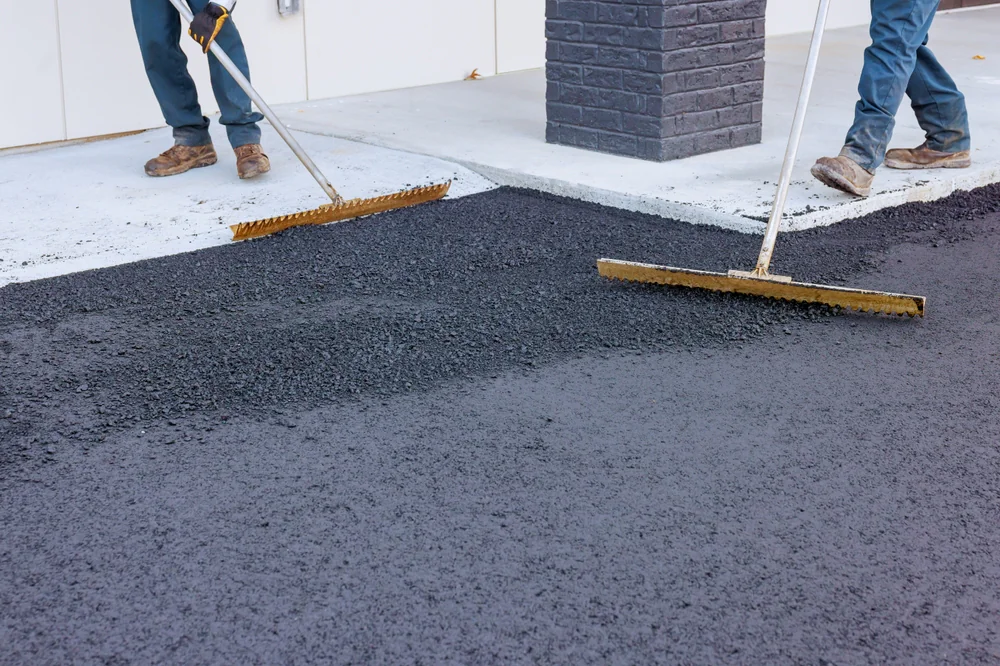
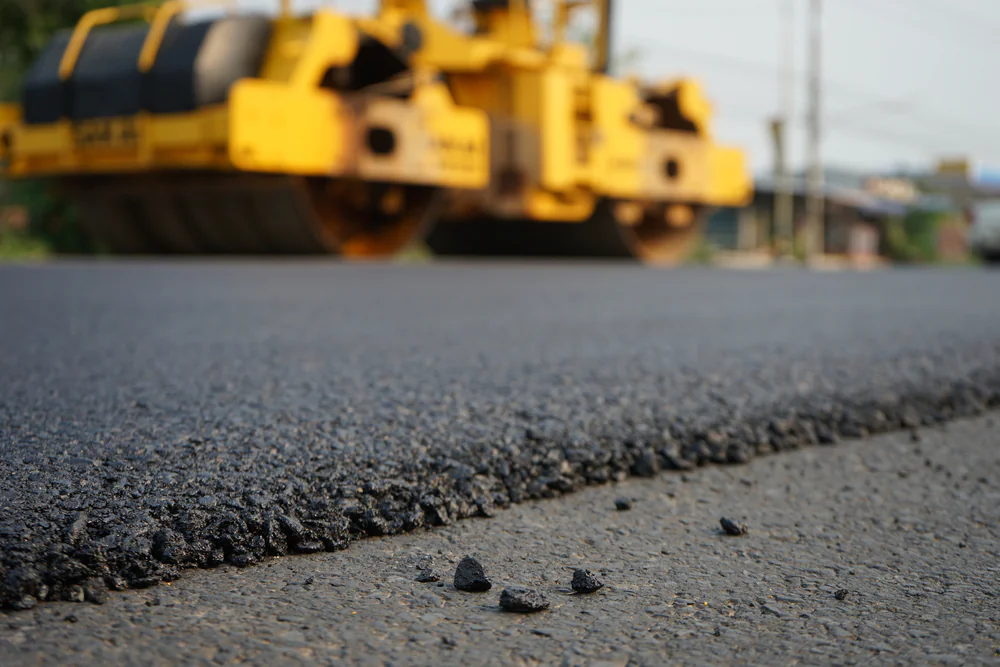
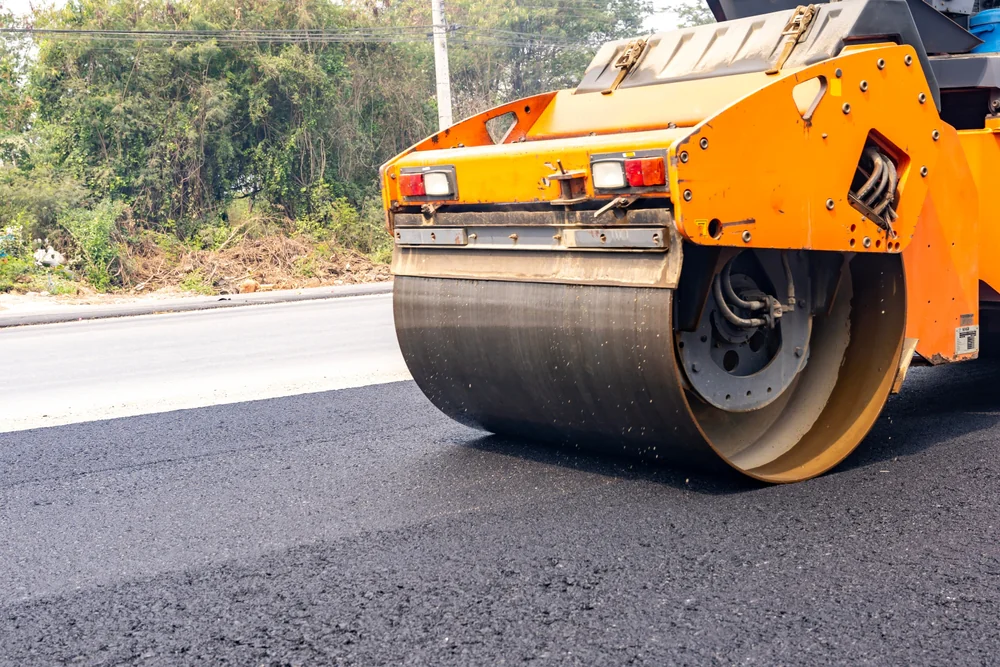
Then the paving installation happens. Hot asphalt mix arrives from the plant and goes into the paving machine, which lays it in controlled passes. We monitor thickness, temperature, and slope to ensure proper drainage. Vibratory rollers compact everything while the material is still hot, creating a dense surface that won’t shift or settle. The process is coordinated to minimize disruption to your business operations—work happens during off-hours when possible, and access stays open where needed.
Ready to get started?
Commercial paving in Groveville means dealing with real conditions. Properties here face heavy traffic from Route 130 and I-295, winter weather that cycles between freezing and thawing, and the need to stay operational during construction. That requires planning beyond just the asphalt itself.
Parking lot paving includes proper striping for traffic flow and ADA compliance. Loading zones need thicker asphalt to handle trucks. Entrances and exits require specific grading so water doesn’t pool where customers drive. These details matter because they affect how long your investment lasts and whether your property stays safe and functional.
The paving process also accounts for timing. Retail properties can’t shut down during peak hours. Industrial sites need access for deliveries. Medical facilities require continuous operation. We schedule work around your business needs, staging projects to keep disruption minimal. That might mean night paving, phased installation, or creative access solutions that keep operations running.
Water management is critical in this area. Mercer County gets significant rainfall, and poor drainage is the fastest way to destroy new asphalt. Proper commercial paving includes grading that moves water away from structures, catch basins positioned correctly, and sub-base materials that allow drainage without compromising stability. These aren’t extras—they’re essential to asphalt that performs for decades instead of years.
Most commercial parking lot paving projects in Groveville take 3-7 days from start to finish, but that timeline depends entirely on your property’s specific conditions. A straightforward overlay on stable existing asphalt with minimal prep work might be done in 2-3 days. A complete tear-out and rebuild with drainage improvements and significant grading could take a week or more.
The prep work phase usually takes the most time because it determines everything that follows. Removing old asphalt, addressing any sub-base issues, ensuring proper compaction, and setting up drainage can’t be rushed. Once the foundation is right, the actual asphalt installation moves quickly—hot mix gets laid, compacted, and is ready for light traffic within 24-48 hours. Full curing takes longer, but you’re not looking at weeks of downtime.
Weather affects timelines too. Asphalt needs certain temperature conditions to install properly. Cold or rainy weather can delay work because the material won’t compact correctly or bond properly in those conditions. We build realistic timelines that account for these factors instead of promising unrealistic speed.
The number one cause of premature parking lot failure in New Jersey is poor sub-base preparation. When contractors skip proper grading, compaction, or drainage setup to save time or money, the asphalt on top doesn’t have stable support. New Jersey’s freeze-thaw cycles expose these weaknesses fast—water infiltrates, freezes, expands, and creates the cracks and potholes you see within a few years instead of decades.
Inadequate asphalt thickness is another common problem. Commercial properties need thicker applications than residential driveways, especially in loading zones or high-traffic areas. When contractors use residential-grade thickness or mix to cut costs, the pavement can’t handle the weight and stress. You end up with rutting, cracking, and surface failure much sooner than expected.
Poor drainage probably ranks third. Water is asphalt’s worst enemy. When parking lots don’t have proper slope, functioning catch basins, or adequate sub-base drainage, water sits on or under the surface. That accelerates deterioration, weakens the base, and creates the conditions for rapid failure. Proper commercial paving addresses drainage from the beginning, not as an afterthought when problems appear.
It depends entirely on the condition of your existing asphalt and what’s underneath it. If the current surface has minor cosmetic issues but the base is still solid and stable, an overlay can work well and costs significantly less than full removal. The existing asphalt gets milled to create a clean, level surface, then new asphalt goes on top. This approach makes sense when you’re dealing with surface wear but no structural problems.
Complete removal becomes necessary when the existing asphalt has failed structurally—meaning you see alligator cracking, significant settling, or areas where the base has clearly deteriorated. Paving over a failed base just transfers those problems to your new surface. You might get a few months of good appearance, but the underlying issues will show through quickly. That’s throwing money away instead of fixing the actual problem.
The only way to know for sure is a proper assessment. We’ll tell you honestly whether your base can support an overlay or whether you need full removal and reconstruction. That assessment includes looking at drainage, checking for soft spots in the sub-base, and evaluating the overall structural condition—not just what’s visible on the surface.
Commercial paving costs in Groveville typically run $3-$8 per square foot for complete installation, but that range is broad because every property is different. A simple overlay on a well-maintained parking lot with minimal prep work lands toward the lower end. Full tear-out with significant grading, drainage improvements, and thicker asphalt for heavy traffic pushes toward the higher end or beyond.
The biggest cost factors are site preparation requirements, asphalt thickness, and project complexity. If your property has poor drainage that needs correction, unstable soil requiring extra base material, or difficult access for equipment, those factors increase costs. Larger projects generally get better per-square-foot pricing because of economies of scale, while smaller jobs have higher relative costs due to mobilization and minimum charges.
Be cautious with quotes that seem too good to be true—they usually are. Extremely low bids often mean shortcuts on base preparation, thinner asphalt than specified, or lower-grade materials. Those savings disappear fast when you’re paying for repairs within a few years. Quality commercial paving is an investment that should last 20-30 years with proper maintenance. Cheap work that fails in 5 years costs far more in the long run than doing it right the first time.
Commercial asphalt paving requires thicker applications, heavier-duty base preparation, and materials designed for much higher traffic loads than residential work. A typical residential driveway might use 2-3 inches of asphalt over a compacted gravel base. Commercial parking lots generally need 3-4 inches minimum, with loading zones and high-traffic areas often requiring 4-6 inches to handle trucks and constant vehicle weight.
The base preparation is more intensive for commercial projects too. Residential driveways deal with a few cars daily. Commercial parking lots handle dozens or hundreds of vehicles, delivery trucks, and continuous stress. That demands deeper excavation, more substantial base materials, better compaction, and drainage systems designed for larger surface areas and water volumes. Cutting corners on any of these elements leads to premature failure.
Commercial paving also involves striping, ADA compliance, proper traffic flow design, and coordination to minimize business disruption. These projects require different equipment, larger crews, and contractors who understand commercial property needs beyond just laying asphalt. The planning, permitting, and execution are more complex because the stakes are higher—your parking lot affects customer experience, liability exposure, and property value in ways a residential driveway doesn’t.
Minimizing disruption starts with realistic planning before any equipment arrives. That means understanding your business patterns—when you have peak traffic, when deliveries happen, which access points are critical, and where you can afford temporary closures. We work with you to phase the project so essential access stays open and work happens during your slowest periods when possible.
Phased installation is common for larger commercial properties. Instead of closing the entire parking lot, work happens in sections. One area gets paved while the rest stays operational, then we move to the next section. This approach takes slightly longer overall but keeps your business accessible throughout the project. Temporary striping and clear signage help customers navigate around work zones safely.
Night and weekend work is another option for businesses that can’t afford daytime disruption. Retail properties, medical facilities, and restaurants often need this approach. The paving happens when you’re closed, and by the time you open, the surface is ready for traffic. This requires careful coordination and sometimes costs slightly more due to timing, but it eliminates the customer impact that daytime construction creates.
Other Services we provide in Groveville