You’re not looking for the cheapest bid. You’re looking for asphalt that holds up through New Jersey winters, handles your traffic load, and doesn’t need premature replacement because someone cut corners on the base.
When commercial paving is installed correctly, water drains where it should. Cracks don’t show up in the first year. Your parking lot can handle freeze-thaw cycles without turning into a pothole minefield.
That’s what proper grading, a solid sub-base, and the right asphalt thickness get you. It’s the difference between paving that lasts 15 to 20 years and paving that starts failing in five.
Your property makes an impression before anyone walks through the door. A well-maintained parking lot signals that you run a tight operation. It also means fewer liability concerns, fewer complaints, and one less thing on your plate.
We’ve been in the paving business since 1948. That’s decades of watching trends come and go, learning what actually works in New Jersey’s climate, and building a reputation on jobs that hold up.
We focus on one project at a time. That means when our crew is on your site, they’re not splitting attention between three other jobs. You get the full team, clear updates, and work done the way it should be.
Princeton businesses need contractors who understand local conditions—the freeze-thaw cycles, the drainage challenges, the expectations that come with operating in a community known for high standards. We treat every project with the same level of care, whether it’s a small office parking area or a large retail complex. The goal is straightforward: do quality work, communicate clearly, and build relationships that last beyond a single job.
First, there’s a site evaluation. We look at your current pavement condition, drainage patterns, traffic requirements, and any issues that need addressing. You get a detailed estimate that breaks down what’s included—no vague line items or surprise fees later.
Once the project is scheduled, the existing surface is removed if needed. Then comes grading and sloping, which is critical for water runoff. Standing water is one of the fastest ways to destroy asphalt, so proper drainage isn’t optional.
Next is sub-base preparation. This is the foundation that supports everything above it. It gets compacted in layers, then proof-rolled with heavy equipment to identify any weak spots before paving begins.
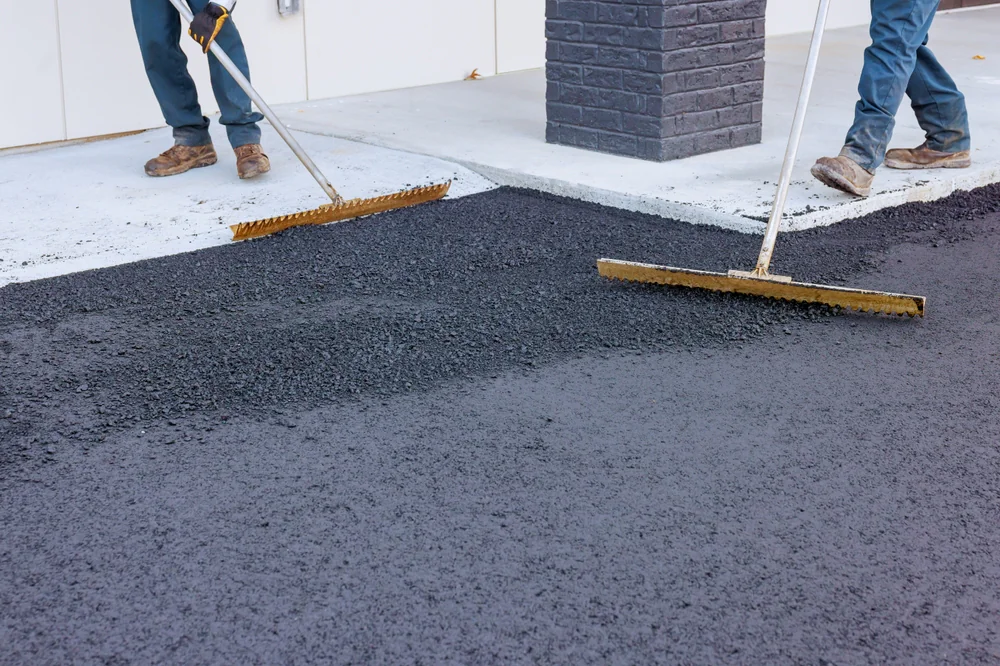
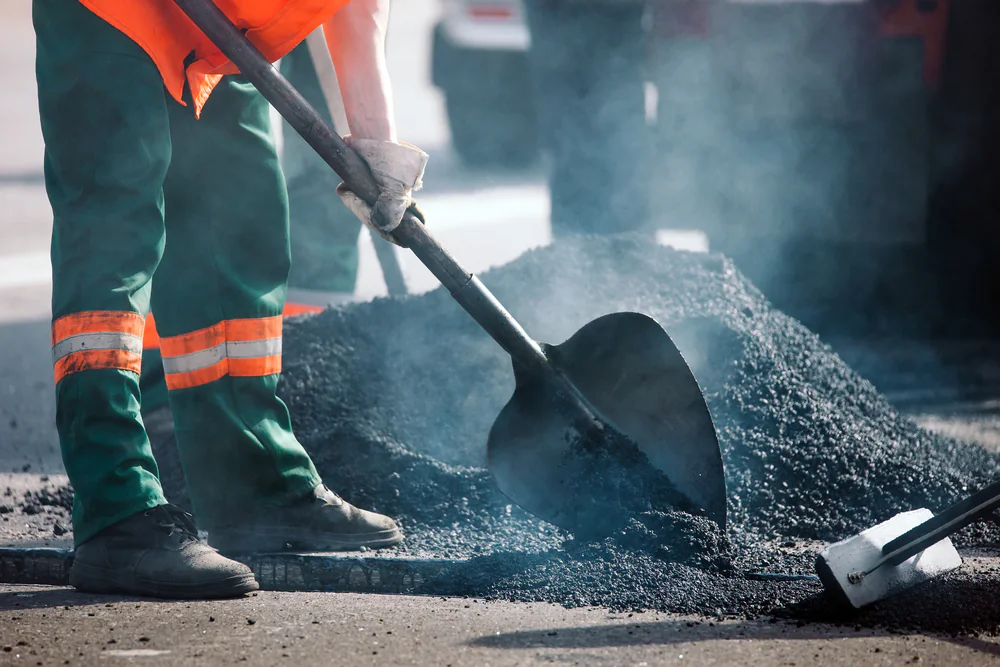
The asphalt goes down in layers—binder course for strength, then the surface layer for durability and appearance. Everything is compacted and smoothed while the asphalt is still hot to ensure proper bonding.
Finally, line striping and any final touches. We clean up, and you’re left with a parking lot that’s ready for use within a few days. Most commercial projects in Princeton take two to five days depending on size, and we work around your schedule to minimize disruption to your operations.
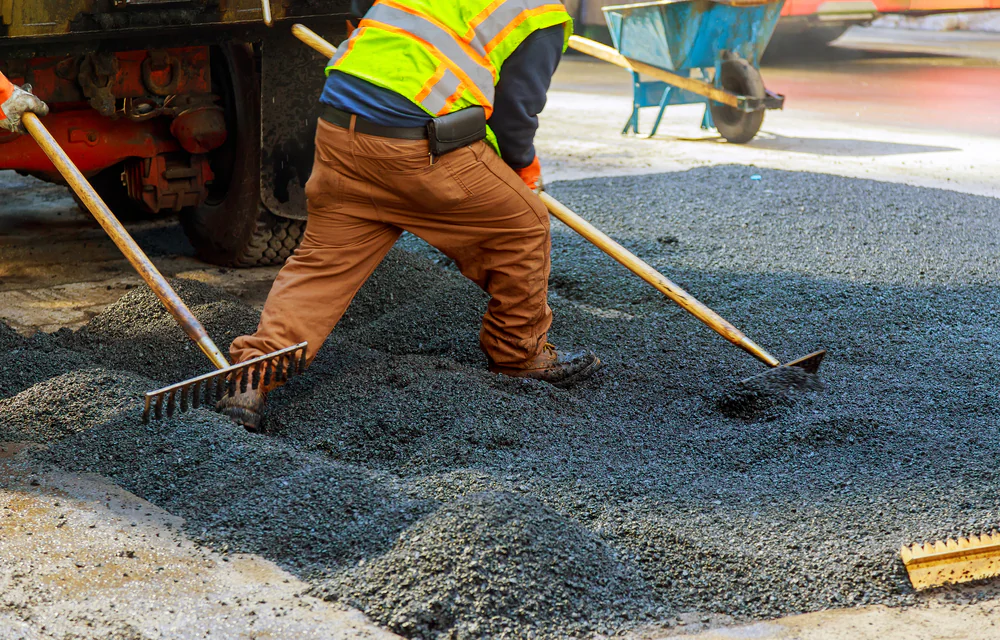
Ready to get started?
Commercial paving covers new parking lot installation, resurfacing existing areas, and full-depth reconstruction when the base has failed. We handle retail centers, office buildings, industrial facilities, churches, and other commercial properties throughout Princeton, NJ.
Each project includes proper base preparation, commercial-grade asphalt designed for New Jersey’s climate, and professional line striping. Drainage solutions are built into the design—whether that means adjusting grades, installing catch basins, or correcting existing water flow problems.
ADA compliance is part of the process, not an afterthought. Accessible parking spaces, proper slopes, and compliant curb ramps are addressed during planning so your property meets current standards.
Princeton’s weather is tough on asphalt. Winters bring freezing temperatures and snow. Summers mean heat and UV exposure. Spring and fall bring rain that tests every drainage system. That’s why the thickness of your asphalt, the quality of your base, and the attention to grading all matter. Shortcuts show up fast here.
We also offer asphalt repair, pothole patching, crack sealing, and sealcoating to extend the life of your pavement. Regular maintenance can add years to your parking lot and save you from costly premature replacement. We work with Princeton businesses to develop maintenance plans that fit budgets and keep properties looking professional year-round.
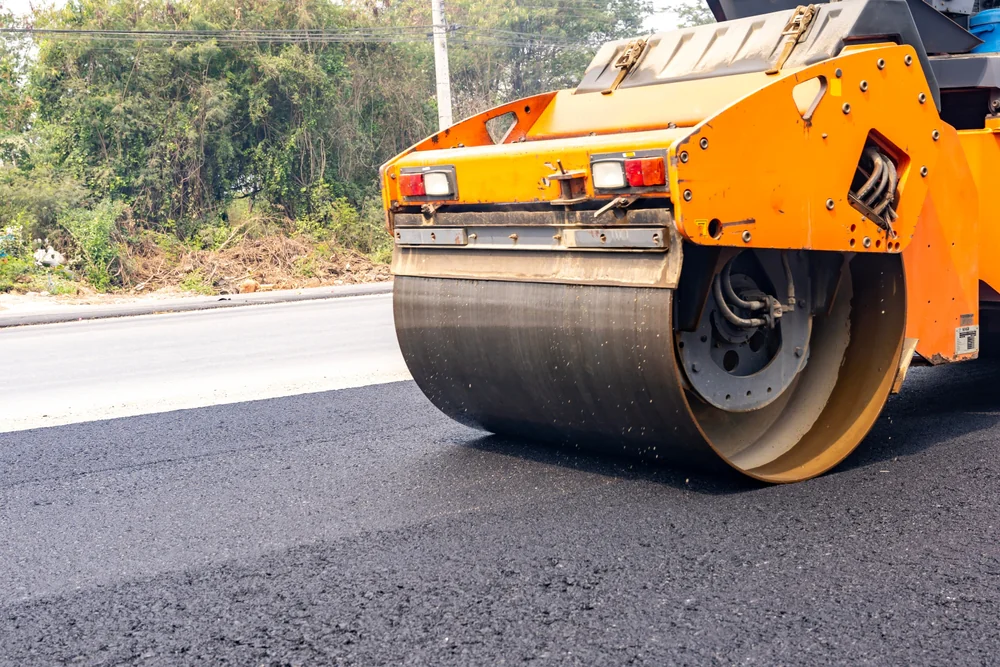
Commercial paving in New Jersey typically runs between two and seven dollars per square foot, but that range depends on several factors. If you’re resurfacing over a solid existing base, you’ll be on the lower end. Full-depth reconstruction with base work and drainage corrections costs more.
Site preparation plays a big role. If the existing pavement needs to be removed, if there are drainage issues to fix, or if the base needs rebuilding, those add to the total. Asphalt thickness matters too—heavier traffic requires thicker pavement, which means more material and higher cost.
Line striping, ADA compliance work, and any additional features like speed bumps or signage also factor in. The best way to know what your project will cost is to get a detailed written estimate that breaks down each component. That way you can see exactly what you’re paying for and make informed decisions about where to invest.
We provide transparent estimates with no hidden fees. The goal is to give you enough information to budget accurately and understand the value you’re getting for your investment.
Most commercial paving projects in Princeton take two to five days from start to finish, depending on the size of the parking lot and the scope of work. Smaller areas under 5,000 square feet can often be completed in two or three days. Larger retail centers or office complexes may need a full week.
Weather affects the timeline. Asphalt can’t be installed in rain or when temperatures drop below 50 degrees. Projects are scheduled during optimal conditions, and you’ll get realistic timelines upfront so you can plan accordingly.
Preparation work takes time but it’s what ensures long-lasting results. Rushing through base compaction or skipping proper grading leads to problems down the road. The actual paving goes relatively quickly once the site is prepped correctly.
You can usually have light traffic on new asphalt within 24 to 48 hours, but it’s best to wait three to five days before heavy use, especially in warm weather. The asphalt continues curing for several weeks, so avoiding sharp turns and heavy loads initially helps ensure the surface performs well long-term.
Resurfacing means applying a new layer of asphalt over existing pavement that’s structurally sound but showing surface wear. It’s faster and more cost-effective than full replacement. If your parking lot has minor cracking, fading, or surface deterioration but the base underneath is still solid, resurfacing can give you years of additional life.
Full replacement means removing the old asphalt and rebuilding from the base up. This is necessary when the underlying structure has failed, when you have extensive alligator cracking, or when drainage issues can’t be fixed without starting over. It costs more and takes longer, but it’s the right choice when the foundation is compromised.
The decision comes down to the condition of your existing pavement. A proper evaluation can determine whether your base is still doing its job or whether you’re better off rebuilding. Trying to resurface over a failing base is throwing money away—the new surface will just fail along with the old one.
We evaluate your current pavement condition and recommend the most cost-effective approach that will provide long-term durability for your specific situation. Sometimes spending more upfront saves you from having to redo the work in a few years.
Drainage is one of the most important aspects of commercial paving, and it’s where a lot of contractors cut corners. Standing water is asphalt’s worst enemy. It seeps into cracks, weakens the base, and accelerates deterioration. In New Jersey’s freeze-thaw climate, water that gets trapped under the surface causes heaving, potholes, and premature failure.
Proper drainage starts with grading. The parking lot needs to be sloped correctly so water flows away from buildings and toward drainage points. That usually means a quarter-inch slope per foot, but the exact grade depends on your site’s layout and existing conditions.
Sometimes drainage issues require more than just regrading. Catch basins, french drains, or other drainage structures may need to be installed or repaired. If there are low spots where water collects, a leveling course can be applied before paving to eliminate puddles.
During the planning phase, we evaluate your site’s drainage patterns and build solutions into the design. The goal is to make sure water moves off your pavement efficiently, protecting your investment and extending the life of your parking lot. Fixing drainage problems during paving is far easier and cheaper than dealing with water damage after the fact.
Any paving project involves some level of disruption, but good contractors work to minimize the impact on your business. The key is clear communication, realistic scheduling, and efficient execution.
Before work starts, you’ll know exactly when the crew will be on site, how long each phase will take, and what areas will be inaccessible. For businesses that can’t close completely, paving can often be done in phases—completing one section at a time so customers and employees still have access.
Timing matters. Some businesses prefer to have paving done on weekends or during slow seasons to reduce interference with operations. We work around your schedule whenever possible and focus on one project at a time, which means the crew isn’t bouncing between jobs and dragging out your timeline.
Most commercial projects move quickly once they’re underway. The prep work and base installation take the most time, but the actual paving happens relatively fast. You’ll have access to the new asphalt within a few days, though it’s best to avoid heavy traffic initially while it fully cures.
The goal is to get in, do quality work, and get out without creating more hassle than necessary. That means showing up when scheduled, keeping you updated on progress, and cleaning up thoroughly when the job is done.
Properly installed commercial asphalt typically lasts 15 to 20 years with regular maintenance. Some parking lots go even longer if they’re well cared for and don’t experience unusually heavy traffic or harsh conditions.
Several factors affect lifespan. Traffic volume and vehicle types matter—heavy trucks and constant use wear down asphalt faster than light car traffic. New Jersey’s climate is tough, with freeze-thaw cycles that stress pavement and hot summers that can soften asphalt if it’s not thick enough.
Maintenance makes a huge difference. Sealcoating every two to three years protects against oxidation, UV damage, and water penetration. Filling cracks as soon as they appear prevents them from spreading. Addressing drainage issues before they cause major damage saves you from expensive repairs.
The quality of the initial installation is the biggest factor. If the base isn’t compacted properly, if drainage wasn’t addressed, or if the asphalt is too thin for your traffic load, you’ll see problems within the first few years. That’s why choosing a contractor based on quality rather than just price matters.
We design each installation based on your specific traffic requirements and site conditions, then provide maintenance recommendations to help you get the most life out of your pavement. The goal is to deliver parking lots that perform well for decades, not just pass inspection on day one.
Other Services we provide in Princeton