You get a parking lot that doesn’t puddle after every rain. One that doesn’t crack apart before you’ve even finished paying for it. Asphalt that looks professional because it was installed by people who know what proper base prep actually means.
When the work is done right from the start, you’re not calling someone back in two years to fix what should’ve lasted ten. You’re not dealing with customer complaints about potholes or standing water. You’re not explaining to your boss or your tenants why the new pavement already looks old.
The difference shows up in how long the surface lasts, how few problems you deal with, and how much less you spend on repairs down the road. That’s what happens when a crew takes the time to do it correctly instead of rushing to the next job.
We’ve been handling commercial paving in Princeton Junction and throughout central New Jersey with the kind of consistency that only comes from decades in the field. Our roots in the paving industry go back to 1948, and that foundation shows in how we approach every project.
This isn’t a crew bouncing between five jobs in one day. When we’re on your site, that’s where we stay until the work is finished. One project gets our full attention, which means better results and fewer mistakes. It’s a straightforward approach that property managers and business owners in the Princeton Junction area have come to rely on.
The five-star reviews and repeat clients aren’t accidents. They’re what happens when you treat every customer the same way, communicate clearly, and stand behind the work.
First, we actually come out to look at your property. Not a salesperson reading from a script, but someone who understands grading, drainage, and what your specific site needs. You’ll get a clear estimate that covers the actual scope of work without vague line items or surprise additions later.
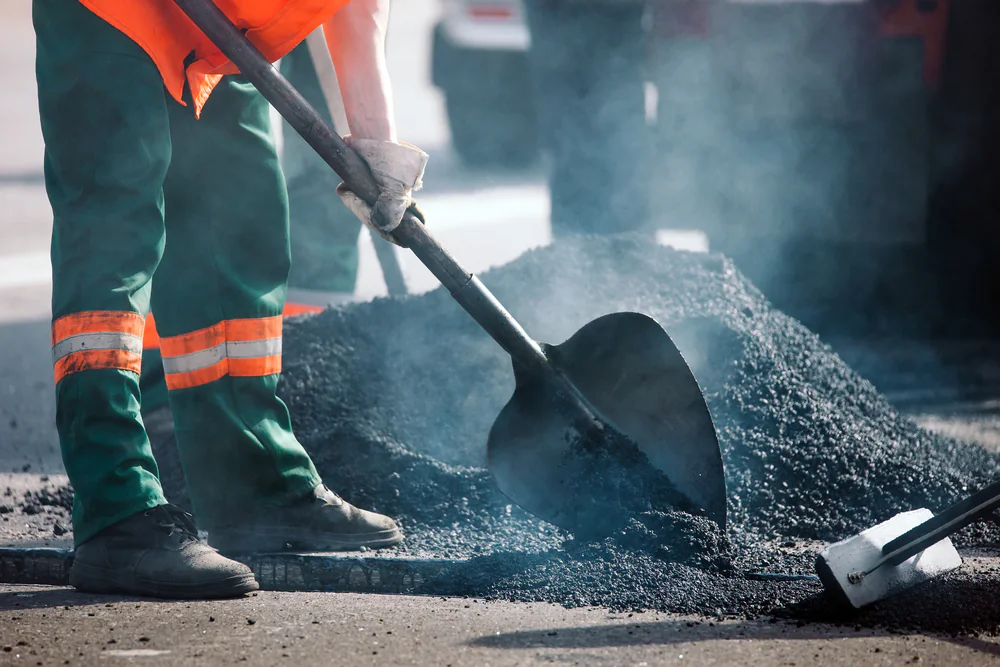
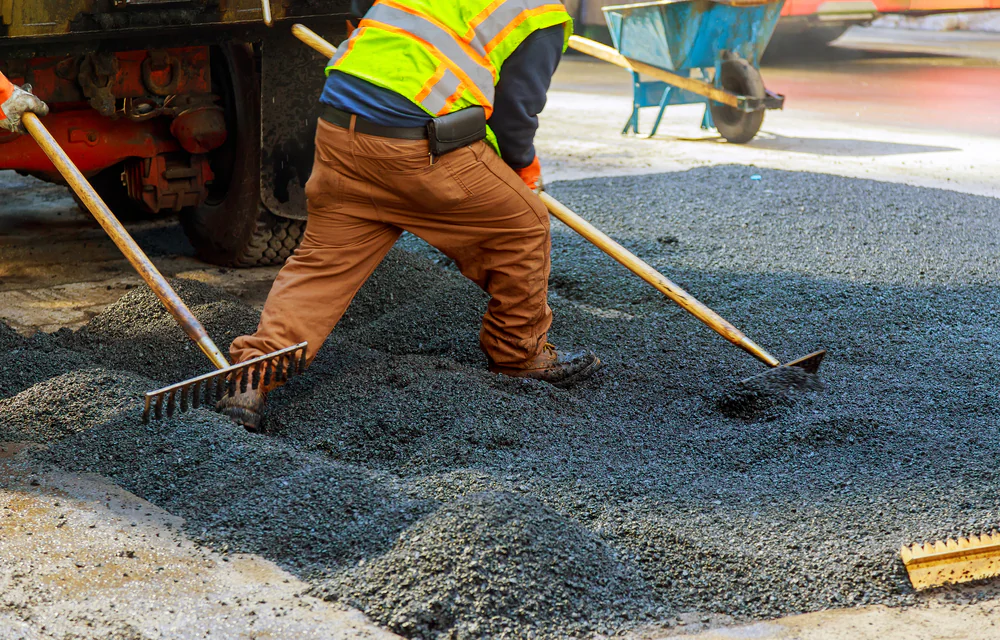
Once the schedule is set, our crew shows up when we say we will and stays focused on your project. The existing surface gets removed if needed, the base gets properly prepared and compacted, and drainage issues get addressed before any asphalt goes down. This is where most problems start—with contractors who skip steps to save time.
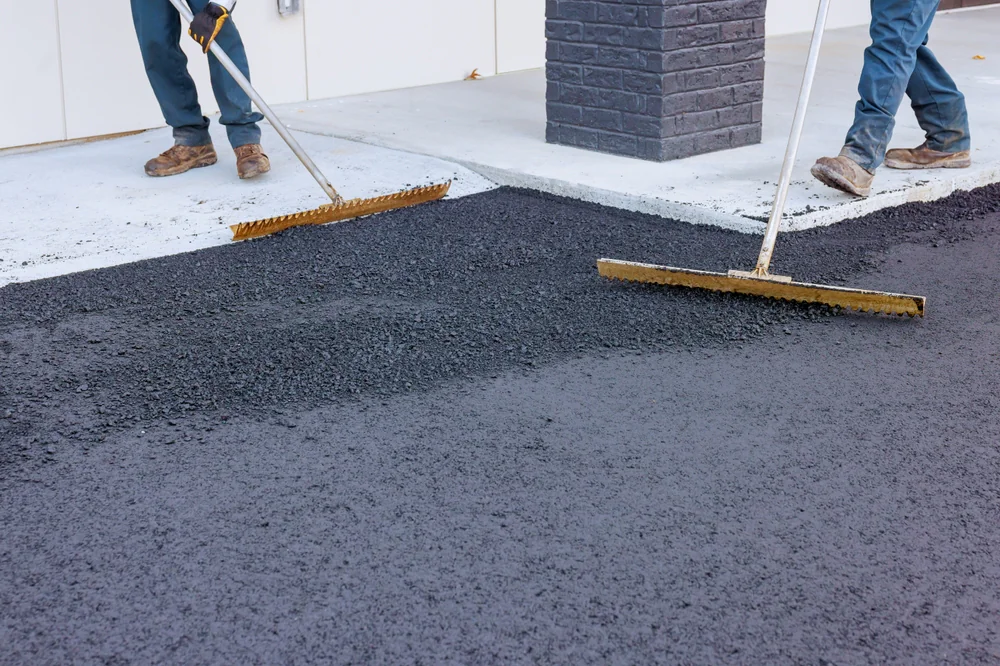
The asphalt installation itself follows industry standards for thickness and compaction. Edges are clean, transitions are smooth, and the surface is graded to move water where it needs to go. After paving, striping and accessibility features get handled if that’s part of your project.
You’ll know what’s happening at each stage because communication doesn’t stop once the contract is signed. When the job is done, you’ll have a parking lot or paved surface that’s ready to handle traffic and weather without falling apart in the first season.
Ready to get started?
Commercial paving installation covers new parking lot construction, complete resurfacing of deteriorated areas, and expansion projects for growing businesses. The work includes site preparation, proper grading for drainage, base installation and compaction, and asphalt paving to the appropriate thickness for your traffic load.
In Princeton Junction, where properties range from small office buildings along Quakerbridge Road to larger commercial centers near the Route 1 corridor, the approach needs to match the specific demands of each site. A medical office parking lot doesn’t get the same treatment as a warehouse loading area, and a retail center needs different considerations than an apartment complex.
Water management is particularly important in this area. Central New Jersey sees its share of heavy rain, and without proper drainage solutions, even quality asphalt won’t last. Grading, catch basins, and slope considerations all factor into the installation process to prevent the standing water and premature deterioration that plague poorly planned projects.
The work also includes ADA-compliant striping, accessible parking space installation, and any necessary curbing or transitions to existing surfaces. For businesses in West Windsor Township and surrounding areas, maintaining a professional appearance matters, and that means clean lines, proper markings, and a finished product that looks as good as it performs.
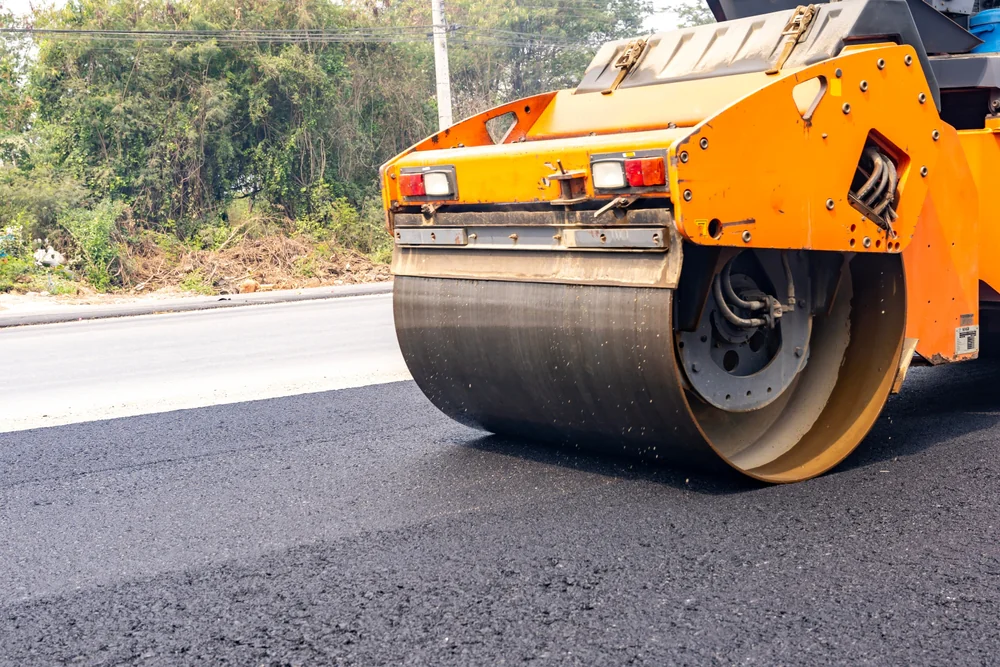
Timeline depends on the size of your lot and what needs to happen before asphalt goes down. A small commercial parking lot might take two to three days from start to finish. Larger projects or ones requiring significant grading and drainage work could run a week or more.
The actual paving happens relatively quickly once the prep work is done. But the prep work—removing old asphalt, grading the base, addressing drainage issues—is where the time goes and where quality is determined. Contractors who rush this phase to speed up the timeline are the same ones whose work fails early.
You’ll also need to factor in cure time. Fresh asphalt can typically handle light traffic within 24 hours, but it takes time to fully harden. Heavy vehicles and sharp turns should wait a few days. We discuss a realistic timeline upfront so you can plan around any access restrictions.
The biggest cost factors are the condition of what’s already there and what needs to happen below the surface. If your existing base is solid and just needs new asphalt on top, that’s one price. If the base has failed and needs to be rebuilt, or if there are drainage problems requiring extensive grading, the cost goes up because the work required goes up.
Thickness matters too. A parking lot handling passenger vehicles needs less asphalt depth than one supporting delivery trucks or heavy equipment daily. Trying to save money with thinner asphalt in a high-traffic area just means you’ll be repaving sooner.
Site access, the amount of prep work, and any additional features like striping or ADA upgrades all factor into the final number. The key is getting an estimate based on someone actually looking at your property and understanding what it needs, not a ballpark figure over the phone that changes once work starts.
If the problems are mostly surface-level—minor cracking, fading, rough texture—resurfacing might be enough. This involves adding a new layer of asphalt over the existing surface after proper prep and repairs to any damaged areas. It’s less expensive and less disruptive than full replacement.
But if you’re seeing alligator cracking, significant settling or unevenness, large potholes, or drainage issues, those are signs the base has failed. Putting new asphalt over a failed base is like putting a new roof on a house with rotted framing. It might look better temporarily, but the problems will come back quickly.
An honest assessment requires someone to actually look at the pavement, understand what’s happening underneath, and give you a straight answer about what will actually fix the problem versus what will just delay it. Sometimes the more expensive option upfront saves you money by not having to redo the work in a few years.
There will be noise, equipment, and restricted access to the area being paved. The goal is to minimize disruption, but it’s still construction. Most commercial paving gets scheduled to work around your business hours when possible, or the lot gets done in phases so you’re never completely without parking.
You’ll see our crew removing old asphalt if needed, grading and compacting the base, and then paving in sections. Asphalt needs to be installed at the right temperature, so timing matters. We won’t stop halfway through a section just because it’s quitting time—the work continues until that phase is complete.
After paving, you’ll need to keep traffic off the fresh asphalt for at least 24 hours. Barricades and signage help, but you’ll want to communicate with employees, customers, or tenants about the temporary restrictions. We’ll help you plan this out ahead of time so everyone knows what to expect and when access will be restored.
Quality asphalt installed correctly absolutely holds up to New Jersey winters. The key is proper installation—adequate thickness, correct compaction, and good drainage. Water is the enemy. When water gets into cracks and freezes, it expands and causes damage. That’s why drainage and crack prevention matter so much.
The freeze-thaw cycles central New Jersey experiences are hard on any pavement, which is why the base preparation is critical. A properly compacted base doesn’t shift and settle when the ground freezes and thaws. Cheap installations that skip this step start failing in the first winter.
Maintenance helps too. Sealcoating every few years protects the surface from water penetration and oxidation. Filling cracks before they spread prevents small problems from becoming big ones. But even with maintenance, asphalt that wasn’t installed right from the start won’t last. The work has to be done correctly the first time, and then basic upkeep extends the life significantly.
Look for contractors who actually show up to assess your property before giving a price. Anyone quoting over the phone or from satellite images isn’t seeing drainage issues, base problems, or site-specific challenges that affect both cost and quality.
Ask about their process, not just their price. How do they handle base preparation? What thickness asphalt do they recommend for your specific traffic? How do they address drainage? Contractors who can’t answer these questions clearly either don’t know or don’t care, and both are problems.
Check references and reviews, but pay attention to what people are saying. Are past clients talking about good communication and work that lasted, or just that the crew was nice? Look for evidence of completed projects similar to yours. A company that mostly does residential driveways might not have the experience or equipment for a commercial parking lot. And if something feels off during the estimate process—vague answers, pressure tactics, prices that seem too good to be true—trust that feeling.
Other Services we provide in Princetonjunction