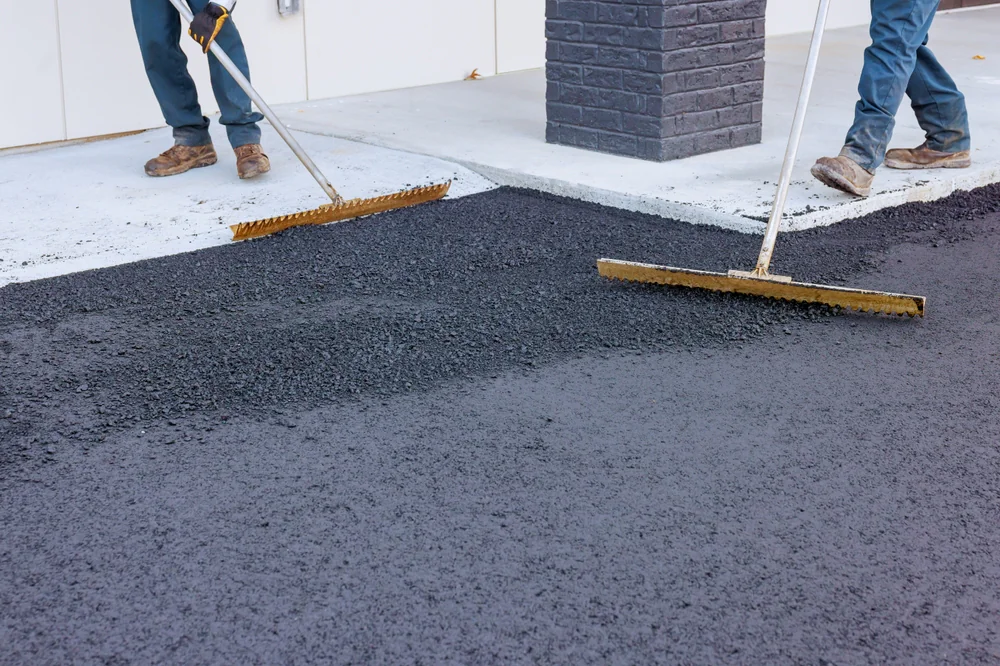
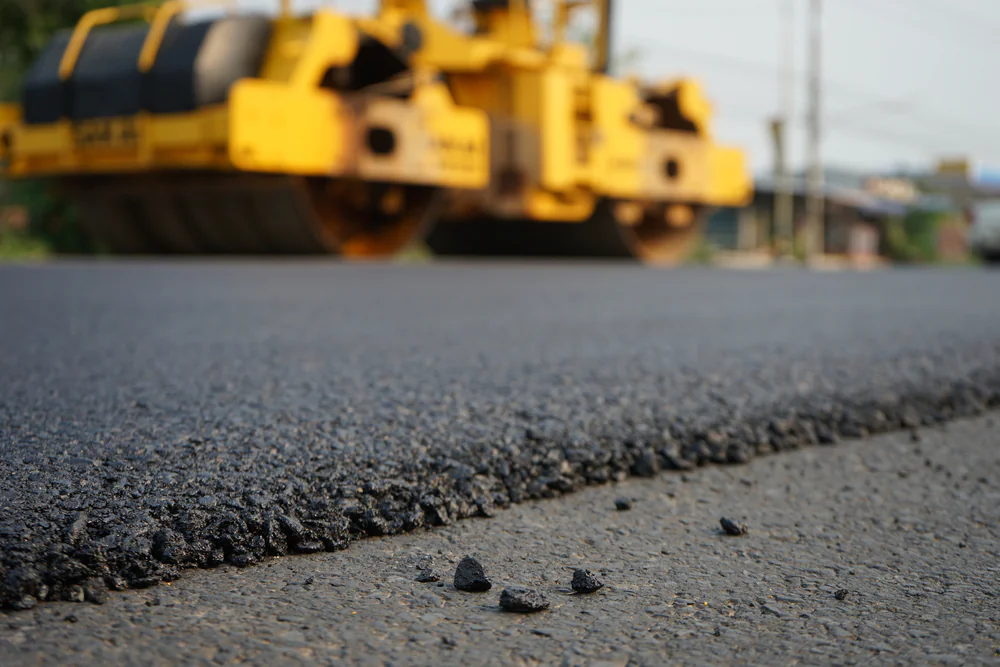
You’re not looking for the cheapest price. You’re looking for pavement that doesn’t crack in two years or settle into low spots that collect water every time it rains.
When commercial paving is done right, your parking lot becomes one less thing to worry about. Customers pull in without dodging potholes. Deliveries happen without scraping undercarriages. You’re not fielding complaints or budgeting for emergency repairs.
That’s what proper base preparation gets you. That’s what full attention on one job at a time delivers. You get a surface built to handle your traffic—whether it’s daily employee parking or heavy truck deliveries—and a contractor who shows up when they say they will and finishes when they say they will.
We bring hands-on paving experience rooted in a family tradition that dates back to 1948. That’s not marketing language—it’s the reason our crew knows how to read a site, anticipate drainage issues, and adjust for Riegelsville’s seasonal freeze-thaw cycles before problems show up.
We handle everything from small business parking areas to large industrial paving projects across Bucks County and the Lehigh Valley. Every project gets the same level of care, whether it’s a 10-space lot or a 100-space facility. We stay involved from estimate to completion, and our crew focuses on one job at a time instead of bouncing between sites.
Riegelsville-area property owners deal with real weather, real traffic, and real consequences when pavement fails. Our approach is straightforward: do the prep work right, communicate clearly, and build surfaces that last.
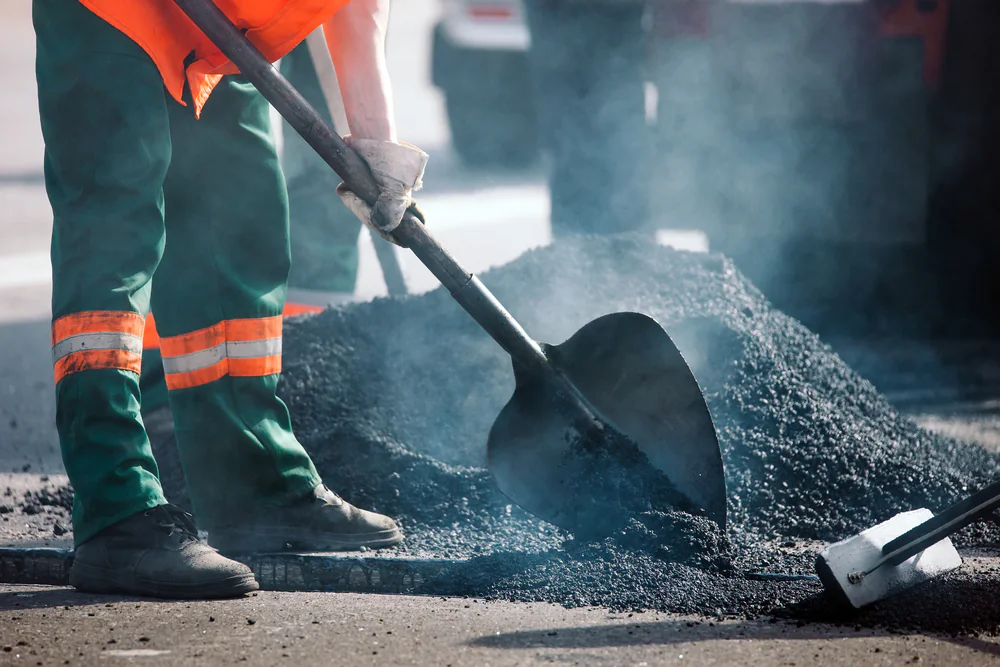
Commercial paving starts with an honest site assessment. Our crew evaluates your existing surface, checks for drainage issues, and identifies any base problems that need addressing before new asphalt goes down.
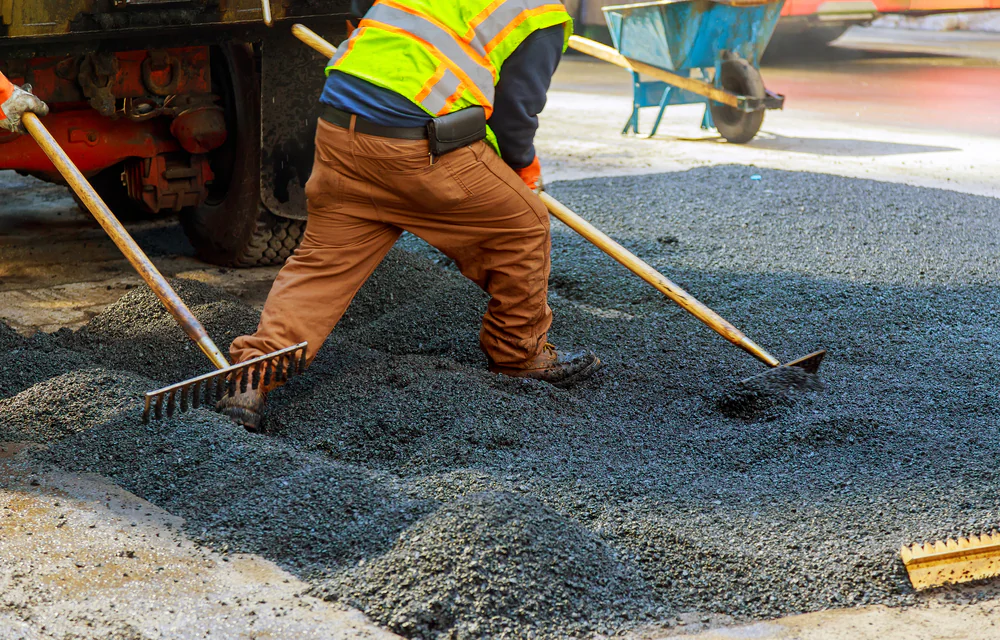
Next comes demolition and removal if you’re replacing old pavement. The existing surface gets stripped away, and the area is graded to ensure proper water flow away from buildings and toward drainage points.
Base preparation is where most contractors either get it right or cut corners. We install a compacted aggregate base, then perform a proof roll—driving heavy equipment over the entire area to identify any soft spots that need reinforcement. This step prevents settling and premature cracking.
Once the base passes inspection, a binder layer goes down. This is the structural foundation of your pavement, made from aggregate and oil, and it needs 24-48 hours to cure properly.
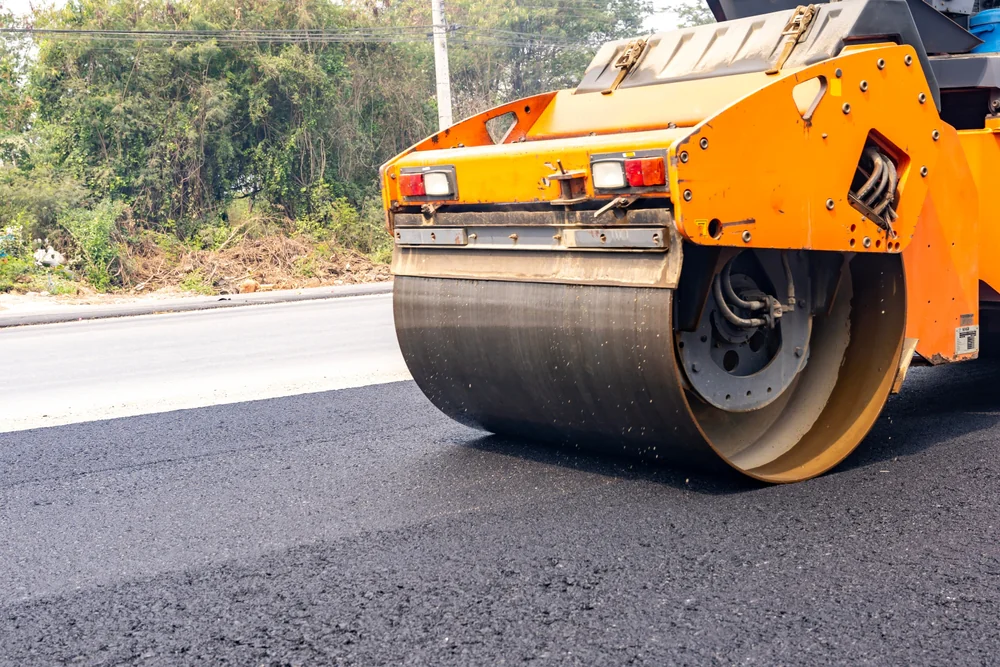
The surface layer comes next—the smooth, finished asphalt you’ll see every day. It’s applied hot, compacted with a roller, and finished to create proper drainage and a clean appearance. If your lot connects to existing pavement, we create smooth transitions so there’s no jarring bump between old and new sections.
Final steps include line striping, ADA-compliant markings, and any additional features like speed bumps or bollards. You’re left with a functional, code-compliant parking area ready for traffic.
Ready to get started?
Commercial paving in Riegelsville means dealing with Pennsylvania weather—freeze-thaw cycles that test every seam, summer heat that can soften poorly mixed asphalt, and spring runoff that exposes drainage problems. Your parking lot needs to handle all of it without turning into a maintenance nightmare.
Our commercial paving services cover new installation, full replacement, and overlay work depending on your existing conditions. The process includes proper grading and drainage design, because standing water is the fastest way to destroy pavement. Every project includes base stabilization, proof rolling, and compaction that meets commercial standards for your expected traffic load.
In the Riegelsville area, commercial properties range from small professional offices to industrial facilities with heavy truck traffic. Each one has different requirements. A retail parking lot needs smooth surfaces and clear striping. An industrial yard needs thicker asphalt and reinforced edges where trucks turn. We size the project to match actual use, not a one-size-fits-all template.
We also handle timing to minimize disruption. Some businesses can shut down a section at a time. Others need weekend or off-hours work. We coordinate around your operational needs and provide realistic timelines—not optimistic guesses that turn into delays.
Timeline depends on your lot size and scope of work. A typical small-to-medium commercial parking lot takes 3-7 days from start to finish, including cure time before you can allow full traffic.
That breaks down roughly like this: demolition and base prep take 1-2 days, binder application and curing take 1-2 days, and final surface paving and striping take 1-2 days. Weather can extend timelines—asphalt needs specific temperature conditions to install properly, and rain stops work completely.
For disruption, we can phase the work to keep part of your lot accessible. If you have multiple entrances, one section gets paved while the other stays open. We work with you to schedule around your busiest times and coordinate with clear signage so customers know where to park. The goal is to get you back to full operation as quickly as possible without cutting corners that lead to callbacks.
The difference shows up in about two years. Low bids usually mean thin asphalt, minimal base prep, or skipped steps that aren’t visible until the pavement starts failing.
Proper commercial paving uses a compacted aggregate base that’s been proof-rolled to find weak spots. The asphalt itself is thick enough for your traffic load—typically 3-4 inches total for standard commercial use, more for heavy trucks. The binder layer and surface layer are applied separately with proper cure time between them.
Cheap jobs skip the proof roll, use thinner asphalt, or rush the work without letting layers cure. You’ll see low spots where water pools, cracks along seams, and premature deterioration at high-stress areas like entrances and turning zones. Fixing those problems costs more than doing it right the first time.
The other difference is communication. Contractors who underbid often disappear when problems arise or hit you with change orders for “unexpected” issues that any experienced crew would have anticipated during the estimate. You’re not just paying for asphalt—you’re paying for expertise that prevents problems and a contractor who stands behind the work.
Commercial paving typically runs $3-$8 per square foot depending on your site conditions, required thickness, and additional features like drainage or curbing. A 10,000 square foot parking lot generally falls in the $30,000-$80,000 range for complete installation.
That’s a wide range because every site is different. If you’re overlaying existing pavement in good condition, costs are lower. If you need full demolition, extensive base repair, or complex drainage work, costs go up. Thicker asphalt for heavy truck traffic costs more than standard parking lot specs.
The best approach is to get detailed estimates from contractors who actually visit your site. Anyone quoting over the phone without seeing your property is guessing. A proper estimate includes site evaluation, base assessment, drainage review, and a breakdown of what’s included—not just a per-square-foot number.
Also factor in long-term costs. Cheaper installation often means more frequent repairs and shorter lifespan. Well-installed commercial asphalt lasts 15-30 years with basic maintenance like sealcoating every few years. Poor installation might need major repairs in 5-10 years. The math favors quality work.
Start with experience in commercial work, not just residential driveways. Commercial paving involves different specs, heavier traffic loads, ADA compliance, and coordination with business operations. Ask how long they’ve been doing commercial projects and request references you can actually contact.
Look for contractors who do their own site evaluation before quoting. Anyone who gives you a price without visiting your property or asking about your traffic patterns isn’t paying attention to details that matter. You want someone who asks questions about your business, your peak hours, and your drainage concerns.
Check that they’re properly licensed and insured for commercial work. Verify they pull permits when required and understand local codes. Ask about their process—specifically base preparation and proof rolling. If they can’t explain why those steps matter, they probably skip them.
Communication matters as much as technical skill. You need a contractor who returns calls, provides realistic timelines, and keeps you updated when conditions change. Read reviews that mention communication and follow-through, not just the finished product. The best technical work doesn’t help if the contractor disappears when you have questions.
Late spring through early fall offers the best conditions for asphalt paving in Pennsylvania. Asphalt needs temperatures above 50°F to install properly, and the material itself needs to stay hot during application and compaction.
Most contractors book up in peak season (May through September), so schedule early if you want work done during ideal weather. Some contractors can work in shoulder seasons—late March/early April or October/November—if temperatures cooperate, and you might find better availability or pricing.
Winter paving is possible but not ideal. Cold temperatures make asphalt harder to work with and can affect compaction quality. Emergency repairs happen year-round, but planned installations should wait for proper conditions.
For commercial properties, consider your business calendar too. If you’re retail, avoid peak shopping seasons. If you’re seasonal, schedule during your slow period. We work with you to find timing that makes sense for both weather and your operations. Planning ahead gives you more flexibility and better results.
Yes. Fresh asphalt needs time to cure before it can handle full traffic loads. You can typically allow light vehicle traffic after 24-48 hours, but heavy trucks should stay off for at least 3-5 days.
During the first few months, asphalt continues to harden as it cures. Avoid sharp turns with heavy vehicles in the same spot repeatedly—this can create scuffing or divots while the surface is still relatively soft. Power steering turns on hot summer days put the most stress on new pavement.
Keep the surface clean. Oil, gasoline, and other petroleum products can soften asphalt, especially when it’s new. Clean up spills promptly. Avoid parking heavy equipment or dumpsters in the same spot for extended periods during the first few months.
After about six months, consider applying a sealcoat. This protects the surface from UV damage, water infiltration, and chemical spills. Sealcoating every 2-3 years extends pavement life significantly. We provide specific care instructions based on your installation, traffic patterns, and local climate conditions.
Other Services we provide in Riegelsville