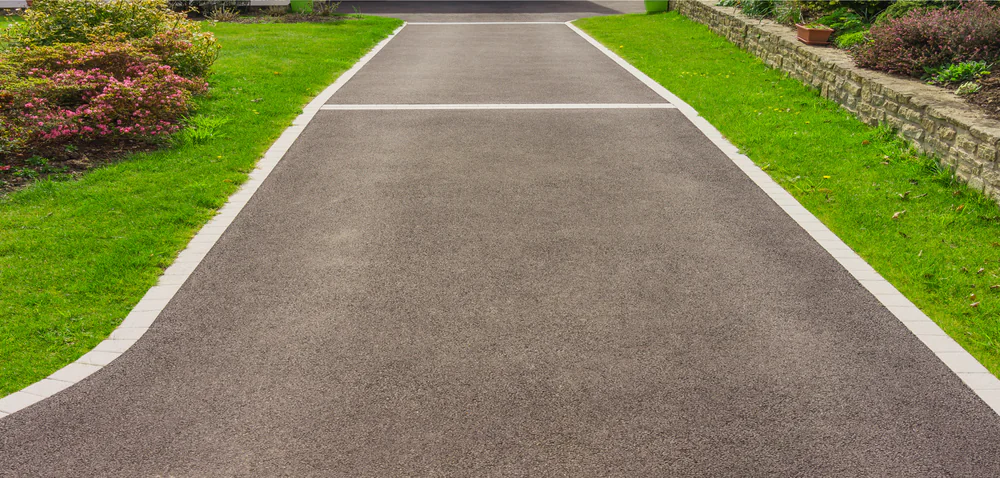
You pull up to a smooth, even surface that doesn’t buckle, crack, or pool water near your garage. No more worrying about whether it’ll survive another brutal Hamilton winter.
A properly installed asphalt driveway means water flows away from your foundation instead of toward it. The difference shows up in fewer basement flooding calls, no ice dams forming at the garage entrance, and pavement that stays intact through freeze-thaw cycles that destroy poorly installed work.
When we handle base preparation correctly and grade your driveway for proper drainage, you’re not calling someone back in 18 months because the surface is already falling apart. You’re getting 15 to 20 years of reliable performance from an investment that protects your property value and eliminates the constant hassle of repairs. The driveway just works, which is exactly what you’re paying for.
We have roots in the paving industry going back to 1948. That’s not a marketing line—it’s decades of understanding what holds up in Hamilton’s climate and what fails.
We handle everything from residential driveways to commercial parking lots. But here’s what sets us apart: we work on one project at a time. Your driveway installation gets our full attention, not divided focus across three other jobs happening simultaneously.
Hamilton’s weather is particularly hard on asphalt. Freezing temperatures, heavy summer heat, drainage challenges, and soil conditions all determine whether your paving lasts or fails early. Local knowledge matters when you’re dealing with Mercer County’s specific climate patterns and township requirements.
First, the existing surface gets removed if you’re replacing an old driveway. If the base underneath is compromised—and it often is on driveways over 15 years old—we rebuild it with compacted gravel. This foundation work determines whether your new asphalt lasts 5 years or 25.
Next comes grading and drainage work. We shape the surface so water runs away from your house and garage, not toward it. Proper slope prevents pooling, which prevents cracks, which prevents the kind of early failure that has you regretting the entire investment.
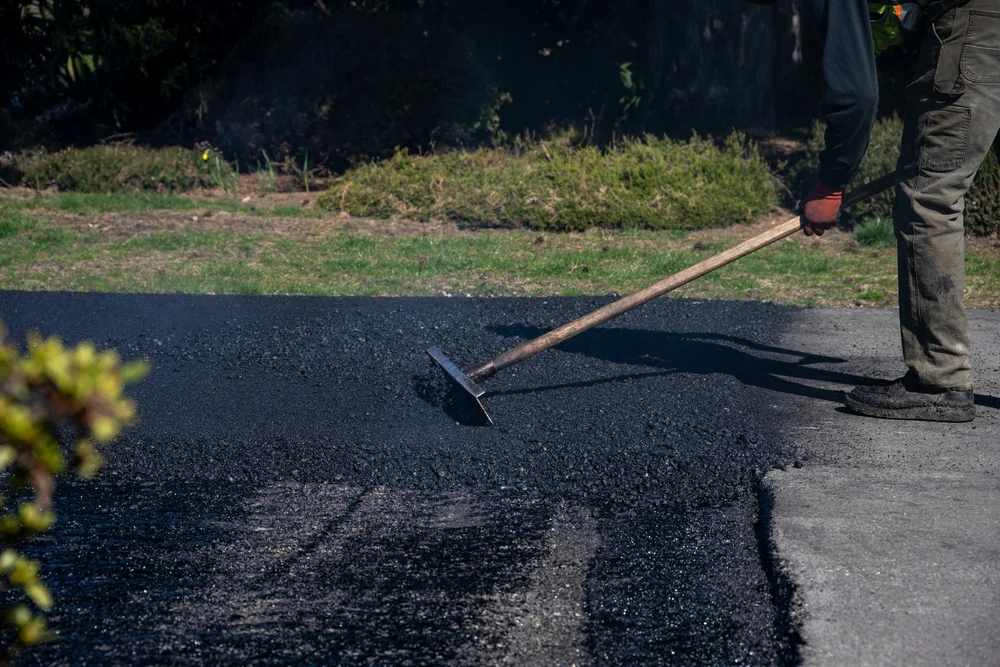
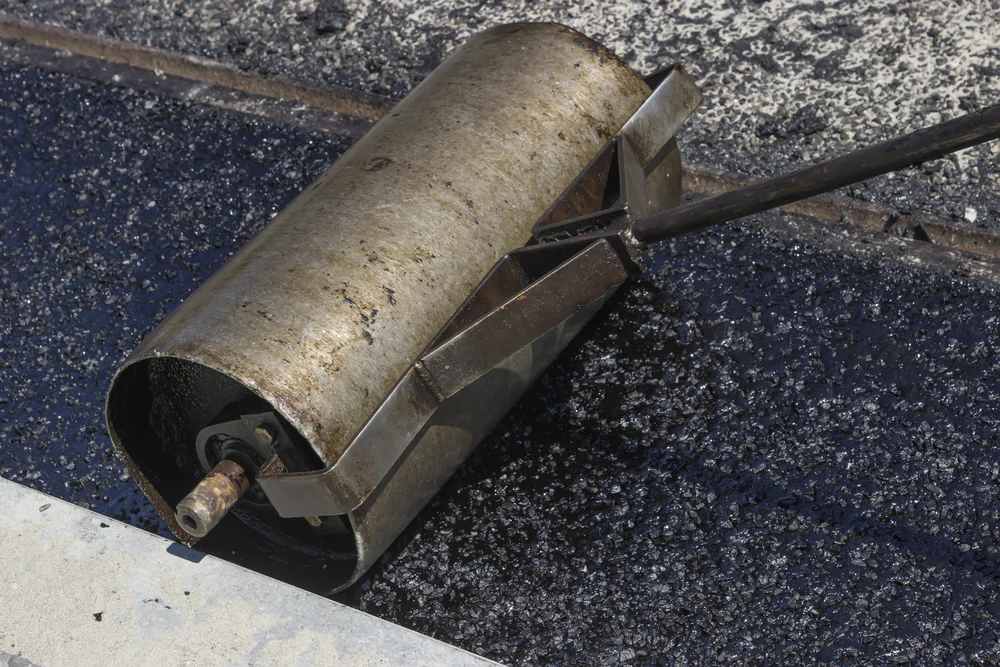
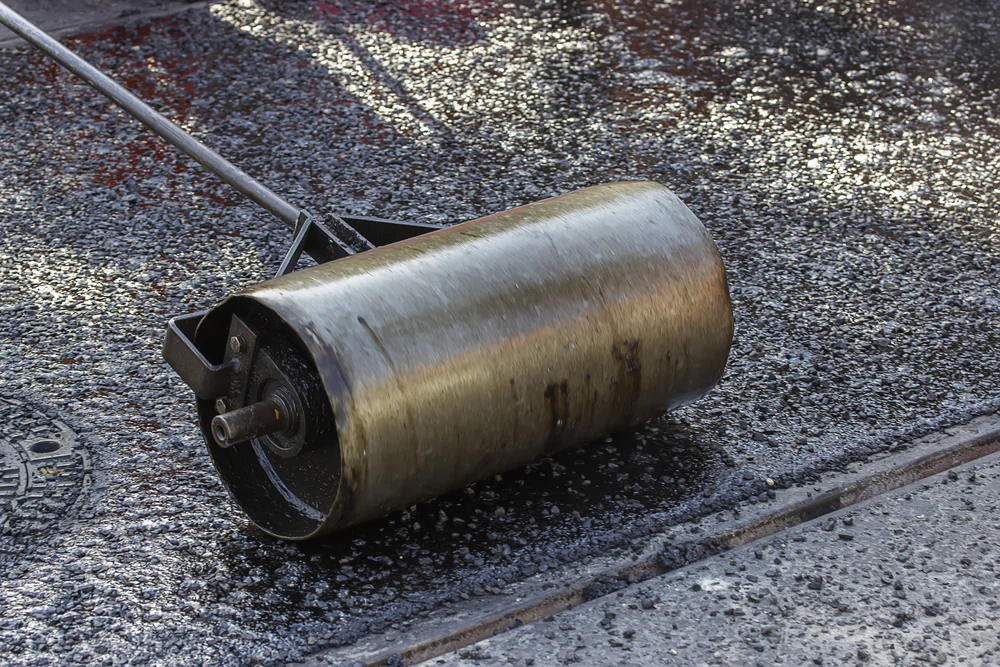
Then the asphalt paving begins. Hot asphalt gets laid down and compacted with heavy rollers to create a dense, durable surface. Thickness matters—residential driveways typically need 2 to 3 inches of compacted asphalt over a solid base. The material needs time to cure before you can drive on it. Weather affects the timeline, but most residential driveway installations take one to two days from excavation to completion. Commercial paving projects take longer depending on size and scope.
Ready to get started?
Hamilton Township has specific requirements for driveway work that most homeowners don’t know about. You need a permit before starting. Your driveway can’t exceed 20 feet wide. It must sit at least 5 feet from property lines. Approved materials include asphalt, concrete, or brick pavers—gravel driveways aren’t permitted.
We already know these regulations. We handle permitting, follow township standards, and make sure the work passes inspection without you chasing down paperwork or dealing with compliance issues.
Quality paving installation includes proper base preparation with compacted gravel for drainage, correct asphalt thickness for your specific use, and careful attention to transitions where your driveway meets the street or garage floor. These details get skipped when contractors rush through jobs or spread their crew too thin across multiple sites.
Hamilton’s freeze-thaw cycles are particularly brutal on asphalt. Water seeps into small cracks, freezes overnight, expands, and turns minor surface damage into major structural problems. This is why base work and drainage matter so much—they keep water from sitting on or penetrating under your pavement. We focus on one project at a time specifically so these critical details don’t get overlooked in the rush to move on to the next job.
Asphalt paving in Hamilton typically runs $3 to $7 per square foot for residential driveways. The exact price depends on your driveway’s size, current condition, and whether you need complete removal and base reconstruction or just resurfacing.
A standard two-car driveway usually costs between $5,500 and $12,000 for full installation. Resurfacing costs less—roughly half the price of replacement—because the base is already in place and you’re only adding a new asphalt layer on top.
Drainage corrections, grading work, and permits add to the total. Any paving contractor quoting significantly below market rate is either cutting corners on materials, skipping proper base preparation, or planning to add surprise charges later. Get a detailed written estimate that breaks down exactly what’s included—materials, labor, base work, grading, cleanup, and disposal. That transparency tells you whether you’re dealing with a professional or someone who’ll disappear when problems show up six months later.
If your driveway has cracks wider than a quarter inch, multiple potholes, or damage covering more than 25% of the surface, replacement usually makes more sense than patching. Repairs work fine for isolated problem areas, but widespread damage means the foundation or asphalt itself is failing.
Age is another factor. Driveways over 20 years old are often candidates for replacement, especially if they’ve never been sealcoated or properly maintained. The base deteriorates over time from water infiltration and ground movement. No amount of surface patching fixes structural problems underneath.
Drainage issues are a major red flag. If water pools in multiple spots or flows toward your foundation instead of away from it, the grading is wrong. You can patch the surface repeatedly, but the real problem is how the driveway was originally sloped. Replacement gives you the chance to correct the grade, install proper drainage, and prevent future water damage to your foundation. Sometimes spending more upfront saves you from bigger problems—and bigger bills—down the road.
A properly installed asphalt driveway in Hamilton should last 15 to 30 years with regular maintenance. The wide range comes down to installation quality, maintenance habits, and traffic volume.
Hamilton’s freeze-thaw cycles are particularly tough on asphalt. Water gets into small cracks, freezes overnight, expands, and makes those cracks bigger. By spring, you’ve got serious damage. This is why proper base preparation and drainage matter so much—they prevent water from sitting on or under the surface where it can cause problems.
Sealcoating every 2 to 3 years extends your driveway’s life significantly. It protects against UV damage, water penetration, and oil spills from vehicles. Small cracks should be filled as soon as you notice them, before they spread and become expensive repairs. Neglect maintenance and even the best paving installation will fail early. Stay on top of it with regular sealcoating and crack filling, and you’ll get decades of use from your investment.
Resurfacing means adding a new 2-inch layer of asphalt over your existing driveway. It works when the base is still solid but the surface is worn, cracked, or faded. You get a fresh, smooth appearance without the cost of tearing everything out and starting over.
Replacement involves removing the old asphalt completely, addressing any base or drainage issues, and installing a new driveway from the ground up. It costs more and takes longer, but it’s necessary when the foundation is compromised or damage is too severe for resurfacing to fix properly.
If your driveway has deep cracks, potholes, or sections that have sunk or buckled, resurfacing won’t solve the problem—it’ll just cover it temporarily. Within a year or two, those same issues will telegraph through the new surface and you’ll be right back where you started. We can assess your specific situation and tell you honestly which option makes sense. Don’t let anyone talk you into resurfacing when replacement is what you actually need. The wrong choice just wastes your money.
Start by verifying they’re properly licensed and insured. This protects you if someone gets injured on your property or equipment damages your house during the project. Ask to see proof—any legitimate contractor provides it without hesitation.
Check their reviews on Google, Angie’s List, or other platforms. Look for patterns in what customers say about communication, quality, and whether the paving contractor stood behind their work after the job was done. A few negative reviews aren’t necessarily a dealbreaker, but pay attention to how the company responded and whether the same complaints appear repeatedly.
Get a detailed written estimate that breaks down materials, labor, timeline, and what’s included. Be skeptical of quotes that seem too good to be true—they usually are. Ask about their process for base preparation, grading, and drainage. If they can’t explain it clearly or seem rushed to move on, that’s a red flag. A good contractor takes time to assess your property, answer questions, and explain why they’re recommending certain approaches. That consultation tells you whether they’re focused on doing the job right or just getting your signature.
Yes, Hamilton Township requires a permit for driveway paving work. The application fee is $30 and permits stay valid for one year from the issue date. You’ll need to schedule inspections before pouring any concrete or laying asphalt, and again after the work is completed.
Hamilton has specific requirements: driveways can’t exceed 20 feet wide, must sit at least 5 feet from property lines, and have to use approved materials like asphalt, concrete, or brick pavers. Stone and gravel driveways aren’t permitted. If you’re widening an existing driveway, you’ll need to submit a plot plan with your application.
We handle the permitting process for you. We know the local regulations, submit the paperwork correctly, and coordinate inspections so you don’t have to deal with township offices. If a contractor tells you a permit isn’t necessary or tries to skip this step, walk away. Unpermitted work can cause serious problems when you try to sell your property or file an insurance claim after damage occurs.
Other Services we provide in Hamilton