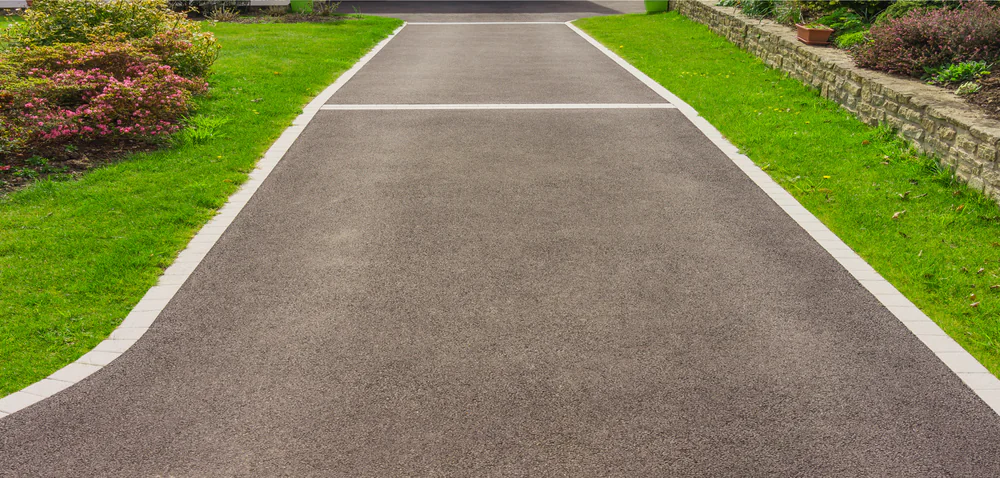
You’re not just getting a smooth surface. You’re getting a driveway that drains properly so water doesn’t pool near your foundation. You’re getting a base that’s built thick enough to support your vehicles without cracking a year later. You’re getting a surface that can handle New Jersey winters without heaving or crumbling when the freeze-thaw cycles hit.
When the work’s finished, you pull into a driveway that looks clean, feels solid, and works the way it should. No dips where water collects. No edges that crumble under tires. No wondering if you made the right call.
That’s what happens when a crew takes the time to do it right—proper grading, the correct base depth, quality materials, and attention to the details that most people won’t see but will definitely feel.
We bring more than 75 years of paving knowledge to Hamilton Square. Our roots go back to 1948, and that experience shows in how we approach every driveway, parking lot, and paving project.
Here’s what sets us apart: one crew works on one job at a time. That means when we’re on your property, we’re fully focused on your project—not rushing off to the next one. We treat every client the same way, whether it’s a small residential driveway or a large commercial lot.
We’ve earned five-star reviews on Angie’s List and built a reputation in Mercer County for being straightforward, reliable, and easy to work with. If you’re in Hamilton Square or anywhere in Hamilton Township, you’re working with a local team that understands how the climate here affects asphalt and knows how to build for it.
First, the old surface gets removed if needed. That means breaking up and hauling away the existing asphalt or concrete so you’re starting with a clean slate. If your driveway’s in rough shape, this step is essential—you can’t build something solid on top of a failing base.
Next comes grading and base preparation. This is where drainage gets handled. The ground needs to slope away from your house so water doesn’t run toward your foundation. A compacted stone base goes down next—usually four to six inches of crushed stone that’s packed tight. This is what keeps your driveway from settling or shifting over time.
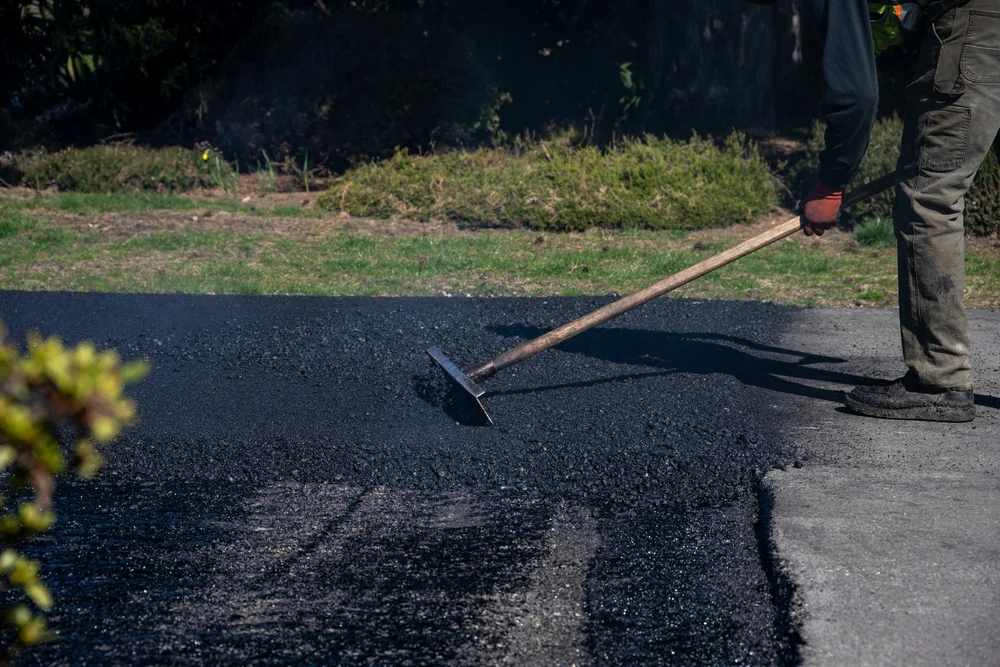
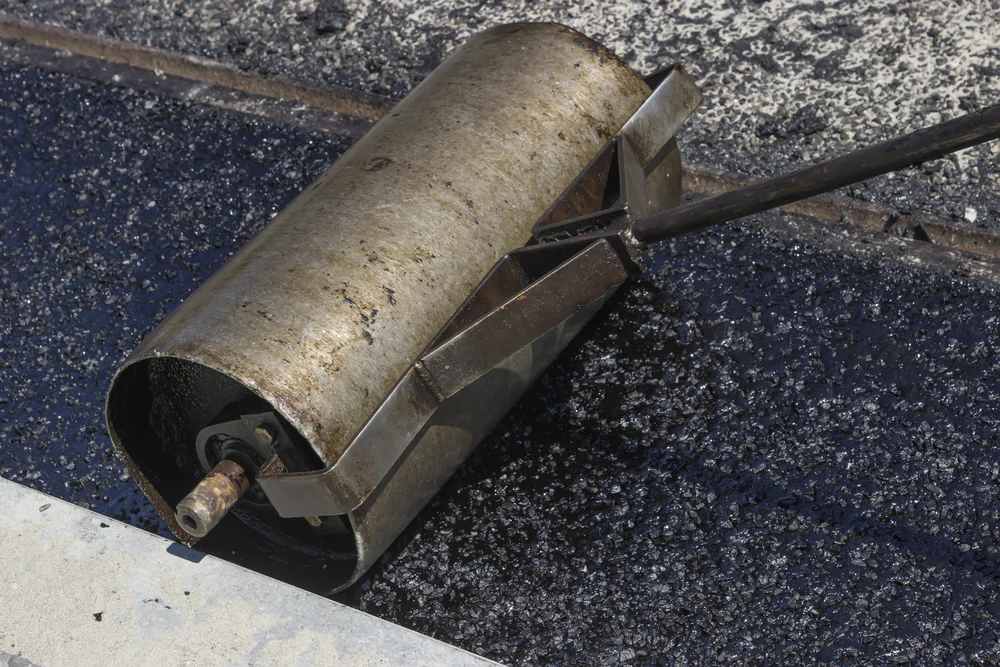
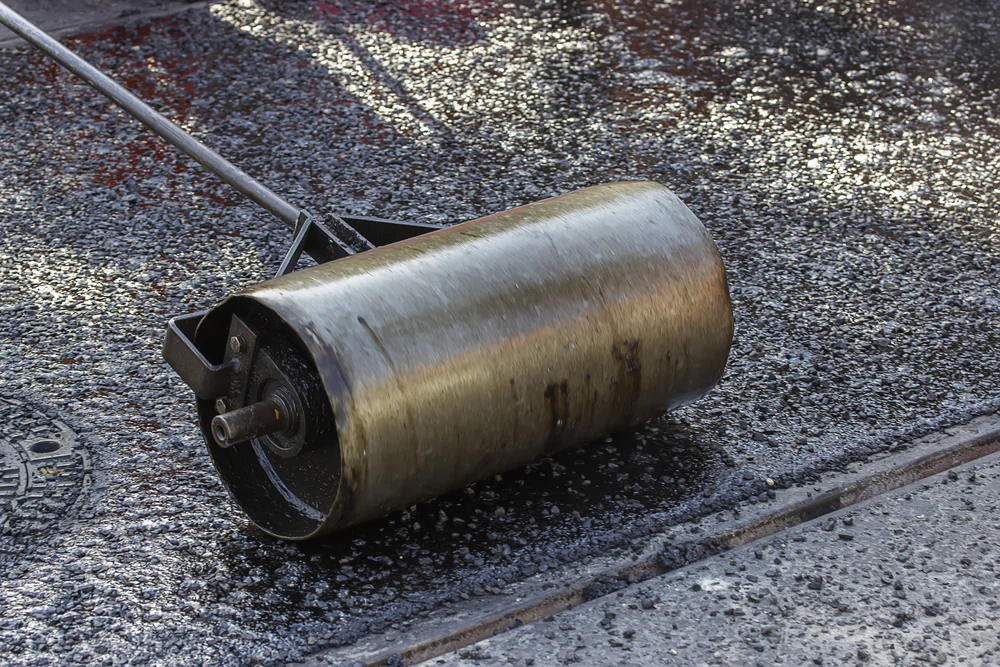
Then the asphalt goes down. For residential driveways, that’s typically two to three inches of hot asphalt, laid smooth and compacted with heavy equipment while it’s still warm. The edges get shaped, the transitions to your garage or the street get blended, and everything gets rolled to create a dense, even surface. Within a day or two, you can drive on it carefully. Full curing takes about a month, but you’ll be using your driveway long before that.
Ready to get started?
When you’re getting driveway paving done in Hamilton Square, you should expect a few key things. Removal of the old surface if it’s damaged or failing. Proper site grading so water drains away from your home—this matters more than most people realize, especially in an area that gets as much rain as Mercer County does. A thick, compacted stone base that prevents settling. And asphalt that’s laid at the right thickness for your needs.
Hamilton Township has specific requirements for driveway work. You’ll need a permit, which costs around $30 and is good for a year. The township standard calls for two inches of compacted asphalt over at least four inches of stone base. We handle projects in line with these local codes, so you don’t have to worry about compliance issues down the road.
You should also know what happens after installation. New asphalt needs time to fully cure—about 30 days. You can drive on it gently after a day or two, but avoid sharp turns or heavy loads for the first week. And plan to sealcoat every two to three years. That’s what protects the surface from UV damage, water infiltration, and the wear that comes from New Jersey’s weather extremes.
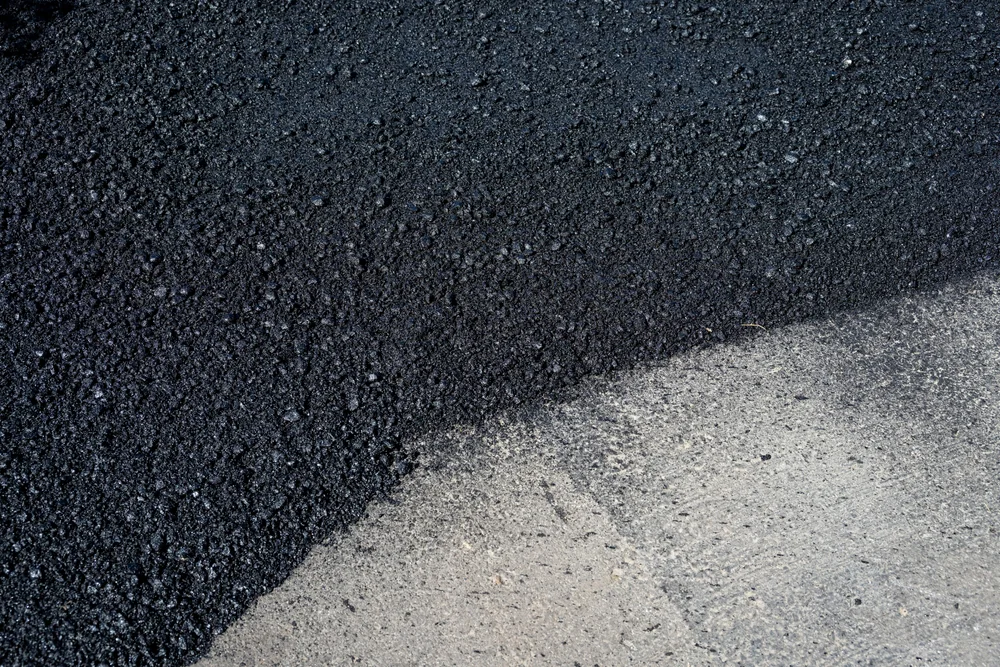
For most residential driveways in Hamilton Square, you’re looking at somewhere between $4 and $7 per square foot. That price typically includes removing the old surface, grading, installing a stone base, and laying new asphalt. The final cost depends on the size of your driveway, how much prep work is needed, and whether there are drainage issues that need to be addressed.
A standard two-car driveway might run anywhere from $4,000 to $8,000, but that’s a rough estimate. If your driveway has a lot of slopes, needs extra grading, or requires thicker asphalt for heavy vehicles, the price goes up. If you’re just doing an overlay on top of existing asphalt that’s still in good shape, it’ll cost less because there’s no demolition or base work involved.
The key is getting a detailed estimate that breaks down what’s included. That way you know exactly what you’re paying for and you’re not surprised later.
With proper installation and regular maintenance, an asphalt driveway in New Jersey should last 20 to 30 years. The lifespan depends on a few factors: how well the base was prepared, how thick the asphalt is, how much traffic it gets, and how well you maintain it over time.
New Jersey’s climate is tough on driveways. You’ve got freezing winters that cause the ground to heave, hot summers that soften asphalt, and plenty of rain that can erode a weak base. That’s why the installation quality matters so much. A driveway with a solid stone base, proper drainage, and the right asphalt thickness will hold up much better than one where corners were cut.
Maintenance plays a big role too. Sealcoating every two to three years protects the surface from water and sun damage. Fixing small cracks as soon as they appear prevents them from turning into bigger problems. If you stay on top of these things, your driveway will last decades.
Yes, Hamilton Township requires a permit for driveway paving work. The permit costs $30 and is good for one year from the date of issue. You’ll need to submit a Driveway-Parking Area Permit application to the Engineering Office before work begins.
If you’re just resurfacing your existing driveway with new asphalt, you need a permit. If you’re only sealcoating, you don’t. If you’re widening your driveway, you’ll need to include a plot plan with your application. The township also requires an inspection after the work is done, so we make sure to schedule that.
Most reputable paving contractors in Hamilton Square are familiar with the local permit process and can either handle it for you or walk you through what’s needed. The township standard calls for at least two inches of compacted asphalt over four inches of stone or recycled concrete, so we make sure your project meets those specs.
Drainage is one of the most important parts of driveway paving, and it’s something a lot of homeowners don’t think about until there’s a problem. If your driveway doesn’t slope away from your house, water will run toward your foundation. That can lead to basement flooding, foundation cracks, and water damage inside your home.
Proper grading means the driveway is sloped so water runs off to the sides or toward the street—not toward your garage or basement. The standard slope is about a quarter inch per foot, which is enough to move water without being noticeable when you’re driving on it. If your property has drainage issues, you might also need catch basins or French drains installed to handle heavy rain.
Water is also the enemy of your driveway’s base. If water gets under the asphalt and saturates the stone base, it weakens the foundation. That leads to cracking, settling, and potholes. A well-graded driveway with good drainage will last much longer because water isn’t constantly undermining the base.
Sometimes, yes—but only if the existing asphalt is in decent shape. If your current driveway has minor surface cracks, some wear, and a solid base underneath, an overlay can be a cost-effective option. An overlay involves laying a new layer of asphalt (usually about two inches) on top of the old surface.
But if your driveway has major cracks, potholes, or areas where the base has failed, an overlay won’t fix the problem. You’ll just be covering up damage that will eventually show through the new asphalt. In those cases, it’s better to remove the old driveway completely, address any base issues, and start fresh.
We’ll assess your existing driveway and let you know whether an overlay makes sense or whether a full replacement is the smarter move. We won’t talk you into an overlay if the base is compromised—it’s a waste of money and you’ll be dealing with the same problems a year or two down the road.
Asphalt and concrete both work for driveways, but asphalt tends to perform better in New Jersey’s climate. Asphalt is flexible, so it can handle the freeze-thaw cycles that happen every winter without cracking as easily as concrete. It also costs less upfront—usually $4 to $7 per square foot compared to $7 to $12 for concrete.
Concrete is more rigid, which makes it prone to cracking when the ground freezes and expands. Once concrete cracks, repairs are expensive and often don’t blend well with the original surface. Asphalt cracks can be filled and sealed much more easily, and the repairs are less noticeable.
Asphalt also gets hot in the summer, which some people see as a drawback. But that same heat helps melt snow and ice faster in the winter. Concrete, on the other hand, can be damaged by road salt over time, leaving pits and stains. For most homeowners in Hamilton Square, asphalt is the more practical choice—it’s affordable, durable, and easier to maintain over the long term.
Other Services we provide in Hamiltonsquare