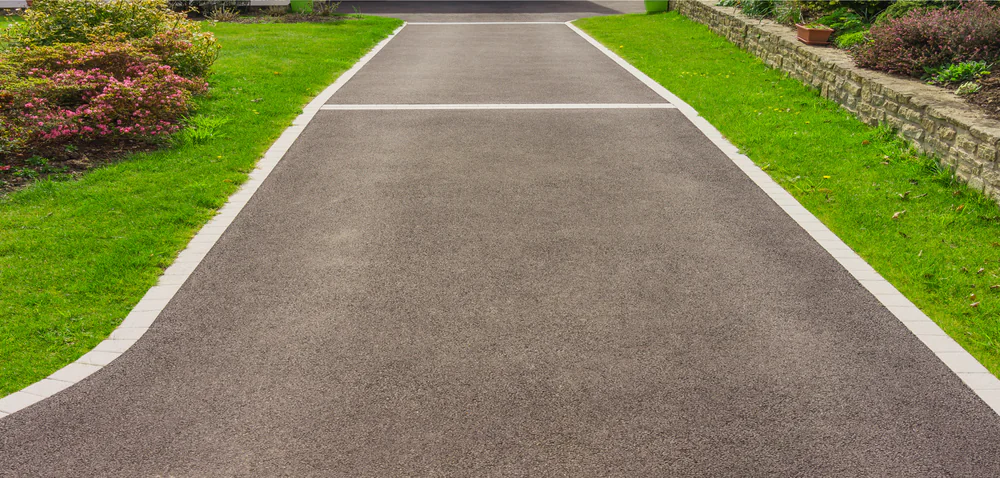
A properly installed driveway isn’t just smooth pavement. It’s a surface that drains water away from your foundation, withstands Pennsylvania’s freeze-thaw cycles, and lasts decades without premature cracking or settling.
You get curb appeal that holds its value. You get a driveway that handles your vehicles, your weather, and your daily use without constant repairs. Most importantly, you get peace of mind knowing the job was done with the right materials, the right process, and the right expertise from start to finish.
That’s what separates a driveway that lasts 15 years from one that lasts 30. The difference isn’t luck—it’s in the details most contractors skip.
We bring family expertise dating back to 1948 to every driveway, parking lot, and commercial project in Warrington. That’s 76 years of understanding what works in Pennsylvania’s climate and what doesn’t.
We handle everything from residential driveways on the quiet streets near Bristol Road to commercial parking lots serving Warrington’s business community. Every project gets the same approach: one crew, full attention, no shortcuts. Whether you’re in the established neighborhoods near Street Road or the newer developments throughout Bucks County, you’re working with contractors who treat your property like their own.
Warrington homeowners know quality matters. With median home values well above $500,000, you’re not looking for the cheapest option—you’re looking for the right one.
First, the existing surface comes out. Whether it’s old asphalt, concrete, or gravel, everything gets removed down to a clean base. This isn’t optional—trying to pave over failing materials just transfers the problem to your new driveway.
Next comes grading and drainage. This is where most contractors either get it right or set you up for problems. The ground gets sloped so water runs off, not toward your foundation or into low spots where it pools and freezes. In Warrington’s climate, improper drainage means premature failure.
Then the sub-base goes in—typically 4 to 8 inches of crushed aggregate, compacted in layers. This is the foundation that keeps your driveway stable through temperature swings and heavy use. Skimp here, and you’ll see cracks and settling within a few years.
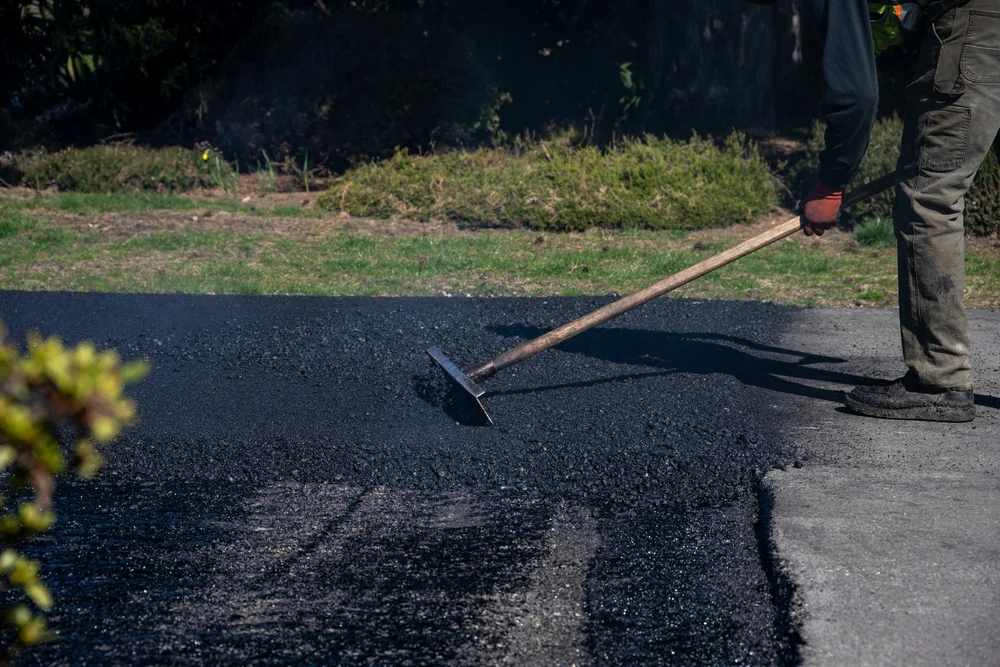
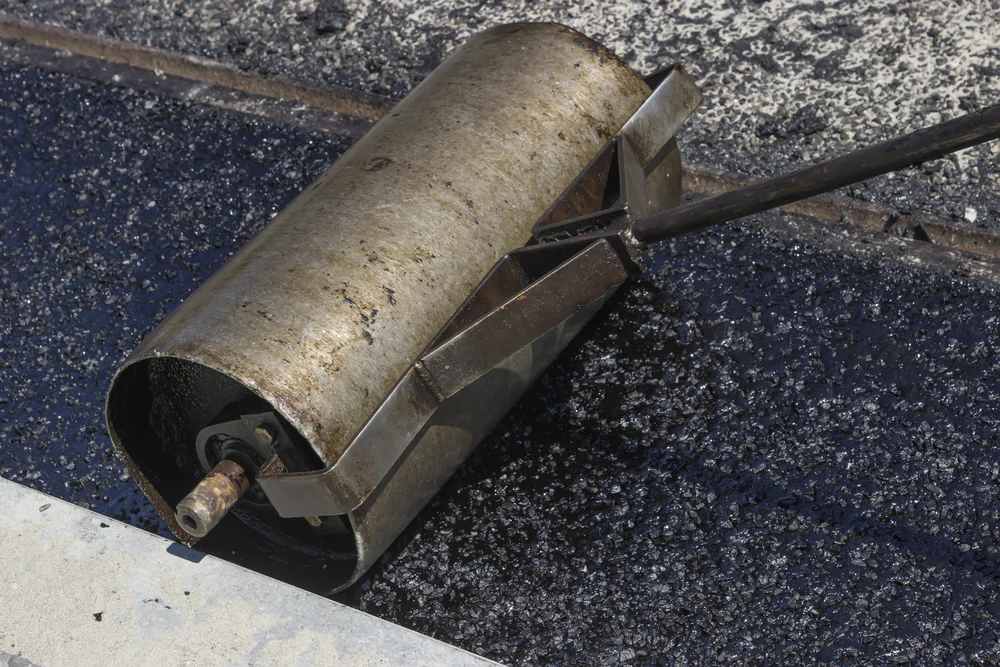
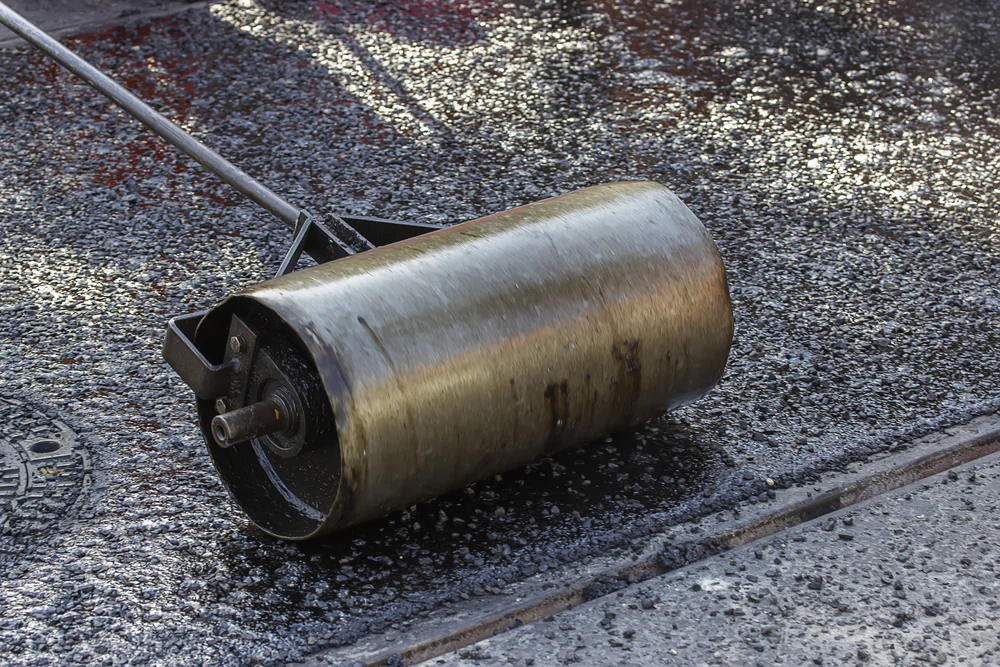
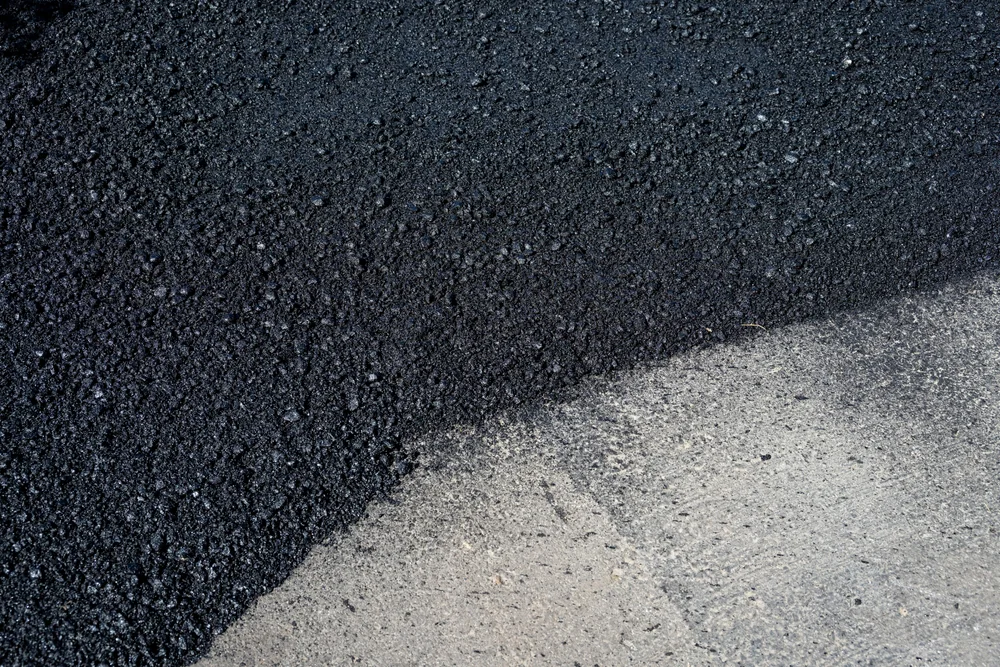
After the sub-base is tested for soft spots and stability, the asphalt binder layer goes down, followed by the surface course. This is the smooth, finished asphalt you’ll drive on—a mix of aggregate, sand, and oil that gets compacted with heavy rollers until it’s dense and uniform.
Finally, the transitions get finished. Where your new driveway meets the street, existing pavement, or walkways, everything gets blended smoothly so there are no jarring edges or drainage problems. Most residential driveways take at least two days—one for prep and base work, one for asphalt installation.
Ready to get started?
When you’re getting a driveway installed in Warrington, you should know exactly what you’re paying for. That includes demolition and removal of your old surface, proper grading for drainage, a compacted aggregate sub-base, and the asphalt installation itself—both binder and surface layers.
You should also get clear communication throughout. That means accurate estimates before work starts, updates on scheduling, and answers to your questions without runaround. It means showing up when promised and leaving your property clean when the job’s done.
Warrington’s housing stock includes everything from established single-family homes to newer developments, and each property has its own drainage patterns, access considerations, and site conditions. A driveway on a sloped lot near County Line Road needs different solutions than a flat driveway in a newer subdivision. That’s where experience matters—knowing how to adapt the process to your specific property, not just following a cookie-cutter approach.
For commercial properties, the same principles apply but at a larger scale. Parking lots need thicker asphalt, more robust drainage systems, and careful planning around business operations. Whether it’s a small office lot or a larger commercial space, the goal is the same: a surface that performs reliably for decades.
Most residential driveways take a minimum of two days to install properly. Day one covers demolition of your existing surface, grading and drainage work, and installation of the aggregate sub-base. Day two is for the asphalt installation—laying the binder course and surface layer, then compacting everything with heavy rollers.
That timeline assumes normal conditions. If your property has drainage issues that need correction, soft soil that requires extra base material, or access challenges that slow equipment movement, it could take longer. Weather also plays a role—asphalt needs certain temperature conditions to install correctly, so work gets scheduled around Pennsylvania’s climate.
You won’t be able to drive on your new driveway immediately. We recommend waiting 24 to 48 hours before driving on fresh asphalt, and you should avoid parking in the same spots or turning your steering wheel while stationary for the first week or so. The asphalt continues curing for several months, which is why sealcoating should wait at least three months, and often up to a year, after installation.
An overlay means installing new asphalt directly over your existing driveway, while full replacement means removing everything and starting fresh. The right choice depends entirely on what’s underneath and what’s causing your current problems.
Overlay works when your existing asphalt is structurally sound—no major cracks, the base is stable, and you’re mainly dealing with surface wear. It’s faster and costs 20 to 30 percent less than full replacement. But if your driveway has drainage problems, a failing base, cracks wider than a quarter inch, or areas that have settled, an overlay just covers up problems that will come back through your new surface within a few years.
Full replacement costs more upfront but gives you a properly built driveway from the ground up. You get correct grading for drainage, a new compacted base that won’t shift or settle, and asphalt that’s not compromised by what’s underneath. For most driveways showing significant age or damage, replacement is the smarter investment. You’re paying once for a driveway that lasts 20 to 30 years instead of paying for an overlay now and dealing with the same problems again in five years.
Asphalt driveway installation in the Warrington area typically runs $7 to $15 per square foot, depending on site conditions, access, and the scope of work. For a standard two-car driveway around 600 square feet, you’re looking at roughly $4,200 to $9,000 for complete installation.
That range covers demolition and removal of your existing driveway, proper grading and drainage work, a compacted aggregate base, and installation of the asphalt binder and surface layers. If your property needs additional drainage solutions, has access challenges that require smaller equipment, or involves more extensive grading work, costs go up. If you’re doing a simple overlay on a driveway that’s in good structural condition, costs come down.
The cheapest bid isn’t always the best value. A contractor who quotes significantly lower than others is probably cutting corners somewhere—thinner asphalt, inadequate base material, or skipping proper drainage work. Those shortcuts cost you more in the long run when your driveway fails prematurely. Get detailed estimates that break down what’s included, compare apples to apples, and choose based on the complete picture, not just the bottom-line number.
Most premature driveway failures come down to three things: inadequate sub-base, poor drainage, or improper installation. The sub-base is the compacted aggregate layer underneath your asphalt—it’s the foundation that keeps everything stable. If a contractor skimps on base material, doesn’t compact it properly, or fails to address soft spots in the underlying soil, your driveway will settle, crack, and fail no matter how good the asphalt on top is.
Drainage is the other major culprit. Water is asphalt’s enemy. When water gets underneath your driveway and freezes—which happens constantly during Pennsylvania winters—it expands and creates pressure that cracks the surface. If your driveway wasn’t graded to shed water away from the pavement, or if low spots allow water to pool, you’re set up for failure. Proper grading and drainage planning during installation prevent these problems.
Installation quality matters too. Asphalt needs to be installed at the right temperature, compacted to the correct density, and finished properly at the edges and transitions. Rushing the job, working in poor weather conditions, or using substandard materials all lead to driveways that don’t perform. That’s why experience and process matter—contractors who’ve been doing this for decades know what works and what doesn’t in your local climate.
Don’t sealcoat a new asphalt driveway for at least three months, and ideally wait six months to a year. Fresh asphalt needs time to cure fully before you seal it. The oils in new asphalt need to oxidize and harden, and sealing too early traps those oils and prevents proper curing.
Once your driveway has cured, sealcoating every two to three years helps protect the surface from UV damage, water penetration, and chemical spills like oil or gas. Sealcoating isn’t a structural repair—it won’t fix cracks or failing base—but it does extend the life of a properly installed driveway by protecting the surface layer.
You’ll know your driveway is ready for its first sealcoat when the jet-black color has faded to more of a gray tone. That color change indicates the surface has cured and oxidized enough to accept sealant. We recommend waiting a full year before that first sealcoat, especially if your driveway was installed in late fall or spring when curing happens more slowly. After that initial application, regular sealcoating every few years keeps your driveway looking good and performing well throughout its lifespan.
Start with verifiable experience and local reputation. How long has the company been in business? Can they show you completed projects in your area? Do they have reviews you can check on platforms like Angie’s List or Google? A contractor with decades of local experience and documented customer satisfaction is a safer bet than someone who just showed up with a truck and a business card.
Get detailed, written estimates that break down what’s included. You want to see line items for demolition, base material and depth, asphalt thickness, drainage work, and any other site-specific requirements. Vague estimates that just give you a total price make it impossible to compare contractors or know what you’re actually getting. Make sure the estimate specifies materials, process, and timeline.
Verify licensing and insurance. Your contractor should be properly licensed for paving work and carry both liability insurance and workers’ compensation. Ask for proof and verify it’s current. Also ask about their installation process—how thick is the base? What type of aggregate? How is drainage handled? A contractor who can clearly explain their process and why they do things a certain way is more trustworthy than one who gives vague answers or tries to rush you into signing.
Other Services we provide in Warrington