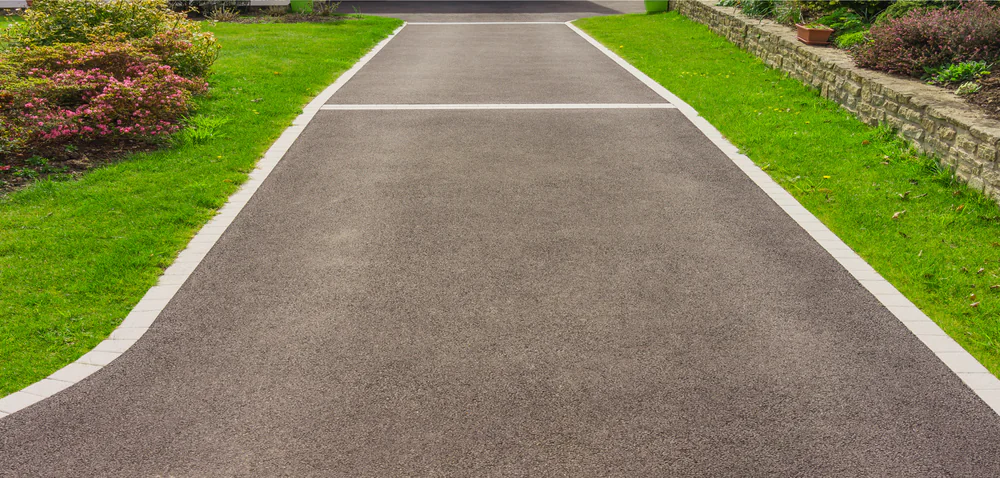
You pull into a smooth, even surface that doesn’t puddle when it rains. No more dodging potholes or watching cracks spread across your driveway every spring.
The asphalt is thick enough to handle your vehicles without sinking or crumbling at the edges. Water drains where it should. Your property looks sharp, and you’re not worried about calling someone back in six months to fix what should’ve been done correctly from the start.
That’s what happens when the base is prepared properly, the grading directs water away from your foundation, and the crew actually knows what New Jersey weather does to asphalt. You get years of use without the constant repairs that come from shortcuts.
We bring over seven decades of asphalt experience to every driveway in Yardville and throughout Hamilton Township. This isn’t a crew that shows up, rushes through your job, and disappears to the next one.
We work on one project at a time. That means your driveway gets our full attention—from the moment we assess your property’s drainage and grading needs to the final pass of the roller. No splitting focus between multiple job sites, no cutting corners to stay on schedule somewhere else.
Yardville homeowners deal with the same challenges every year: freeze-thaw cycles that turn hairline cracks into potholes, heavy rain that pools where it shouldn’t, and summers hot enough to soften poorly installed asphalt. We understand what this area demands from a driveway and build accordingly.
First, we evaluate your property. We look at drainage patterns, soil conditions, and how water moves across your driveway area. If there’s an existing driveway, we determine whether it needs full removal or if the base is salvageable.
Next comes site preparation. This means excavating to the proper depth, grading the base so water flows away from your home, and compacting the foundation. Skipping or rushing this step is how driveways fail early. The base has to be stable and properly crowned.
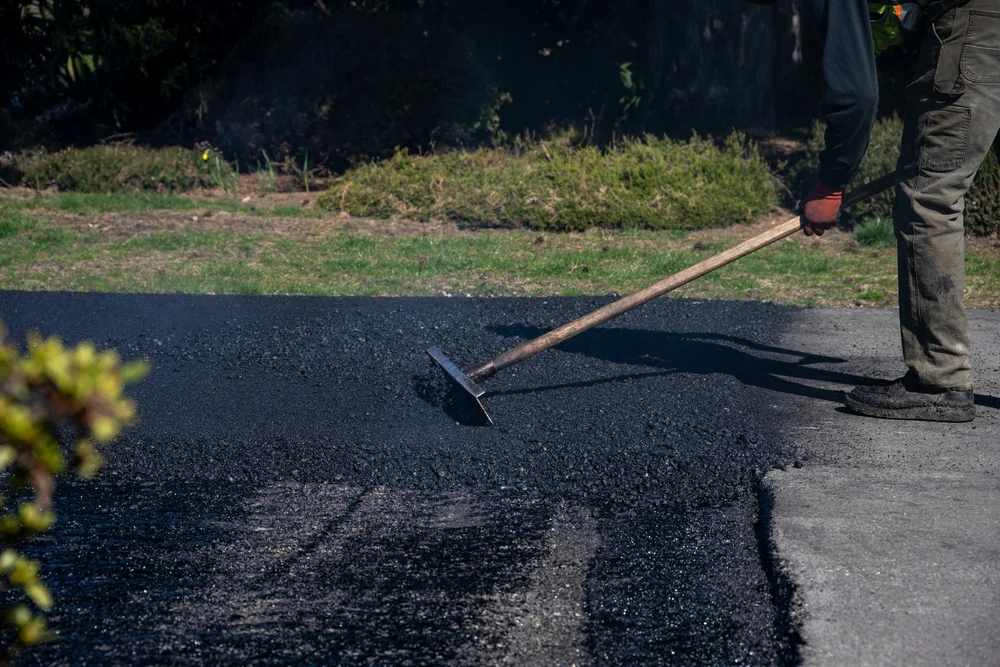
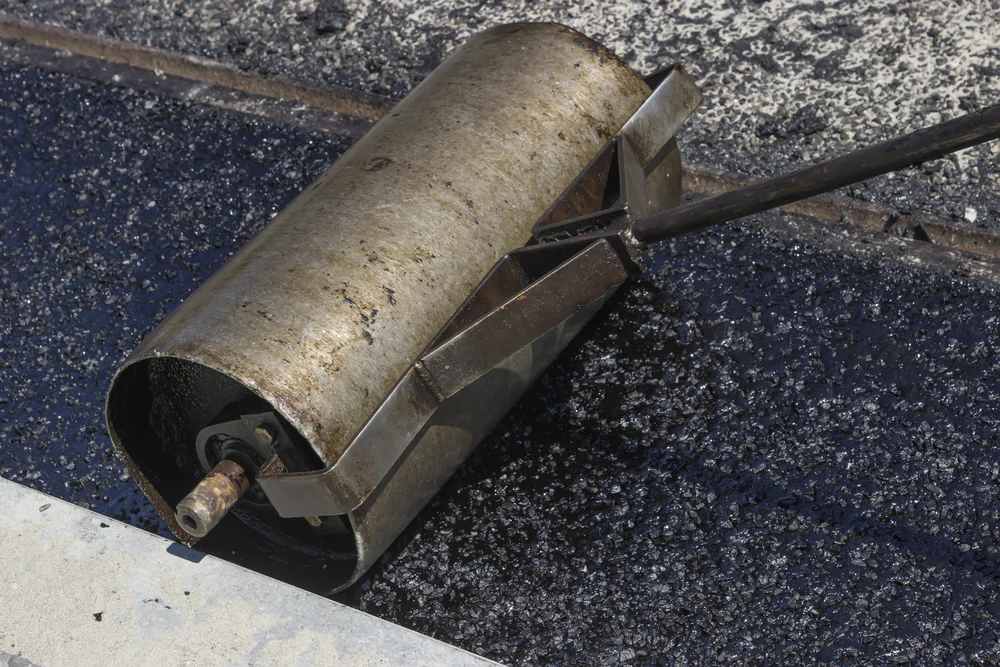
Then the asphalt goes down—typically 3 to 4 inches for residential driveways in Yardville. The material is hot-mix asphalt that bonds correctly and can handle New Jersey’s temperature swings. We compact it in layers, making sure the surface is smooth and even.
After paving, you’ll need to stay off it for at least 72 hours while it cures. Full curing takes about a year, but you can use it carefully after the initial set. Sealcoating comes later—usually within the first year, then every two to three years after that to protect the surface from moisture, UV damage, and chemicals.
Ready to get started?
Every project starts with an honest assessment. You get a clear explanation of what your property needs—whether that’s full removal and replacement, resurfacing, or targeted repairs. No upselling, no vague estimates that balloon later.
The work includes proper excavation and base preparation, grading for drainage, and installation of the asphalt layer at the right thickness for your use. For Yardville properties, that often means addressing water management since this area sits near Crosswicks Creek and deals with significant rainfall. French drains or catch basins get incorporated if your property needs them.
We handle both residential driveways and commercial projects—parking lots, private roads, industrial surfaces. The approach stays the same: assess the specific conditions, prepare the site correctly, and install asphalt that will hold up to the traffic and weather it’s going to face. Hamilton Township properties vary widely in soil type and drainage, so cookie-cutter solutions don’t work here.
You also get transparency throughout the process. We communicate what’s happening, how long each phase takes, and what to expect after we’re done. And if you’re a senior, military member, or first-time customer, specialized discounts apply.
A properly installed asphalt driveway in Yardville should last 15 to 30 years, but that range depends entirely on installation quality and maintenance. The properties that hit 25 or 30 years are the ones with solid base preparation, proper drainage, adequate asphalt thickness, and regular sealcoating every two to three years.
New Jersey’s freeze-thaw cycles are brutal on asphalt. Water seeps into small cracks, freezes overnight, expands, and turns those cracks into larger problems. If your base wasn’t compacted correctly or your driveway doesn’t drain properly, you’ll see failure much sooner—sometimes within 5 to 10 years.
Thickness matters too. Most residential driveways need 3 to 4 inches of asphalt. Go thinner to save money upfront, and you’ll pay for it later in repairs. Regular sealcoating protects the surface from UV damage, moisture penetration, and chemical breakdown from oil or gasoline. Skip that maintenance, and even a well-installed driveway will deteriorate faster than it should.
Asphalt paving in Yardville typically runs $4 to $7 per square foot for residential driveways, though costs vary based on site conditions, existing driveway removal, drainage work, and property access. A standard two-car driveway (around 600 square feet) usually falls between $5,500 and $12,000 depending on what your property needs.
If your existing driveway has to be removed, that adds to the cost. Same with drainage solutions—if water pools on your property or you need French drains installed, that’s additional work. Properties with difficult access, rocky soil, or significant grading requirements will be on the higher end of the range.
Concrete costs more—typically $7 to $12 per square foot—but it’s not necessarily better for New Jersey’s climate. Concrete cracks in freeze-thaw conditions and repairs are harder to blend. Asphalt is more forgiving, easier to repair, and holds up better to road salt. The key is getting an honest assessment upfront so you know exactly what your property requires and what you’re paying for.
If your driveway has isolated cracks, minor surface wear, or small potholes, repairs or resurfacing usually make sense. But if you’re seeing widespread cracking, significant crumbling at the edges, deep potholes, or areas where the base has failed and the asphalt is sinking, replacement is the smarter move.
Here’s why: Repairs work when the base is still solid. You can fill cracks, patch potholes, or add a new layer over the existing surface (called an overlay). But if the foundation underneath is compromised—maybe it wasn’t compacted properly to begin with, or water has been undermining it for years—patching the surface is just temporary. You’ll be back to the same problems within a year or two.
We’ll tell you honestly which route makes sense for your situation. If your driveway is 20+ years old and showing multiple failure points, replacement usually saves you money in the long run compared to constant repairs. If it’s newer and the damage is localized, targeted fixes can buy you several more years. The assessment should be based on what’s actually happening with your driveway, not what’s easiest to sell.
Winter cracking in Yardville comes down to water and temperature. When water gets into small cracks or porous areas of your asphalt, it freezes overnight when temperatures drop. Frozen water expands—by about 9%—and that expansion forces the crack wider. Then it thaws during the day, contracts, and the cycle repeats. Over a single winter, a hairline crack can turn into a significant problem.
If your driveway wasn’t sealed properly or the sealcoat has worn off, water penetrates more easily. Once it’s in there, freeze-thaw damage is inevitable. Poor drainage makes this worse—if water pools on your driveway instead of running off, you’re giving it more opportunity to seep into the asphalt.
The other factor is base preparation. If the foundation under your asphalt wasn’t compacted correctly or doesn’t drain well, water can undermine the base itself. That leads to settling, which causes the asphalt above to crack and buckle. Preventing winter damage means proper installation from the start, good drainage, and regular sealcoating to keep water out of the surface.
You should stay completely off your new asphalt driveway for at least 72 hours after installation. That gives the surface time to cool and set properly. Drive on it too soon, and you risk leaving tire marks, indentations, or other damage that becomes permanent.
After that initial three days, you can drive on it carefully, but the asphalt is still curing. Full curing takes about a year. During that first year, avoid turning your steering wheel while the car is stopped (that can scuff the surface), don’t park heavy vehicles like RVs or loaded trucks in the same spot repeatedly, and be cautious during hot summer days when the asphalt is softer.
Your driveway will harden and strengthen over that first year. Once it’s fully cured, you can use it normally. Sealcoating should happen within 12 to 24 months after installation—not sooner, because you want the asphalt fully cured before sealing. After that first sealcoat, plan on resealing every two to three years to protect the surface and extend its lifespan.
Some towns in New Jersey require permits for driveway work, and regulations vary by municipality. Hamilton Township may have specific requirements depending on the scope of your project, especially if you’re changing the driveway’s footprint, altering drainage patterns, or connecting to a public road.
We know the local permit requirements and can handle that process for you. We’re familiar with Hamilton Township’s codes and any approvals you need before work starts. Don’t assume you can skip this step—unpermitted work can create issues when you try to sell your property or if a neighbor complains.
Permit requirements typically cover things like setback distances, drainage management, and ensuring water from your property doesn’t flow onto neighboring lots or public streets. The process usually isn’t complicated, but it needs to be done correctly. We’ll clarify upfront whether permits are required for your specific project and who’s responsible for obtaining them before any work begins.
Other Services we provide in Yardville