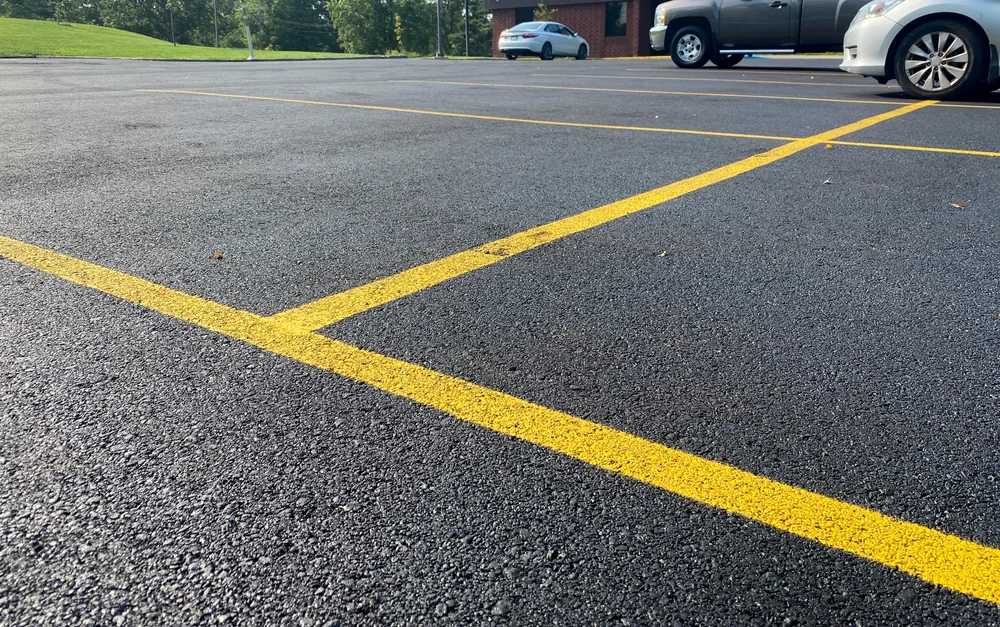
A well-executed parking lot paving project changes how your property functions. Your customers pull in and see a smooth, well-marked surface instead of cracks and faded lines. First impression handled.
But it goes deeper. Proper asphalt installation with the right base prep and drainage keeps water from pooling. That means fewer potholes, less freeze-thaw damage, and a surface that actually lasts through Pennsylvania’s weather swings. You’re not calling for repairs every spring.
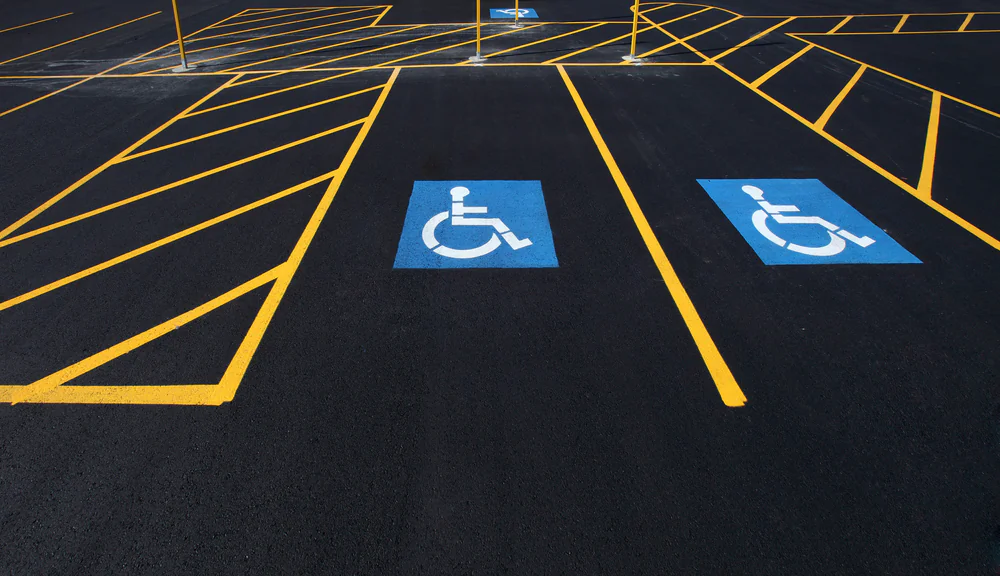
When the job’s done right, you’ve got clear striping that helps traffic flow, accessible spaces that meet ADA requirements, and a surface that reduces your liability. Your property value goes up. Maintenance costs stay predictable. And you’re not second-guessing whether you hired the right paving contractor.
We’ve been in the paving business since 1948. That’s decades of hands-on experience with everything from residential driveways to commercial parking lots and industrial paving projects across the Riegelsville, PA area and beyond.
Our approach is straightforward: one job at a time, full crew attention, no shortcuts. Every project gets treated like it’s the most important one on the schedule, whether it’s a small lot or a complex commercial installation. Our philosophy is simple—treat every client like the top client and find solutions that actually fit the property.
Riegelsville sits right along the Delaware River in Bucks County, and properties here deal with freeze-thaw cycles, drainage issues from varied terrain, and the need for asphalt that can handle both passenger cars and delivery trucks. We know the area, understand what works in local conditions, and back up the work with transparent communication from estimate to final walkthrough.
First, there’s a site assessment. That means looking at what you’ve got—whether it’s an existing lot that needs resurfacing or bare ground that needs full paving installation. We evaluate drainage, check the base condition if there’s existing pavement, and measure everything to give you an accurate quote.
Next comes prep work. If you’re overlaying existing asphalt, that means repairing any significant cracks or damage first so the new layer bonds properly. If it’s a full replacement or new installation, we grade the site, install a compacted base layer, and ensure proper slope for water runoff. This is where most parking lots fail early when contractors cut corners. We don’t skip it.
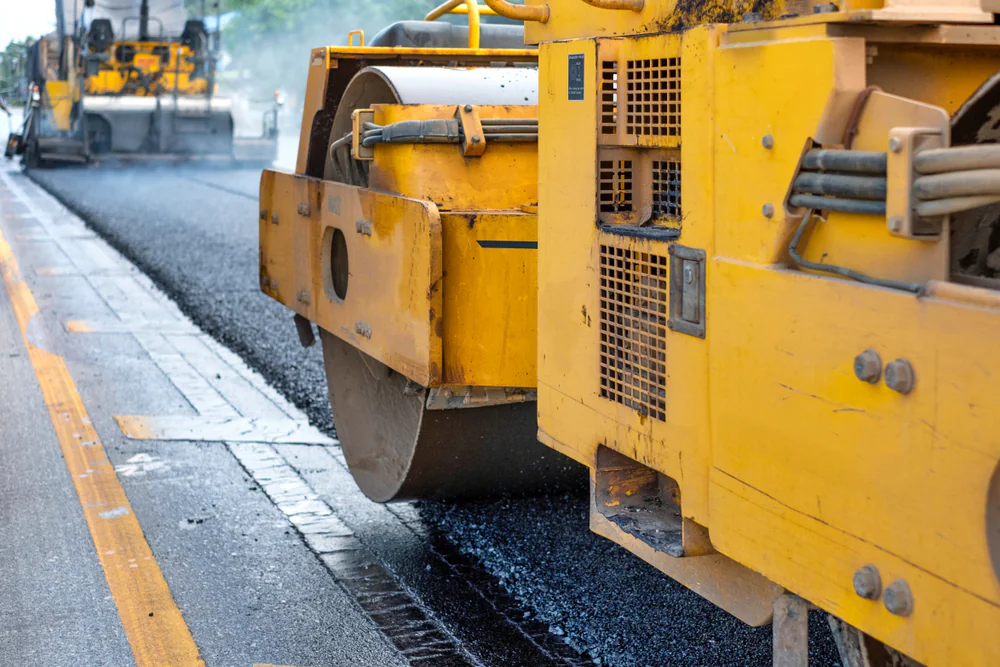
Then the asphalt goes down. Hot-mix asphalt gets laid at the right thickness for your traffic load, then compacted with heavy rollers to create a dense, durable surface. Timing matters—temperature, weather conditions, and curing time all affect how well the pavement performs long-term.
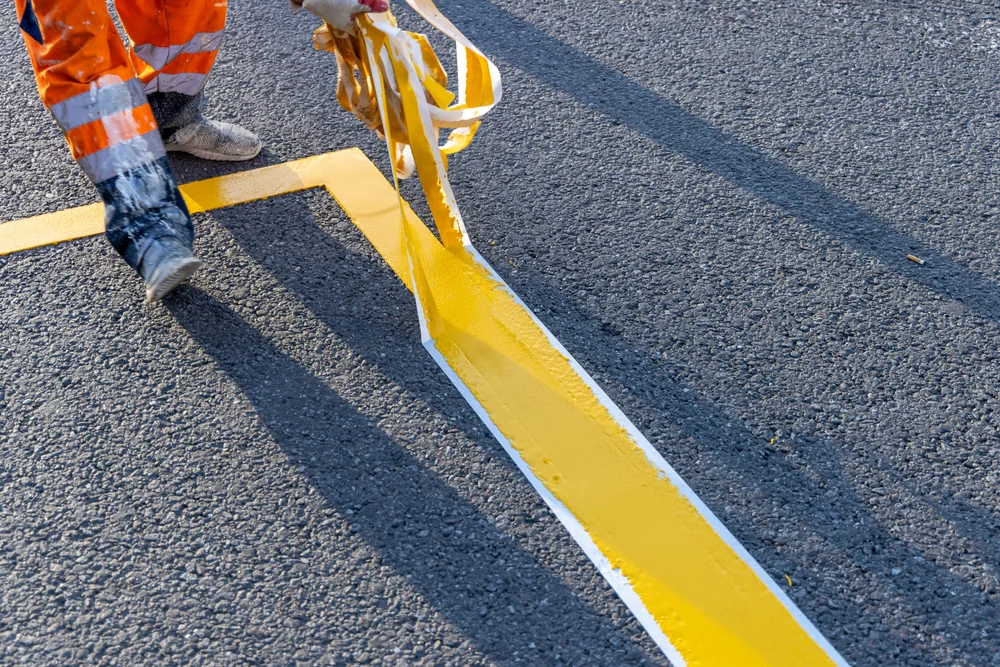
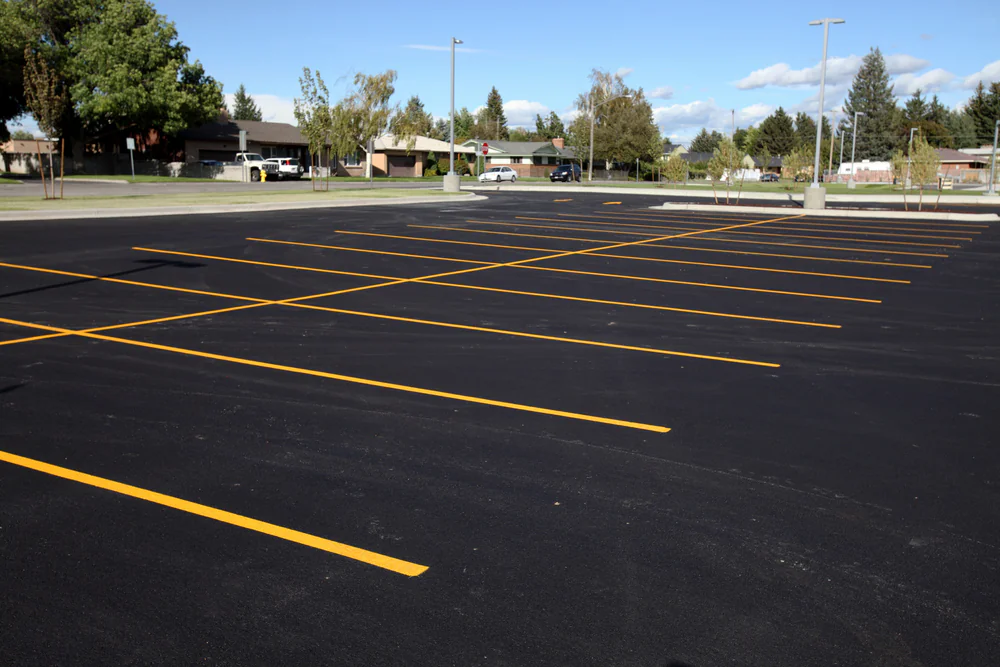
Finally, striping and finishing. Once the asphalt has cured, we mark parking spaces, accessible spots, directional arrows, and any other markings your lot needs. You get a final walkthrough to confirm everything meets your expectations before the job’s called complete.
Ready to get started?
A complete parking lot paving project in Riegelsville, PA covers more than just laying asphalt. You’re getting site evaluation, proper grading and drainage design, base preparation with compacted aggregate, and asphalt installation at the thickness your property requires.
Striping and marking come standard—that includes parking space lines, ADA-compliant accessible spaces with proper signage, directional arrows, and any fire lane or no-parking zones. If your lot needs curbing, we address that too, along with any tie-ins to existing pavement or structures.
For properties in Riegelsville and the surrounding Bucks County area, drainage is critical. The terrain here varies, and Pennsylvania’s weather means heavy rain, snow melt, and freeze-thaw cycles that can destroy a parking lot with poor drainage. We design each commercial paving project with proper slope and water management so your lot doesn’t turn into a pond after every storm.
You also get transparent communication throughout. That means updates on timeline, explanations for any site-specific recommendations, and answers to questions without the runaround. The goal is for you to understand what’s happening and why, not just trust blindly and hope for the best.
A properly installed asphalt parking lot in Pennsylvania typically lasts 20 to 30 years, but that depends entirely on how it’s built and maintained. The key factors are base preparation, asphalt thickness, drainage design, and ongoing maintenance like sealcoating and crack repair.
Pennsylvania’s freeze-thaw cycles are tough on pavement. Water gets into small cracks, freezes, expands, and creates bigger problems. If your lot was installed with proper drainage and a solid compacted base, and you stay on top of sealcoating every few years, you’re looking at the higher end of that lifespan. If corners were cut during installation or maintenance gets ignored, you might see significant deterioration in 10 years or less.
The bottom line: longevity starts with doing it right the first time. Cheap paving installation with inadequate base prep or poor drainage will cost you more in repairs and early replacement than investing in quality work upfront.
It depends on the condition of your existing pavement and base. An overlay—adding a new layer of asphalt on top of the old surface—works when your current lot has minor surface cracks but the base underneath is still stable and properly draining. It’s less expensive and faster than full replacement.
Full replacement is necessary when you’ve got deep cracks, potholes, significant settling, or drainage problems. If water pools in your lot, if the surface is uneven, or if the base has failed, an overlay just covers up problems temporarily. You’ll end up with the same issues showing through the new layer within a year or two.
A good asphalt contractor will assess your lot honestly and tell you which option makes sense. If the base is solid, an overlay saves money and extends the life of your lot. If the base is compromised, replacement is the only option that won’t waste your money. We evaluate every lot individually and recommend what actually fits your situation, not what’s easiest to sell.
Asphalt and concrete both work for parking lots, but they have different costs, maintenance needs, and performance characteristics. Asphalt typically costs less upfront—usually $3 to $8 per square foot installed compared to $4 to $7 for concrete. Asphalt is also faster to install and can be used sooner after installation.
Concrete lasts longer—often 30 to 40 years compared to asphalt’s 20 to 30 years—but it costs more initially and takes longer to cure. Asphalt requires sealcoating every few years to protect against weather and extend its life, while concrete needs less frequent maintenance but is harder and more expensive to repair when damage does occur.
For most commercial properties in Riegelsville, PA and the surrounding area, asphalt makes more sense. It handles Pennsylvania’s freeze-thaw cycles well when properly maintained, it’s more forgiving if you need to cut in for utility work later, and the lower upfront cost makes it accessible for more property owners. Concrete works better for very high-traffic areas or properties where the lighter color and longer lifespan justify the higher initial investment.
Commercial parking lot paving in the Riegelsville, PA area typically runs between $3 and $8 per square foot, but that’s a broad range because every project is different. The actual cost depends on whether you’re doing a full installation from bare ground, overlaying existing asphalt, or completely replacing a failed lot.
Site conditions matter. If your property needs significant grading, drainage work, or base prep, that adds to the cost. If access is tight or the layout is complex with islands and curbing, that affects labor and equipment time. Asphalt thickness also plays a role—a lot that only sees passenger cars needs less thickness than one handling delivery trucks daily.
The best way to get an accurate number is to have us look at your specific property. We provide transparent estimates based on what your lot actually needs, not generic per-square-foot pricing that doesn’t account for your site. You’ll know what you’re paying for and why, with no surprises when the invoice comes.
Most parking lot paving projects take anywhere from a few days to a couple of weeks, depending on size, complexity, and weather. A straightforward overlay on a small lot might be done in two to three days. A full replacement with extensive base work on a larger commercial property could take a week or more.
Weather plays a big role. Asphalt needs to be installed when temperatures are warm enough for proper compaction and curing—typically above 50 degrees. Rain delays work because asphalt can’t be laid on wet surfaces. In Pennsylvania, spring and fall are ideal paving seasons, but summer works too as long as extreme heat doesn’t create issues.
We plan projects to minimize disruption to your business in Riegelsville, PA. That might mean working in phases so you don’t lose all your parking at once, or scheduling work during off-hours if that fits your operation better. You’ll get a realistic timeline upfront and updates if anything changes, so you’re never left guessing when your lot will be usable again.
Yes, sealcoating is essential for extending the life of your asphalt parking lot in Pennsylvania. Sealcoating creates a protective barrier against water, UV rays, chemicals like oil and gas, and the freeze-thaw cycles that cause cracks and deterioration. Without it, your asphalt oxidizes, becomes brittle, and fails much sooner than it should.
The general recommendation is to sealcoat every two to three years, but that can vary based on traffic volume and exposure. A high-traffic lot with heavy use might need it closer to every two years. A lower-traffic lot in good condition might stretch it to three or four years. The key is not to wait until the pavement is already cracking and breaking down—sealcoating is preventive, not a repair.
Most new asphalt should be sealcoated about six months to a year after installation, once the pavement has fully cured. After that, staying on a regular schedule keeps your lot looking good and performing well. It’s a relatively low-cost maintenance step that prevents expensive repairs down the road, which is why property owners who stay on top of it get decades out of their parking lots.
Other Services we provide in Riegelsville