A parking lot isn’t just pavement. It’s the first thing people see when they pull up to your business or property. When it’s cracked, uneven, or riddled with potholes, it sends a message you probably don’t want to send.
Here’s what changes when the job’s done right. Your lot drains properly, so water doesn’t pool up and turn into ice patches come winter. The surface stays smooth, which means fewer liability concerns and no customers dodging craters in your parking spaces. Your property looks maintained, not neglected.
Pennsylvania winters are brutal on asphalt. Freeze-thaw cycles crack weak pavement fast. But when your base is prepped correctly and the asphalt’s installed at the right depth, you’re looking at decades of use instead of repairs every few years. That’s not an exaggeration—it’s what happens when the foundation work isn’t skipped and the crew knows what they’re doing.
We’ve been handling paving projects in Springfield, PA since 1948. That’s not a typo—decades of family knowledge, passed down and updated with modern methods. We don’t juggle multiple job sites at once. When your project starts, our crew’s focus is on your lot, your driveway, your property. Not the next one down the road.
Springfield’s weather tests pavement hard. Snow, salt, freeze-thaw cycles—it all adds up. We understand how to build asphalt that holds up here, not just anywhere. Every project gets the same approach: assess what your property actually needs, explain what’s going to happen, and do the work without cutting corners. Whether it’s a small residential driveway or a full commercial parking lot, the standard doesn’t change.
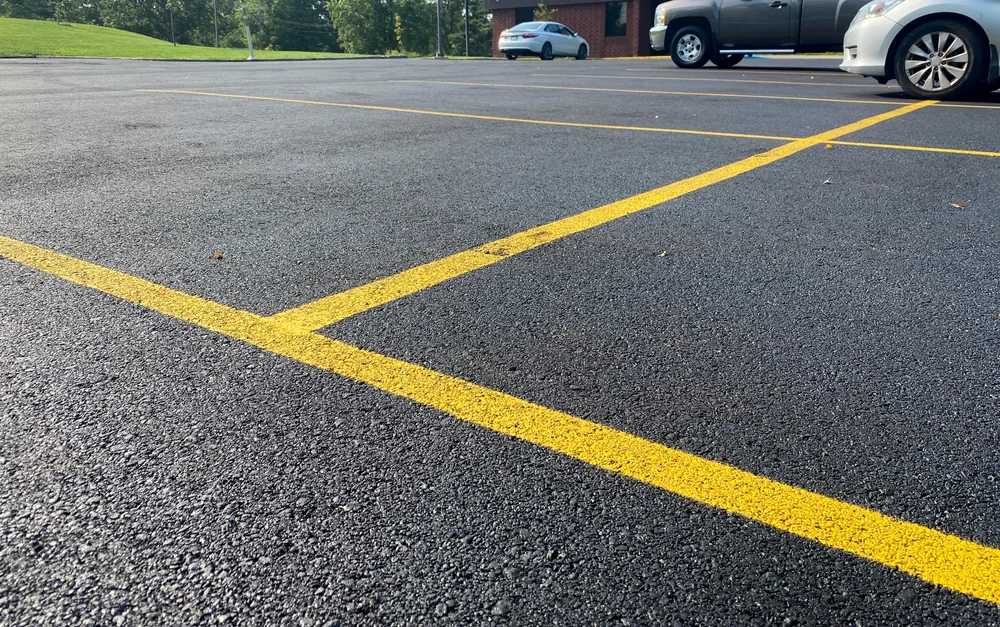
First, we evaluate the site. That means checking drainage, grading, and what’s underneath the current surface if you’re replacing old asphalt. If water’s pooling anywhere, we address that before any paving starts. Skipping this step is how you end up with a parking lot that fails in five years instead of twenty.
Next comes the base work. This is the foundation—the part you don’t see but the part that determines whether your pavement lasts or cracks apart. We grade the base, compact it, and build it to handle the load your lot’s going to carry. For commercial properties with heavy traffic, that means a thicker, more stable base. For residential driveways, it’s scaled to what you actually need.
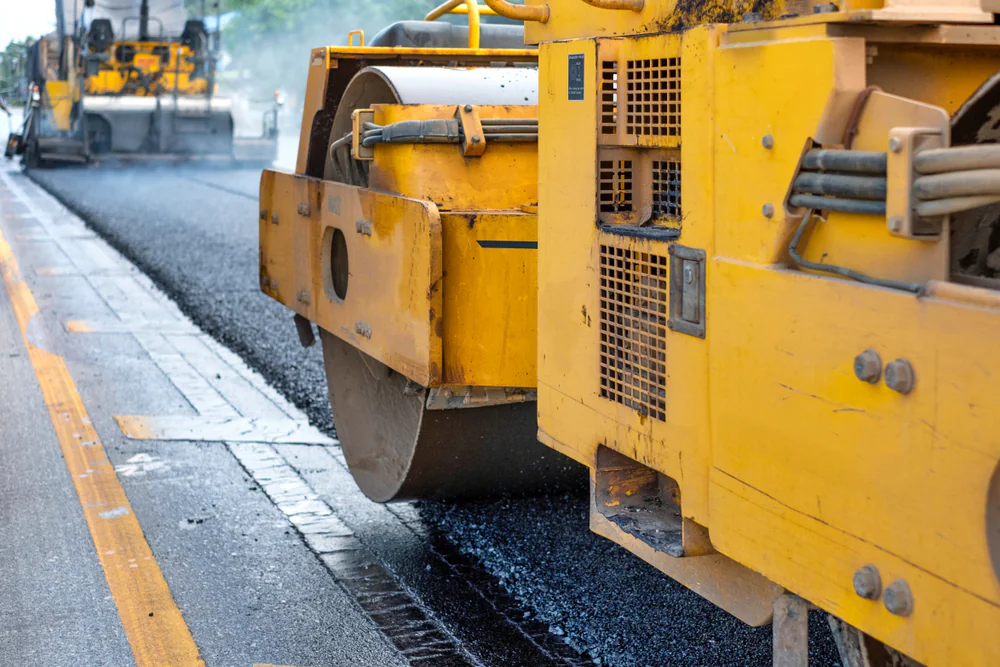
Then the asphalt goes down. We install it in layers, compact it properly, and finish it smooth. Once it’s cured, you’ve got a surface that can handle traffic, weather, and time. If you need sealcoating down the road, that’s a simple maintenance step that extends the life even further. But the real work—the work that matters—happens in the prep and the installation. That’s where quality shows up or doesn’t.
Ready to get started?
You’re not just getting asphalt dumped on the ground. A proper parking lot paving project in Springfield, PA includes site assessment, grading for drainage, base preparation, asphalt installation, and compaction. If your lot needs it, we build in water management solutions so runoff doesn’t cause problems later.
Springfield sits in an area where winter weather does real damage. Freeze-thaw cycles crack poorly installed pavement fast. That’s why the base matters so much—it’s what keeps your asphalt from shifting, cracking, or developing potholes after the first hard winter. When the base is done right, your lot can handle Pennsylvania’s temperature swings without falling apart.
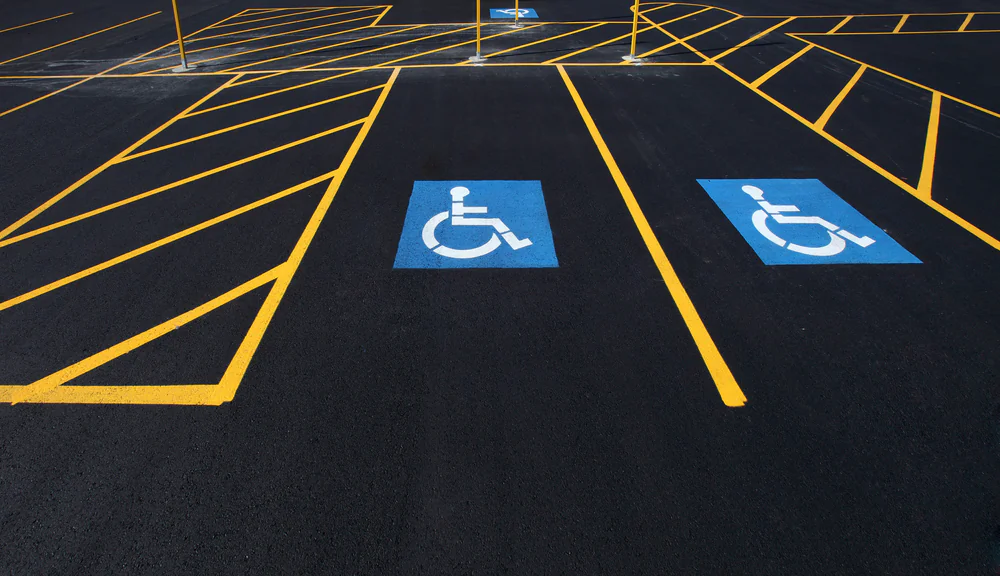
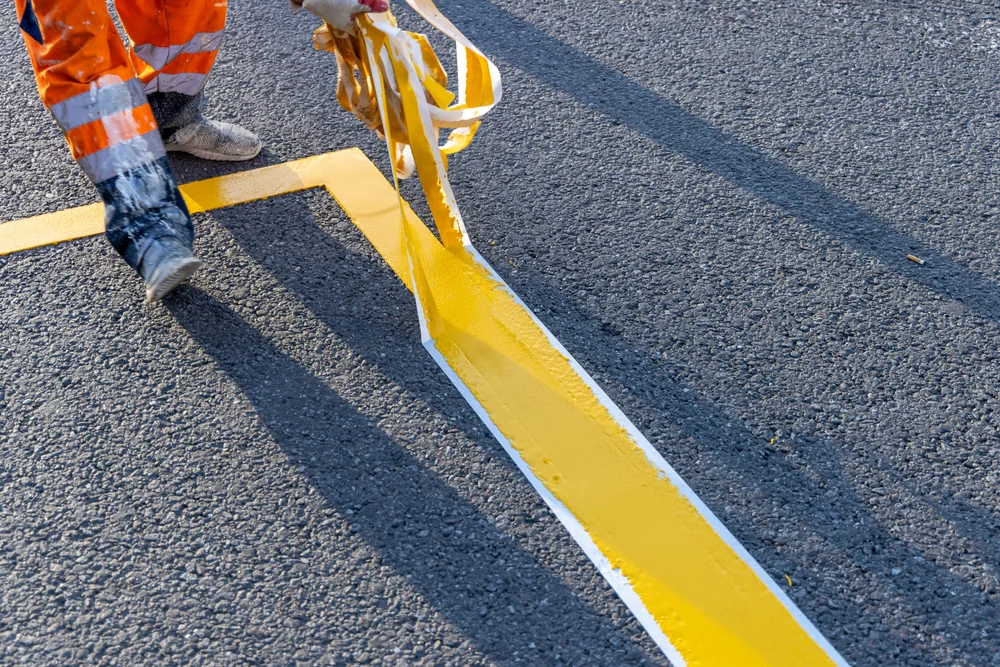
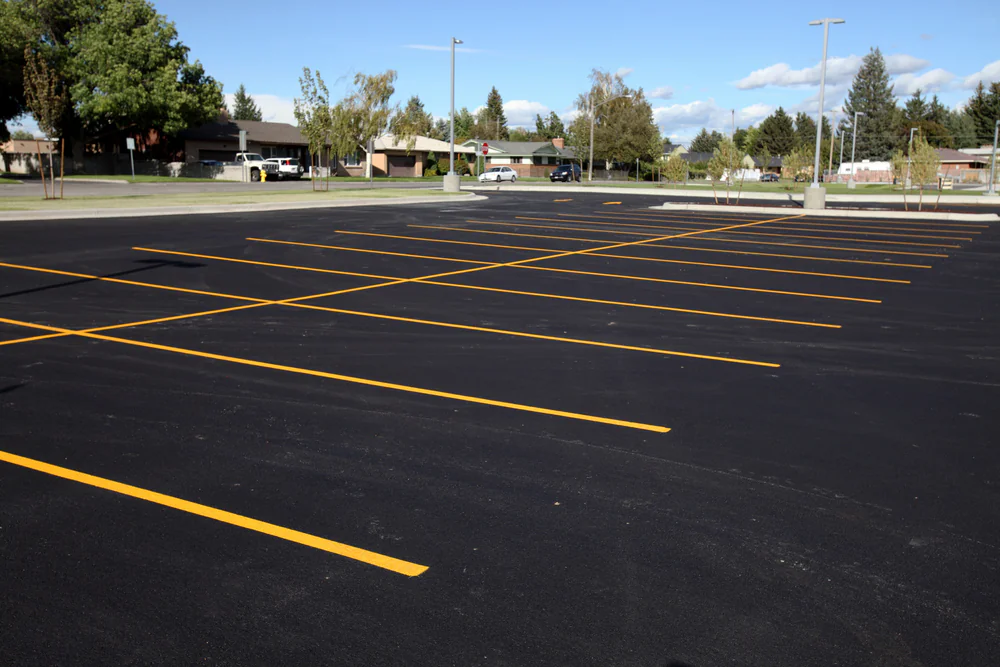
Commercial properties often need striping, ADA-compliant spaces, and proper traffic flow design. We handle that too. Residential projects get the same attention to detail, just scaled to what your driveway or private lot actually requires. The goal is always the same: build it right so it lasts, and make sure you understand what’s happening at every step. No surprises, no shortcuts, no excuses.
With proper installation and regular maintenance, you’re looking at 20 to 30 years. That’s not a best-case scenario—that’s what happens when the base is prepped correctly, the asphalt’s installed at the right depth, and you stay on top of basic upkeep like sealcoating every few years.
Pennsylvania’s freeze-thaw cycles are hard on pavement. Water gets into small cracks, freezes, expands, and turns those cracks into bigger problems. If your lot was installed with a solid base and proper drainage, it can handle that cycle year after year. If the base was rushed or the asphalt’s too thin, you’ll see cracks and potholes a lot sooner.
Maintenance matters too. Sealcoating every two to five years fills hairline cracks and protects the surface from UV damage, water, and chemicals. It’s a small cost compared to repaving. But even with zero maintenance, a well-built lot will outlast a poorly built one by a decade or more. The installation is what sets the timeline.
Water is the main culprit. When water seeps into cracks, it gets under the asphalt and weakens the base. In winter, that water freezes and expands, which makes the cracks bigger. Over time, the pavement loses support and starts to break apart. That’s how potholes form.
Poor drainage makes it worse. If your lot doesn’t slope properly or water pools in certain areas, those spots take the most damage. Add in heavy traffic and you’ve got a recipe for rapid deterioration. Springfield’s winters don’t help—freeze-thaw cycles accelerate everything.
The other big factor is installation quality. If the base wasn’t compacted correctly or the asphalt layer is too thin, the lot won’t hold up under normal use. Cheap installations skip steps to save time or money, and you pay for it later with constant repairs. A properly built lot with good drainage can handle decades of weather and traffic without major issues. A rushed job starts falling apart in a few years.
Asphalt parking lot paving typically runs between $2 and $4.50 per square foot in 2025, depending on the project. That includes materials and labor. Concrete costs more—usually $4 to $7 per square foot—but asphalt is the better choice for Pennsylvania’s climate because it handles freeze-thaw cycles better.
The total cost depends on your lot’s size, the condition of the existing surface, and how much prep work is needed. If you’re starting from scratch, you’ll need excavation, grading, and base installation before the asphalt goes down. If you’re resurfacing over an existing lot in decent shape, the cost drops because less prep is required.
Don’t make decisions based on price alone. A low bid usually means corners are getting cut—thinner asphalt, less base prep, or rushed compaction. Those shortcuts cost you more in the long run because you’ll be repairing or replacing the lot years earlier than you should. Get a clear breakdown of what’s included, ask about the base depth and asphalt thickness, and make sure drainage is part of the plan. That’s how you know if you’re getting a fair price or just a cheap job.
Resurfacing means adding a new layer of asphalt over your existing pavement. It works when the base is still solid and the current surface just needs refreshing. It’s faster and costs less than a full repaving job—usually $2 to $4 per square foot. You get a smooth, new-looking lot without tearing everything out.
Repaving (or reconstruction) means removing the old asphalt, fixing or replacing the base, and installing new pavement from the ground up. You do this when the base has failed, when there’s extensive cracking or settling, or when drainage problems can’t be fixed with just a new surface. It costs more and takes longer, but it’s the right move when the foundation is compromised.
Here’s how to know which one you need: if your lot has isolated cracks and surface wear but no major structural issues, resurfacing works. If you’ve got widespread potholes, deep cracks, or areas where the pavement is sinking, you need full repaving. We can assess your lot and tell you honestly which approach makes sense. If someone’s pushing resurfacing on a lot that clearly needs reconstruction, that’s a red flag. You’ll just be paying twice—once for the resurface, and again in a few years when it fails.
Late spring through early fall—basically May through October—is the ideal window. Asphalt needs warm temperatures to cure properly. Most contractors won’t pave when it’s below 50 degrees, and the warmer it is, the better the asphalt compacts and bonds.
Summer is peak season, which means contractors are busy and scheduling can be tight. Spring and fall offer good weather and sometimes more flexible scheduling. Just avoid late fall if there’s any chance of an early freeze—you want the asphalt to cure fully before winter hits.
Winter paving is possible in emergencies, but it requires special techniques and additives to make the asphalt workable in cold temps. It’s not ideal and it costs more. If you can plan ahead, schedule your project for warmer months. Your lot will cure better, the installation will go smoother, and you won’t be paying premium rates for cold-weather work. If you’re dealing with urgent repairs that can’t wait, we can handle it, but it’s always better to pave when conditions are right.
Yes, if you want it to last. Sealcoating protects asphalt from UV damage, water infiltration, and chemicals like oil and gas. It fills small surface cracks before they turn into bigger problems and keeps your lot looking maintained instead of worn out. It’s one of the easiest ways to extend pavement life.
You should sealcoat every two to five years, depending on traffic and weather exposure. High-traffic commercial lots need it more often. Residential driveways can go longer between applications. The key is not waiting until the asphalt looks terrible—by then, you’re playing catch-up instead of preventing damage.
Sealcoating isn’t a fix for structural problems. If your lot has deep cracks, potholes, or base failure, sealcoating won’t help. You need repairs first. But once your pavement is in good shape, regular sealcoating is cheap insurance. It costs a fraction of what resurfacing or repaving costs, and it can add years to your lot’s lifespan. Most property owners who skip it end up paying a lot more in repairs down the road.
Other Services we provide in Springfield