
Top 7 Maintenance Tips to Double the Life of Your Asphalt Paving
Your driveway or parking lot takes a beating every single day. Weather, traffic, time—they all add up. And if you’re like most property owners in Hunterdon County, NJ, Bucks County, PA, or Mercer County, NJ, you’ve probably noticed cracks forming, water pooling, or the surface starting to fade.
Here’s what most people don’t realize: small problems turn into expensive ones fast. But with the right maintenance approach, you can extend your asphalt’s life by 10 to 15 years and avoid those costly emergency repairs. You just need to know what to look for and when to act. Let’s start with understanding why preventive maintenance matters in the first place.
Why Preventive Maintenance Saves You Thousands
Think about it this way: fixing a small crack costs a few dollars per foot. Ignoring that crack until it becomes a pothole? That’s $100 to $400 per hole. And if water gets underneath and weakens your base, you’re looking at full replacement costs of $8 to $15 per square foot.
The math is simple. Preventive maintenance costs about three times less than reactive repairs. Industry studies show that spending just $1 on pavement preservation when your asphalt is still in good condition saves you $6 to $10 down the road.
Your asphalt starts aging the day it’s installed. UV rays break down the binder. Water seeps into tiny surface cracks. Freeze-thaw cycles—and we get 30 to 50 of them every winter in this region—expand those cracks into bigger problems. Without regular care, a surface that should last 25 years might need replacing in 10.
How to Schedule Routine Inspections That Actually Catch Problems
Most people wait until they see obvious damage before calling an asphalt contractor. By then, the problem has usually spread beyond what’s visible on the surface. Routine inspections change that dynamic completely.
Walk your property after winter ends. Spring is the best time for this because winter does the most damage in areas like Hunterdon County, NJ, Bucks County, PA, and Mercer County, NJ. You’re looking for cracks—even hairline ones. Check for areas where water pools after rain. Notice any spots that look faded or gray instead of black. Pay attention to edges where the pavement meets grass or gravel.
If you spot cracks wider than a quarter-inch, standing water that doesn’t drain within a day, or areas where the surface looks rough and loose, those need professional attention. Smaller cracks you catch early can often be sealed before they spread. That’s the difference between a $200 repair and a $2,000 problem.
Don’t just look at the surface either. Check your drainage systems. Clogged drains, gutters that dump water onto your pavement, or areas where the slope directs water the wrong way—all of these accelerate damage. A quick inspection every few months helps you stay ahead of the curve instead of constantly reacting to emergencies.
Keep notes or take photos of what you find. Track where problems show up and how fast they’re spreading. This helps you spot patterns and gives us useful information when you’re ready to schedule repairs. It also helps you budget better because you’ll see issues coming instead of getting surprised by them when they’ve already become expensive.
The inspection process doesn’t need to be complicated or time-consuming. Fifteen minutes walking your property with your phone camera can save you thousands. Look for anything that lets water in or shows the surface is breaking down. Document it. Address it before it spreads. That’s preventive maintenance in action.
Understanding When Your Asphalt Needs Attention
New asphalt doesn’t need much attention for the first few years. The surface is still strong, the binder is flexible, and everything looks great. But around the five-year mark, that changes. The pavement starts showing its age, and that’s when your maintenance cycle really begins.
Here’s a realistic timeline that most property owners can follow. With proper care, your asphalt can last 20 to 30 years. Without it, you’re looking at 10 to 12 years before you need replacement. The difference comes down to a few key practices done at the right time.
Years one through five represent your grace period. Minimal maintenance needed. Keep the surface clean. Address any drainage issues that pop up. Fill cracks as they appear. This is when your asphalt is most forgiving.
Years five through fifteen are your active maintenance phase. Sealcoating every two to three years protects against UV damage and water infiltration. Crack sealing becomes more important as the surface ages. You might need minor patching in high-traffic areas. This is where you get the most return on your maintenance investment. Skip this phase and you’re setting yourself up for expensive problems.
Years fifteen through twenty-five are the evaluation phase. If you’ve maintained the pavement well, it’s still serving you. But you’ll need to decide if an asphalt overlay or more extensive repairs make sense. Overlays can add another 8 to 15 years when the foundation is still solid beneath the worn surface.
The key is staying proactive during that five to fifteen year window. That’s when preventive maintenance delivers the biggest impact. Miss that window, and you’re looking at rehabilitation or reconstruction—which costs about ten times more than routine maintenance would have cost you.
Temperature matters too when you’re planning work. Don’t schedule sealcoating when it’s below 50 degrees. The material won’t cure properly in cold conditions. Spring through early fall is your maintenance season in our region. Plan ahead so you’re not scrambling when you notice a problem that needs immediate attention.
Sealcoating Protects Your Investment
Sealcoating is probably the most cost-effective thing you can do for your asphalt. It’s a protective layer that shields the surface from everything trying to break it down—UV rays, water, oil, chemicals, and general wear from traffic.
Think of it like sunscreen for your pavement. Without it, the surface oxidizes. It turns gray and brittle. Cracks form faster. Water gets in easier. With regular sealcoating, you’re adding years to the pavement’s life while keeping it looking fresh.
The cost difference is dramatic. Sealcoating runs about $0.25 to $0.50 per square foot. Compare that to $8 to $15 per square foot for replacement. For a typical driveway, you might spend $1,200 on sealcoating versus tens of thousands for replacement. And sealcoating can add 5 to 7 years to your pavement’s lifespan when done consistently every two to three years.
When to Sealcoat and What the Process Involves
Timing matters with sealcoating more than most property owners realize. Your first application should happen about a year after installation. The asphalt needs time to cure fully before you seal it. Seal it too early and you trap volatiles that need to escape. After that first application, plan on sealcoating every two to three years for optimal protection.
High-traffic areas might need it more often. If your parking lot sees heavy use or your driveway gets constant traffic from multiple vehicles, consider every two years. Residential driveways with lighter use can usually go three years between applications without problems.
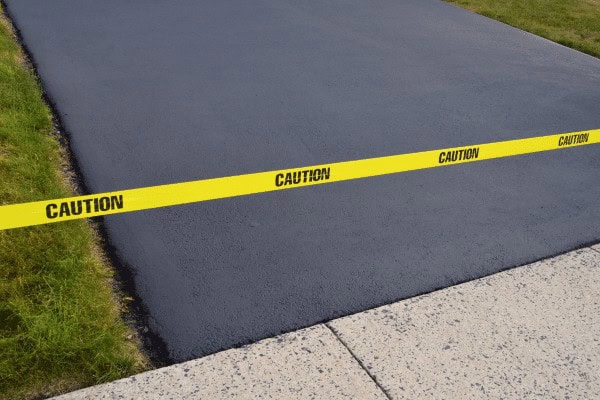
Before sealcoating happens, the surface needs to be completely clean and dry. Any debris, oil spots, or standing water will prevent proper adhesion. We clean the surface thoroughly, fill major cracks first, then apply the sealcoat. The material typically needs 24 to 48 hours to cure, depending on temperature and humidity levels.
You’ll notice the difference immediately after the work is done. The surface looks darker and more uniform. Water beads up instead of soaking in. The pavement feels smoother under your feet and tires. More importantly, you’re protecting the binder that holds everything together—the part that breaks down fastest without protection.
Don’t sealcoat over major damage thinking it will fix the problem. If you’ve got widespread cracking, potholes, or areas where the base is failing, address those first. Sealcoating works best as prevention, not as a cover-up for structural problems. It fills minor surface cracks and voids, but it won’t fix underlying issues that need real repair.
Watch for signs you’ve waited too long between coats. If the surface looks faded and gray instead of black, if small stones are coming loose from the surface, or if you’re seeing more cracks than usual forming, you’ve probably missed your window. Get it done before the next winter hits and makes everything worse.
Crack Sealing Stops Water Damage Before It Starts
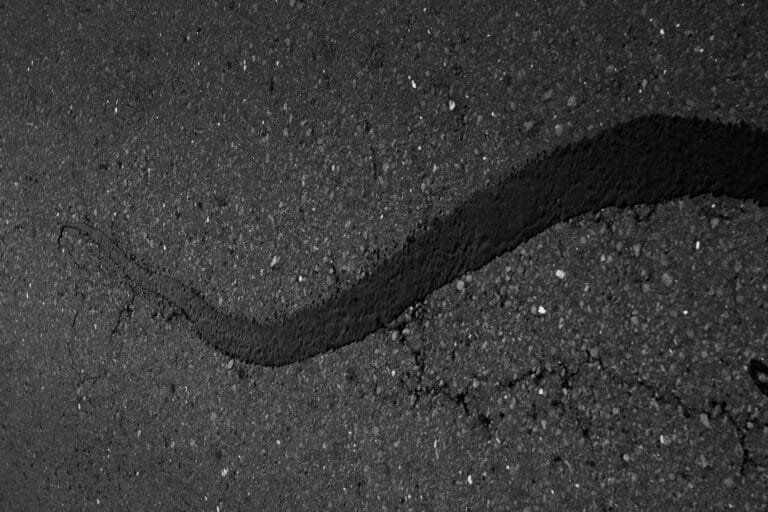
Cracks are your asphalt’s worst enemy. Not because of the crack itself, but because of what happens next. Water gets in through the crack. It reaches the base layer underneath. In winter, it freezes and expands. The crack gets bigger. More water gets in. The cycle repeats until you’ve got potholes and base failure that costs thousands to fix.
Crack sealing breaks that cycle before it starts. It’s straightforward—fill the crack with a rubberized sealant that keeps water out. The cost is minimal, usually $0.50 to $3 per linear foot depending on crack size. Compare that to the $100 to $400 you’ll spend repairing each pothole that forms if you ignore those cracks.
The key is acting fast when you spot damage. Once you see a crack, don’t wait for it to get worse. Even hairline cracks let water through to the layers below. By the time a crack is wide enough to fit a quarter inside, water is already damaging the base underneath where you can’t see it.
Different cracks need different approaches. Longitudinal cracks that run with the pavement direction often come from temperature changes or normal aging. Transverse cracks that run across the pavement might indicate base issues developing. Alligator cracking—those interconnected cracks that look like reptile skin—usually means the base has failed and you need more than just crack sealing to fix it properly.
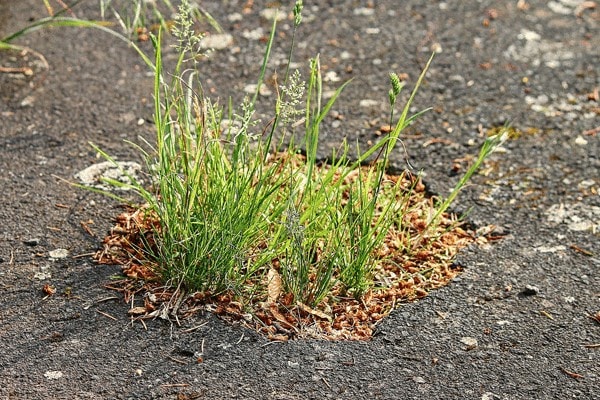
For simple cracks, the repair process is quick. Clean out the crack and remove any vegetation or debris that’s gotten in. Apply hot rubberized sealant that flexes with temperature changes. Let it cure. The whole process takes minutes per crack, but the protection lasts for years if done right.
Make crack sealing part of your annual spring maintenance routine. Walk the property, mark any new cracks with spray paint, and get them sealed before summer heat and winter cold make them worse. This one simple practice can extend your pavement’s life by a decade or more without major expense.
Protecting Your Asphalt Investment for the Long Term
Your asphalt represents a significant investment whether it’s a residential driveway, commercial parking lot, or industrial surface. Proper maintenance protects that investment and extends its useful life dramatically—often doubling the years you get from your pavement.
The strategies we’ve covered—routine inspections, understanding your maintenance timeline, sealcoating every two to three years, and crack sealing when problems first appear—work together to keep your pavement in service for decades. Miss any one of them, and you’re leaving money on the table while shortening your pavement’s lifespan unnecessarily.
The best time to start is right now. Spring is ideal for inspections and planning your maintenance schedule. Summer and early fall are perfect for sealcoating and repairs when temperatures support proper curing. Don’t wait until damage is obvious and expensive. By then, you’re already behind and facing higher costs.
If you’re in Hunterdon County, NJ, Bucks County, PA, or Mercer County, NJ and need guidance on your asphalt maintenance needs, we can help. With roots in the industry dating back to 1948 and decades of hands-on experience, we provide honest, quality asphalt services while treating every project with the attention it deserves regardless of size or budget. Reach out for a consultation and get a clear picture of what your pavement actually needs.