
Why Every Local Business Needs a Long-Term Relationship with a Paving Contractor
Your parking lot doesn’t call in sick, but it will fail you when you least expect it. A pothole that appears overnight. A crack that turns into a liability claim. Emergency repairs that blow your budget and shut down half your lot during peak hours. Most business owners deal with pavement the same way they deal with a toothache—ignore it until the pain becomes unbearable, then pay whatever it takes to make it stop.
There’s a better approach. A long-term relationship with a paving contractor transforms how you manage one of your property’s biggest assets. You move from reactive scrambling to proactive planning. From surprise expenses to predictable budgets. From wondering if your lot is safe to knowing someone’s already checked. Here’s what that relationship actually looks like and why it matters more than you might think.
How Routine Inspections Prevent Expensive Surprises
Asphalt doesn’t collapse overnight. It sends signals. Small cracks. Slight depressions. Areas where water pools after rain. Most property owners miss these signs until they become problems that can’t be ignored.
When we work with you long-term, we get to know your property. We’ve seen it through seasons. We understand where drainage struggles, where heavy delivery trucks create stress points, and where freeze-thaw cycles hit hardest. That knowledge turns routine inspections into something more valuable than a checklist—it becomes pattern recognition.
Annual inspections catch issues while they’re still cheap to fix. A crack sealed today costs a fraction of what you’ll pay when that same crack allows water underneath, weakens the base, and creates a pothole that damages vehicles and threatens lawsuits. The difference between a $200 crack seal and a $2,000 emergency patch often comes down to whether someone was paying attention at the right time.
What Happens During a Professional Pavement Inspection
A real inspection isn’t someone glancing at your lot from their truck. It’s a systematic review of your pavement’s condition, drainage performance, and structural integrity.
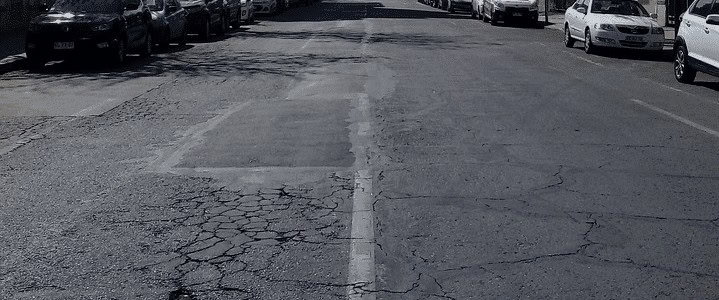
We walk the entire surface looking for specific distress patterns. Alligator cracking signals base failure. Linear cracks suggest drainage problems or thermal stress. Raveling—where the surface starts to disintegrate into loose gravel—indicates oxidation and the beginning of structural breakdown. Each type of damage tells a story about what’s happening beneath the surface and what’s coming next if left unaddressed.
We check drainage areas for standing water, which accelerates deterioration faster than almost anything else. We inspect edges where pavement meets landscaping, a common failure point when water washes away the supporting base. We look at high-stress areas like delivery zones and turning lanes where heavy vehicles concentrate their weight.
Most importantly, we document everything. Photos. Measurements. Notes on severity. This creates a record that tracks how your pavement ages and helps predict when different areas will need intervention. That documentation becomes the foundation for a multi-year maintenance plan that spreads costs over time instead of hitting you with one massive bill when the entire lot fails at once.
When you work with us year after year, we’re not starting from scratch each time. We know what that crack in the northwest corner looked like last spring. We remember that the delivery area needed patching three years ago and can assess whether our repair is holding up or showing signs of stress. That institutional knowledge is impossible to replicate with a contractor you call once and never see again.
The Real Cost of Skipping Regular Inspections
Ignoring your pavement doesn’t save money. It just changes when and how you spend it—usually in the worst possible way.
A property manager in central New Jersey recently learned this lesson the expensive way. They skipped inspections for three years to “save money.” When a customer tripped on a raised section of pavement and filed a lawsuit, the legal fees and settlement dwarfed what annual inspections would have cost. The damaged area had been visible for months. Any inspection would have caught it. Now they’re paying for the repair, the lawsuit, and the reputation damage that comes with being known as the place where someone got hurt.
Emergency repairs cost significantly more than planned maintenance. When you call a contractor in a panic because a pothole appeared overnight, you’re paying premium rates. The contractor has to rearrange their schedule, possibly turn down other work, and mobilize equipment on short notice. That urgency costs money. Emergency asphalt repairs typically run five to ten times more than the same work performed as part of scheduled maintenance.
Then there’s the operational impact. Emergency repairs often mean shutting down portions of your parking lot with minimal notice. Customers can’t find parking. Deliveries get delayed. Employees complain. A planned repair scheduled during your slow season or off-hours creates minimal disruption. An emergency repair during your busiest week can cost you business you’ll never recover.
The pavement lifecycle itself accelerates when problems go unaddressed. A crack that gets sealed early might add years to your pavement’s life. That same crack left open allows water infiltration. In regions like Hunterdon County, Bucks County, and Mercer County where freeze-thaw cycles are brutal, that water expands when it freezes, widening the crack and damaging the base layer. What started as a minor surface issue becomes structural damage requiring expensive excavation and replacement.
Asphalt properly maintained can last 25 to 30 years. Asphalt ignored typically fails around 15 years. That difference—potentially a decade of extended service—comes down to whether someone’s regularly checking on it and addressing small problems before they become big ones. The math is simple. Spending a few hundred dollars annually on inspections and minor repairs beats spending tens of thousands on premature replacement.
Budget Planning and Cost Control Through Long-Term Partnerships
Most businesses budget for pavement maintenance the same way they budget for emergency room visits—they don’t, because they hope it won’t happen. Then it does, usually at the worst possible time, and they scramble to find money they didn’t plan to spend.
A long-term relationship with us flips that model. Instead of reacting to failures, you’re planning for them. We provide a multi-year maintenance roadmap based on your pavement’s actual condition and projected needs. You know that sealcoating needs to happen every two to three years. You know that certain high-traffic areas will need patching on a predictable schedule. You can budget for these expenses the same way you budget for insurance or utilities—as known costs, not surprises.
This predictability matters more than most business owners realize. When you can forecast pavement expenses three to five years out, you can plan capital improvements, time major work for slow seasons, and avoid the financial stress of unexpected five-figure repair bills that wreck your quarterly numbers.
How Multi-Year Maintenance Plans Save Money
A maintenance plan isn’t just a schedule. It’s a strategy for extending your pavement’s lifespan while controlling costs.
Here’s how it typically works. After the initial inspection, we map out what your pavement needs over the next several years. Year one might focus on crack sealing and minor repairs. Year two includes sealcoating to protect the surface from UV damage and water infiltration. Year three addresses any drainage improvements needed to prevent water pooling. Year four might involve patching high-stress areas before they fail completely.
Each intervention builds on the previous one. The crack sealing in year one prevents water damage that would make year two’s sealcoating less effective. The sealcoating protects the repairs and extends the time before major work is needed. The drainage improvements reduce stress on the entire system. It’s preventive care that compounds—each action making the next one more effective and pushing major reconstruction further into the future.
The financial benefit is significant. Spreading maintenance costs over multiple years keeps any single year’s expense manageable. Instead of ignoring your pavement for a decade and then facing a $50,000 replacement project, you might spend $3,000 to $5,000 annually on maintenance that extends your pavement’s life by ten years. Over that decade, you’ve spent $30,000 to $50,000 either way, but the maintenance approach gives you a newer, better-maintained surface for the same total investment and avoids the operational disruption of a complete replacement.
There’s also flexibility most people don’t consider. When you have a multi-year plan, you can adjust timing based on your business needs. If year three turns out to be financially tight, you might defer some non-critical work to year four without jeopardizing the overall strategy. That flexibility only exists when you’re working with us and we understand your property’s condition well enough to know what can wait and what can’t.
Long-term relationships often come with better pricing too. When we know we’ll be working with you for years, we can offer more competitive rates than when bidding on a single job. We can schedule your work during our slower periods when labor and equipment availability is better. We can buy materials in bulk or coordinate your project with nearby work to reduce mobilization costs. These efficiencies translate into savings you don’t get from one-off transactions.
Emergency Repairs vs. Planned Maintenance: The True Cost Comparison
The difference between emergency repairs and planned maintenance isn’t just about money—though the financial gap is substantial. It’s about control, predictability, and protecting your business from disruption.
Emergency asphalt repair typically costs $4 to $12 per square foot depending on the severity and urgency. That same work performed as scheduled maintenance might cost $2 to $5 per square foot. The premium you pay for urgency can double or triple your costs. A pothole repair that would cost $400 as part of planned spring maintenance might cost $1,000 when you need it fixed immediately because a customer damaged their vehicle and you’re worried about liability.
Then there’s the hidden costs. Emergency repairs happen on the contractor’s schedule, not yours. Maybe they can get to you in three days, which means you’re either closing off the damaged area and losing parking spaces or leaving it open and hoping nobody gets hurt. Either option costs you something—lost revenue from reduced capacity or increased liability exposure from a known hazard.
Planned maintenance happens when it works for your business. You schedule sealcoating for your slowest month. You arrange patching for early mornings before customers arrive. You coordinate major work with a planned closure or renovation. That control over timing minimizes operational impact and lets you communicate with customers and employees well in advance.
The quality difference matters too. Emergency repairs are often temporary fixes designed to address immediate safety concerns until proper work can be scheduled. A “throw and patch” repair—literally throwing cold mix asphalt into a pothole and compacting it—might last a few months. A proper saw-cut repair that removes damaged material, addresses base issues, and installs hot-mix asphalt with sealed joints can last years. When you’re paying for pavement work, you want repairs that last, not band-aids that need redoing in six months.
There’s also the liability angle. A business owner who can demonstrate regular inspections and proactive maintenance is in a much stronger position if someone claims injury from a pavement defect. Documentation showing you had the lot inspected two months ago and addressed all identified hazards is powerful defense. Scrambling to fix obvious problems only after someone gets hurt looks like negligence. That difference can determine whether your insurance covers a claim or you’re personally exposed.
The businesses that control their pavement costs are the ones that plan for them. They budget for maintenance the same way they budget for any other operating expense. They work with contractors who help them understand what’s coming and when. They make informed decisions about repair versus replacement based on actual data about their pavement’s condition. They don’t panic when a crack appears because they know whether it’s urgent or can wait for the next scheduled maintenance cycle.
Building a Partnership That Protects Your Investment
Your pavement is one of the first things customers see and one of the last things most business owners think about. That disconnect creates expensive problems.
A long-term relationship with us changes how you manage this critical asset. You gain a partner who knows your property, anticipates problems, and helps you make smart decisions about when to repair, when to wait, and when to replace. You move from reactive crisis management to proactive planning. From surprise expenses to predictable budgets. From hoping nothing goes wrong to knowing someone’s watching.
The businesses that get this right don’t treat pavement maintenance as an expense to minimize. They treat it as an investment in safety, curb appeal, and operational continuity. They understand that the cheapest approach in year one is rarely the smartest approach over ten years. They value contractors who communicate clearly, show up when promised, and stand behind their work.
If you’re ready to stop reacting to pavement failures and start preventing them, we bring the experience, expertise, and client-centered approach that turns pavement management from a headache into a partnership. Reach out to discuss what a long-term maintenance relationship could mean for your property.