
Now that Winter’s Behind Us, How’s Your Asphalt?
After what seemed like a never-ending winter, spring has sprung, and the warm-weather months are finally here, if you ask me, it’s not a second too soon!
As you wander your property inspecting the havoc snow and ice have wreaked, be sure to check out any surfaces paved with asphalt. Even asphalt that has been meticulously maintained can develop cracks for a variety of reasons. Weather is one, traffic and age are others. These cracks don’t always call for a complete overhaul of the surface. In fact, in most cases, patching cracks and adding a thin layer of fresh asphalt can provide a practical, cost-effective solution that restores the surface’s integrity.
Common Types of Asphalt Cracks
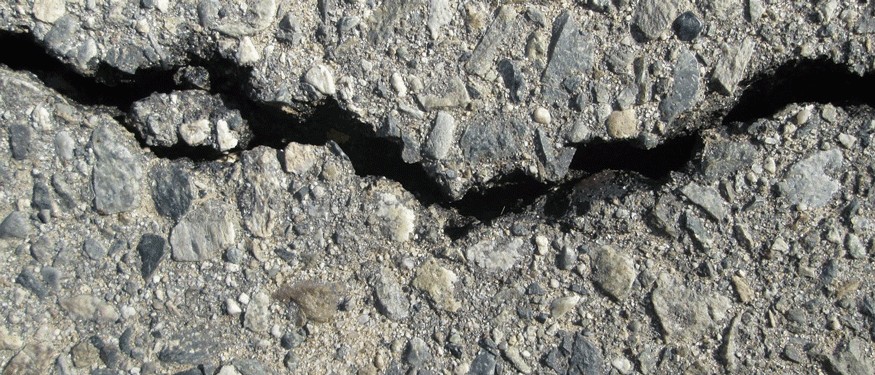
Cracks in your asphalt pavement can indicate underlying issues and can lead to more extensive damage if not addressed. Understanding the common types of asphalt cracks can help in determining the best approach for repair and maintenance. Here are the most prevalent types of asphalt cracks:
- Alligator (or Fatigue) Cracking
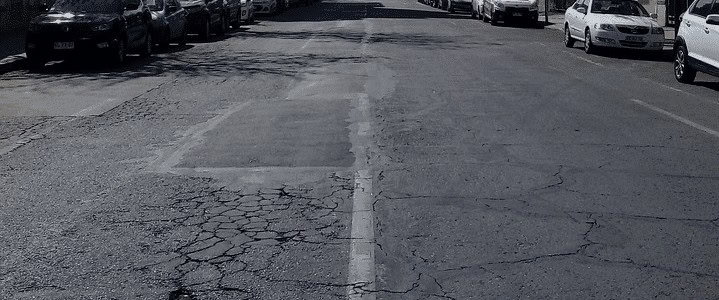
Named for its resemblance to an alligator’s skin, alligator cracking generally occurs due to a failure in the base or subgrade beneath the asphalt surface. This type of cracking is often caused by heavy traffic loads over weakened asphalt. The cracks are typically interconnected and spread over a large area. Repairing alligator cracking can involve patching or even resurfacing, depending on the severity.
- Longitudinal Cracking
As the name suggests, these cracks run parallel to the direction of traffic. Longitudinal cracks often appear along the centerline or sides of a driveway or parking lot. Causes can include poor construction, moisture intrusion, or long-term wear and tear. When addressed early, longitudinal cracks can often be repaired by filling and sealing the crack.
- Transverse Cracking
Transverse cracks run perpendicular to the direction of traffic. They often result from temperature changes, freeze-thaw cycles, or the asphalt’s natural aging process. While annoying, transverse cracks are typically easier to manage and can be sealed or patched without much trouble.
- Edge Cracking
Edge cracks occur along the perimeter of a paved surface. These cracks are often the result of poor drainage, vegetation, traffic, and the expansion and contraction that happens with seasonal changes. Edge cracking is generally fixable by filling the crack and improving drainage to prevent further damage.
- Potholes
Potholes are large, deep holes that form when cracks in the asphalt allow water to infiltrate and weaken the base material beneath. Potholes are usually repaired by filling them with patching material and then resurfacing the area.
The Importance of Timely Crack Repair
Asphalt cracks are unsightly, but they can also cause problems down the line if you don’t take care of them. Water can seep beneath the surface through asphalt cracks, causing additional structural damage. This is particularly true during freeze-thaw cycles, when small cracks can become major structural problems.
If you take care of your asphalt cracks as soon as you notice them, you can avoid major problems that will cost you more money. Cracks will also lead to resurfacing, or complete re-paving of your asphalt at some point if you do not tend to them regularly. That is why it is better to catch problems in your asphalt before they grow, so that you can extend the life of your asphalt without spending a fortune.
Patching and Resurfacing: The Economical Solution
Instead of ripping up and replacing your entire driveway or parking lot, sometimes all it takes is a minor crack repair and a thin layer of new asphalt to completely transform your property. Here are just a few of the reasons why crack patching and resurfacing are typically the most efficient and cost-effective solutions.
Affordable
Repairing cracks and resurfacing with a new layer of asphalt (also commonly referred to as “resurfacing” or “overlaying”) is much more affordable than tearing out and replacing an entire surface. The costs associated with demolition, labor, materials, and disposal of old asphalt can really start to add up. This is why we will always recommend repairing cracks and resurfacing as the best way to both restore your surface and save money.
Less Invasive
Crack repairs and resurfacing are minimally invasive ways to update your parking lot or driveway. Rather than tearing out the entire surface, repairs can typically be completed by cleaning and preparing the existing asphalt, patching any cracks, and then applying a new layer of asphalt. This method minimizes downtime, making it the perfect solution for businesses or homeowners who need their parking lots and driveways available for use.
Foundation
Repairing cracks and adding a thin layer of new asphalt on top helps to preserve the integrity of the base layer and prolong the life of your surface. Of course, at some point, this process may need to be repeated, but it is a much more sustainable solution than ripping out an entire driveway or parking lot and starting from scratch.
Appearance and Protection
Patching cracks and resurfacing your surface can not only improve its functionality but can also give it a completely new lease on life. A new layer of asphalt will restore the smooth, even surface that your property was initially designed to have, improving curb appeal and creating a much safer and more pleasant environment for both pedestrians and vehicles.
Saving Money and Extending the Life of a Paved Surface
All asphalt cracks eventually, but that doesn’t always mean you should consider having the entire asphalt replaced. Crack filling and resurfacing can be, in the majority of cases, the most practical, durable and economical option. When given proper care and attention, your asphalt surfaces can remain a valuable asset for many years.