
ADA Paving Compliance Hunterdon County

Stop Worrying About Compliance Violations

Get your parking lot up to federal ADA standards without the confusion, costly mistakes, or legal risk. We handle compliant striping, accessible routes, and proper specifications so your property protects customers and your business.

Paving Since 1948

Generational expertise in asphalt paving combined with current knowledge of federal ADA standards and New Jersey compliance requirements.

One Project Full Focus

Our crew works one job at a time, ensuring precise measurements, proper slopes, and compliant installation without rushing to the next site.

Commercial Experience Proven

Trusted by businesses, property managers, and municipal clients who can't afford mistakes when it comes to accessibility compliance.

Transparent Project Communication

Clear explanations of what's required, what's optional, and why each element matters for your property's compliance and customer access.

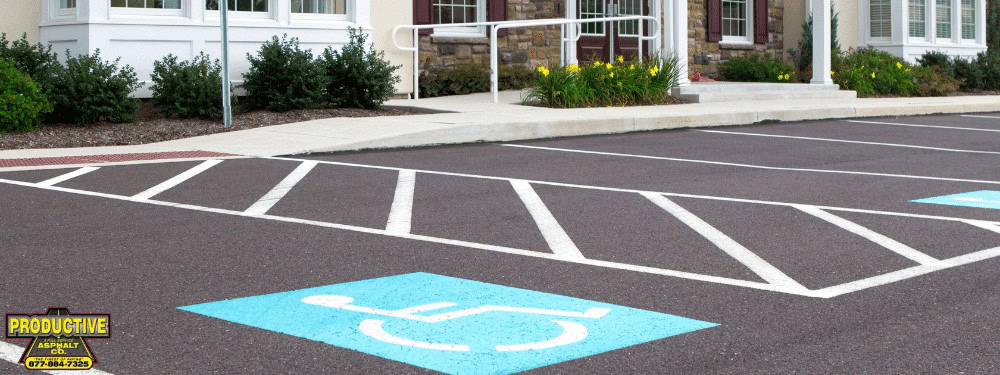
ADA parking space with accessible signage and pavement markings.

Handicap Parking Compliance New Jersey

ADA Compliance Isn't Optional for Commercial Properties

If you own or manage commercial property in Hunterdon County, Bucks County, or Mercer County, federal law requires your parking lot to meet ADA accessibility standards. That includes the right number of handicap parking stalls, proper van-accessible aisles, compliant slopes, visible accessibility markings, and correct signage placement. It also means any time you restripe or resurface your lot, you’re triggering compliance requirements whether you planned for it or not. The stakes are real. Violations can cost $75,000 for a first offense and $150,000 for repeat failures, plus the risk of private lawsuits that often settle for tens of thousands in damages and legal fees. New Jersey’s Barrier Free Subcode adds another layer of state requirements that apply during alterations. We take the guesswork out of ADA paving compliance. We know the federal standards, state codes, and what actually needs to happen on your property to keep you compliant and avoid penalties.

Commercial ADA Parking Lot Solutions

What Proper ADA Compliance Gets You

Beyond avoiding fines, compliant paving protects your business, serves your customers, and eliminates the constant worry about whether your property meets the law.

You'll stop worrying about surprise violations or complaints that lead to expensive legal battles and damage your reputation.

Your property becomes accessible to everyone, opening your business to customers who need proper parking and safe routes to your entrance.

Future restriping or maintenance won't trigger unexpected compliance projects because your lot already meets current federal and state standards.

You'll have documentation and proper installation proving good faith compliance efforts if questions ever arise from inspectors or complaints.

Insurance and liability risks decrease when your property meets accessibility requirements and eliminates barriers that could cause injuries.

Property value stays protected because non-compliant lots create legal liabilities that hurt resale value and tenant attraction.

Ready to get started?

Share project details

Call us or get a free online quote to help us identify your project needs.

We'll follow up

If you requested an online quote, you can expect a callback within 24-48 hours of your request.

The floor is yours

Connect with an expert and share all project specifics.

Plan your project

Like what you hear? We'll provide next steps and expert guidance.
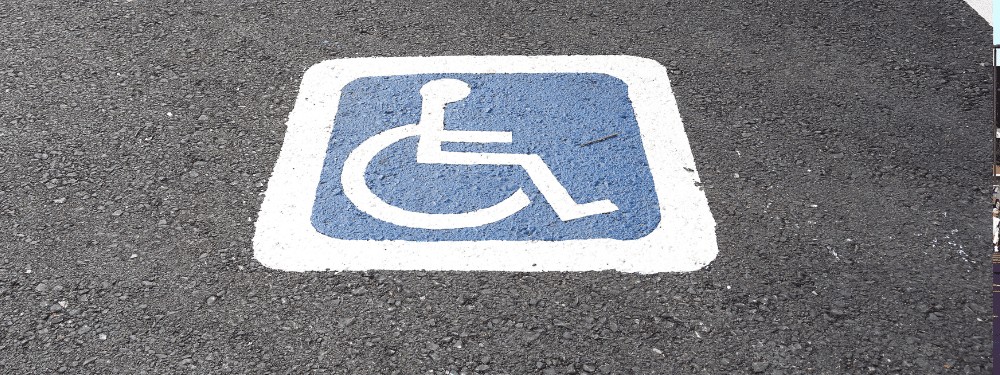
White and blue wheelchair symbol painted on an asphalt parking space

Truncated Dome Ramps ADA Requirements

What Actually Has to Be Compliant

ADA compliance for parking lots covers more than just painting a wheelchair symbol on the ground. Federal standards specify exact requirements for accessible parking spaces based on your total number of spots. A lot with 25 spaces needs at least one accessible space. A lot with 100 spaces needs four. And one out of every six accessible spaces must be van-accessible with wider dimensions to accommodate wheelchair lifts. Each accessible space must be exactly 96 inches wide minimum with an adjacent access aisle at least 60 inches wide. Van-accessible spaces need to be 132 inches wide or have a 96-inch access aisle. The slope can’t exceed 1:48 in any direction—that’s roughly a 2% grade. Signs must mount at least 60 inches above ground measured to the bottom of the sign so parked vehicles don’t block them. Curb ramps need truncated dome ramps—those raised tactile surfaces that warn people with visual impairments about the transition from sidewalk to street. The domes must extend 24 inches in the direction of travel and provide visual contrast. Ramp slopes can’t exceed 1:12. Access aisles must connect to an accessible route leading to your building entrance. When you restripe your lot in New Jersey, the Barrier Free Subcode requires you to bring the entire parking area up to current ADA standards. That’s not optional—it’s triggered automatically by the restriping work.

Van Accessible Parking Spaces NJ

Why Getting It Right Matters More Than You Think

Property owners sometimes treat ADA compliance like a checkbox exercise—paint some lines, put up a sign, call it done. That approach creates expensive problems. Slopes that exceed 2% fail compliance even if they’re close. Signs mounted at 58 inches instead of 60 inches minimum are violations. Access aisles that measure 58 inches instead of 60 inches don’t meet the standard. Inspectors and attorneys measure these things precisely. The Department of Justice enforces ADA requirements and can impose fines up to $75,000 for first violations and $150,000 for subsequent failures. Private individuals can also file lawsuits under the ADA, and those cases often settle for $10,000 to $50,000 plus attorney fees that run $50,000 to $200,000 or more. New Jersey adds state-level enforcement through the Division on Civil Rights and can fine properties up to $500 per non-compliant space. Here’s what most property owners don’t realize: you can’t claim your parking lot is “grandfathered” because it was built before the ADA. The law requires businesses to remove barriers that are “readily achievable”—meaning easy to accomplish without much difficulty or expense. Courts have repeatedly found that restriping is readily achievable, which means even if you’re not planning major work, faded lines that need repainting trigger full compliance requirements. We handle the details so your property meets the standards without costly mistakes or rework.
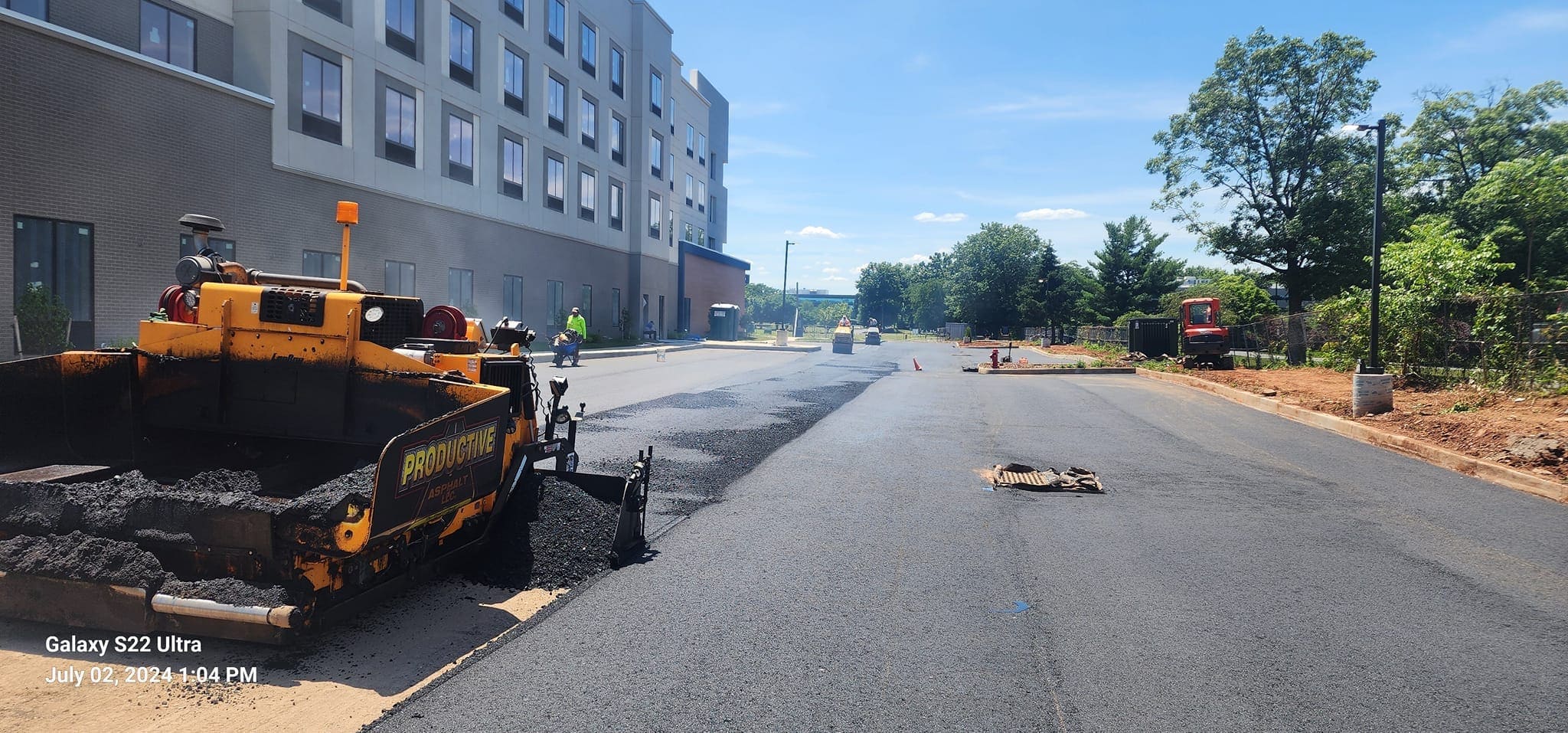
Paving machine laying fresh asphalt on a commercial parking lot beside a hotel building

Property Assessment and Planning

We evaluate your existing parking lot, count total spaces, measure slopes, assess surface condition, and identify what needs to happen for full compliance.

Compliant Design and Layout

We calculate the required number of accessible and van-accessible spaces, plan proper placement on the shortest route to entrances, and design compliant striping.

Precision Installation and Documentation

Our crew installs compliant striping, signage, and truncated dome ramps with verified measurements, proper materials, and documentation proving compliance standards were met.