Catch Basin vs. Storm Sewer: Understanding Parking Lot Drainage Systems
Why Drainage Matters in Parking Lots
Proper drainage is one of the most important aspects of a parking lot. In the event of poor water management, the financial and safety risks can be very high. At Commercial Pavement, we get a lot of questions about the terms “catch basin” and “storm sewer” because they are similar. These two elements of a well-designed and maintained drainage system serve different purposes, and property owners, managers, and contractors need to understand the differences.
What Is a Catch Basin?
A catch basin or storm drain is an underground structure that is designed to trap runoff water from paved areas such as parking lots. It is generally made up of a grated opening at the ground surface with a concrete or plastic basin below. Water from a paved area is allowed to enter the basin through the ground-level grate. Inside the basin, heavy solids, dirt, and sediment accumulate at the bottom of the basin and are prevented from entering the downstream pipe system, where they might cause a clog. Catch basins are the first step in controlling storm water and are usually located in low areas to intercept surface water before it pools.

What Is a Storm Sewer?
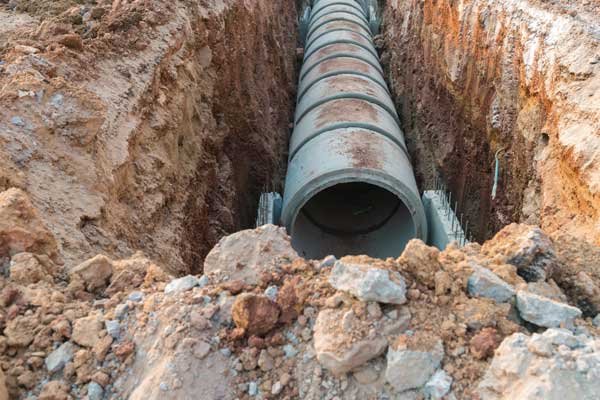
A storm sewer is the system of underground pipes that is responsible for moving the water that has been collected by the catch basin out to a safe discharge point like a retention pond, swale or municipal drain system. Storm sewer pipes tend to be larger in diameter and built to accommodate a larger volume of water. Although the catch basin captures and filters the runoff, the storm sewer has the job of moving the water away from the parking lot. Both of these components work together to form a complete system and drainage solution that will work to prevent flooding, pavement deterioration and safety issues.

How They Work Together
Catch basins and storm sewers are inextricably linked and in many ways depend on each other. When it rains, water from a parking lot naturally runs off to the lowest point. At that point, a catch basin intercepts the water and by-products, and passes the clean water into the connected storm sewer. The storm sewer can then safely transport that water away from the property. Without catch basins, storm sewers would become clogged. Without storm sewers, catch basins would overflow. It is only by proper coordination of these two items that paved surfaces are protected from long-term damage.
Maintenance and Best Practices
Regular maintenance is crucial for the longevity of both catch basins and storm sewers. Catch basins should be inspected and cleaned periodically to ensure they are free from sediment and debris that can reduce flow capacity. Storm sewers, on the other hand, may need to be flushed or inspected with a camera to identify and clear any obstructions. Neglecting drainage can result in erosion of asphalt surfaces, potholes, and expensive repairs. Property managers should develop a seasonal maintenance plan and work with reliable contractors to ensure both catch basins and storm sewers are clear, functional, and capable of handling significant rainfall events.
Need help with your property? Learn more about our commercial paving services or contact Productive Asphalt for a free quote.