From Potholes to Perfection: How an Asphalt Contractor Transforms Your Curb Appeal
You pull into your driveway every day. You see those cracks spreading. The potholes getting deeper. The faded, worn surface that makes your whole property look tired. And if you’re a business owner, you know that parking lot is the first thing customers see—sometimes the only thing they remember.
Here’s what most property owners don’t realize: that deteriorating asphalt isn’t just an eyesore. It’s costing you money, creating liability risks, and quietly telling visitors your property isn’t worth maintaining. But the transformation from damaged pavement to a surface that actually enhances your property value? That’s more straightforward than you might think—if you work with the right asphalt contractor.
What Makes an Asphalt Contractor Different from a Paving Company
Not all paving work is created equal. An asphalt contractor specializes specifically in asphalt applications—from driveways and parking lots to private roads and commercial properties. This focused expertise matters more than you’d think.
General paving companies might work with concrete, pavers, gravel, and asphalt. An asphalt contractor lives and breathes this material. We understand how it behaves in your local climate, how freeze-thaw cycles affect longevity, and which installation techniques prevent the problems that show up three years down the road.
That specialization translates to better drainage solutions, proper base preparation, and material choices that actually match your property’s specific needs. You’re not getting a one-size-fits-all approach. You’re getting someone who knows exactly how asphalt performs in Hunterdon County, Bucks County, and Mercer County conditions.
How Pothole Repair Services Actually Work
Those potholes in your driveway didn’t appear overnight. They’re the result of water getting beneath the surface, freezing, expanding, and breaking apart the asphalt from below. When vehicles drive over these weakened areas, the surface collapses. And here’s the frustrating part: most DIY patching or quick fixes fail within months because they only address the symptom, not the cause.
Professional pothole repair services start by identifying why the pothole formed in the first place. Is there a drainage issue? Has the base layer deteriorated? Is the surrounding asphalt compromised? We remove all loose material, address the underlying problem, and then fill the area with hot-mix asphalt that bonds properly with the existing surface.
The difference between a patch that lasts six months and one that lasts years comes down to preparation. Proper repairs include cleaning the hole completely, ensuring the base is stable and compacted, applying a tack coat for adhesion, and using the right asphalt mix for your climate. The edges get sealed to prevent water infiltration. The repair is compacted to match the surrounding surface level.
This attention to detail matters because water is asphalt’s biggest enemy. Once moisture penetrates to the base layer, you’re not just fixing potholes anymore—you’re looking at much more extensive damage. That’s why addressing these issues early, and addressing them correctly, saves thousands in the long run.
Most property owners don’t realize that constant patching actually costs more than proper resurfacing. If you’re calling for pothole repair more than once a year, or if patches are failing within a season or two, the real problem isn’t the potholes. It’s that the asphalt has reached the end of its effective life. An honest asphalt contractor will tell you when you’re throwing good money after bad.
Asphalt Resurfacing vs Complete Replacement
This is where most property owners get confused. You know your driveway or parking lot needs work, but should you resurface or replace? The answer depends on what’s happening below the surface you can see.
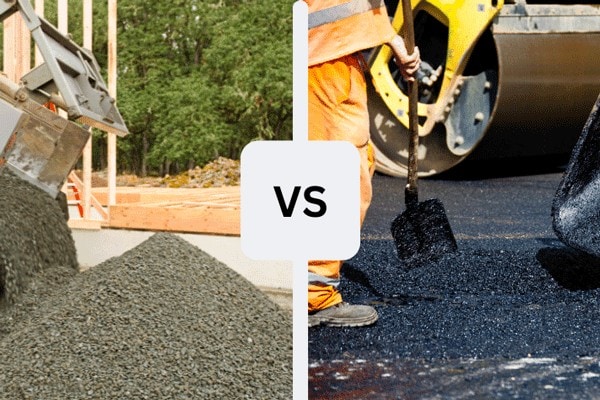
Asphalt resurfacing, also called an overlay, involves applying a new layer of asphalt over your existing surface. This works beautifully when the base is still solid and the damage is mostly cosmetic—surface cracks, fading, minor wear. Resurfacing costs significantly less than full replacement, typically running $1 to $3 per square foot compared to $8 to $18 for complete replacement. The new layer can extend your pavement’s life by 8 to 15 years.
But resurfacing only makes sense if your foundation is sound. If you have widespread cracking, significant potholes, drainage problems, or heaving from tree roots or poor base preparation, resurfacing is like putting new carpet over rotted floorboards. It might look better temporarily, but the problems will resurface—literally—within a year or two.
Complete replacement means removing the old asphalt, addressing any base issues, properly grading for drainage, and installing new asphalt from the ground up. Yes, it costs more upfront. But when the base has failed, replacement is actually the more cost-effective choice because it solves the problem instead of temporarily covering it.
Here’s how to know which you need: If your asphalt is less than 15 years old, has less than 30% surface damage, and doesn’t have drainage or settling issues, resurfacing probably makes sense. If you’re seeing alligator cracking (that interconnected pattern that looks like reptile skin), if water pools on the surface, or if the pavement has sunk or heaved in sections, replacement is likely your better option.
We walk your property with you, point out what we’re seeing, and explain why we’re recommending one approach over the other. We show you the difference between surface damage and structural failure. And we won’t pressure you toward the more expensive option if the less expensive one will actually solve your problem.
The decision also depends on your timeline. If you’re planning to sell within a few years, resurfacing might give you the curb appeal boost you need without over-investing. If you’re planning to stay long-term, replacement might be the smarter financial choice because it resets the clock on your pavement’s lifespan.
Before and After Paving: What Transformation Actually Looks Like
The visual transformation from damaged asphalt to a fresh, smooth surface is dramatic. That’s obvious. What’s not obvious is how that transformation affects everything else about your property.
For residential properties, a new driveway changes the entire front-of-house appearance. That cracked, faded surface that made your home look dated suddenly becomes a clean, dark surface that makes landscaping pop and creates actual curb appeal. Real estate studies show that well-maintained driveways and hardscaping can increase perceived home value by up to 15%. More importantly, 70% of first-time home sales are made or lost based on curb appeal alone.
Commercial properties see even more dramatic impacts. A deteriorating parking lot signals to customers that you don’t care about details. It raises questions about what else might be neglected. Fresh asphalt sends the opposite message: this business is professional, maintained, and worth visiting.
Commercial Property Aesthetics and Customer Perception
Your parking lot is your business’s handshake. Before customers walk through your door, before they see your products or meet your staff, they’re forming opinions based on that parking lot surface.
Faded striping, cracked pavement, potholes that force drivers to navigate carefully—these details create a negative first impression that’s hard to overcome. Research shows people are significantly less likely to enter a store or building when the exterior looks uncared for. That parking lot isn’t just a place to leave cars. It’s a marketing asset or liability.
Fresh asphalt resurfacing or a well-maintained parking lot does the opposite. It signals professionalism, attention to detail, and a business that values its customers’ experience from the moment they arrive. The dark, uniform surface makes striping visible, helps customers navigate safely, and creates a clean backdrop that makes your building and signage stand out.
There’s also the liability factor. Potholes and uneven surfaces create trip hazards and vehicle damage risks. As a property owner, you’re responsible when someone gets hurt or damages their car in your parking lot. Fresh, well-maintained asphalt reduces these risks significantly while also reducing your insurance liability exposure.
For retail properties, restaurants, medical offices, and any customer-facing business, parking lot condition directly impacts foot traffic. For industrial or warehouse properties, it affects employee morale and operational efficiency. Nobody wants to navigate a minefield of potholes every day. Smooth, well-maintained surfaces make the workday start better.
The transformation isn’t just visual. It’s functional. Proper resurfacing or replacement includes updated striping that maximizes parking capacity, clearly marked accessible spaces that meet ADA requirements, and traffic flow patterns that reduce congestion and improve safety. These details matter to your daily operations and your bottom line.
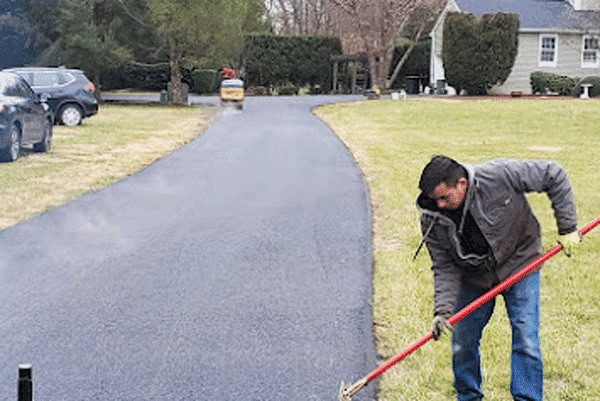
Driveway Renovation: The Process from Start to Finish
Understanding what actually happens during a driveway renovation helps you know what to expect and why certain steps matter. The process varies depending on whether you’re resurfacing or replacing, but the principles remain consistent.
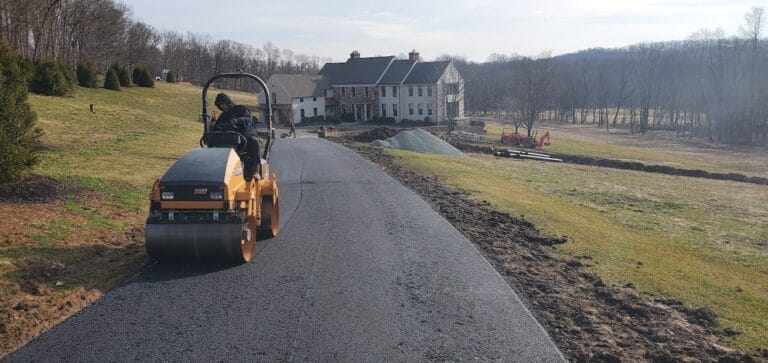
For a complete driveway replacement, we start by removing your existing asphalt. This involves cutting the edges cleanly, breaking up the old surface, and hauling away the debris. Next comes inspecting and preparing the base. If the base material has deteriorated or settled, it needs to be removed and replaced with properly compacted gravel. This base layer is crucial—it’s what prevents your new asphalt from cracking and settling prematurely.
Proper grading comes next. Your driveway needs a slight slope to shed water away from your house and garage. Standing water is asphalt’s enemy, so drainage isn’t optional. We ensure water flows where it should, potentially adding drainage solutions if your property has challenging water issues.
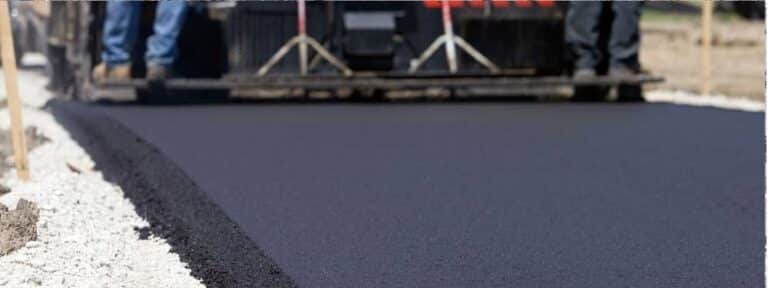
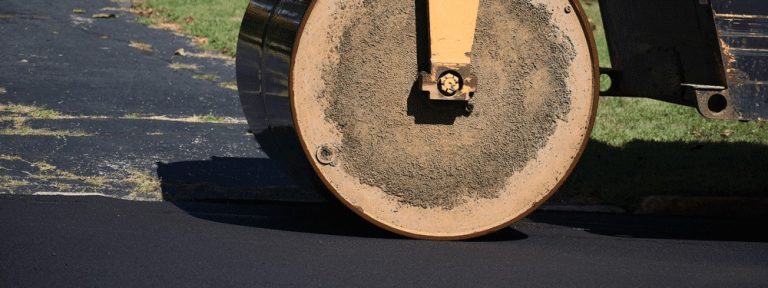
Then comes the asphalt installation. Hot-mix asphalt arrives at a specific temperature and needs to be placed, spread, and compacted while it’s still hot. This is where equipment quality and crew experience matter. The asphalt needs to be compacted thoroughly but not overworked. The edges need to be properly finished. The thickness needs to be consistent across the entire surface.
For residential driveways, a 2 to 3-inch asphalt layer over a properly prepared base is standard. For driveways that see heavier vehicles or commercial traffic, 4 inches or more might be necessary. We recommend the appropriate thickness for your specific use case, not just default to the minimum.
After installation, the asphalt needs time to cure before you can drive on it. Fresh asphalt can typically be walked on within 24 hours, but you should wait at least 48 to 72 hours before driving on it, and even longer before parking heavy vehicles. The surface continues to cure and harden over several months.
Resurfacing follows a similar but abbreviated process. The existing surface is cleaned thoroughly, any significant cracks or potholes are repaired, and then a new layer of asphalt is applied over the existing surface. The new layer bonds to the old surface, creating a unified structure. The key is that the existing base must be sound—resurfacing doesn’t fix underlying structural problems.
Throughout the process, we keep you informed. We explain what we’re doing and why. We let you know if we encounter unexpected issues like base deterioration that wasn’t visible before excavation. We give you realistic timelines and stick to them. We clean up thoroughly when the work is complete.
The difference between a driveway that looks good for two years and one that looks good for twenty comes down to these process details. Shortcuts during installation—inadequate base preparation, poor compaction, insufficient thickness, improper drainage—will show up as problems within a few years. Doing it right from the start costs a bit more but saves dramatically in the long run.
Choosing an Asphalt Contractor Who Delivers Lasting Results
The transformation from damaged, embarrassing pavement to a surface that enhances your property value and creates genuine curb appeal is real. But it only happens when you work with an asphalt contractor who prioritizes quality over speed and long-term results over short-term profits.
Look for contractors with deep local experience who understand your specific climate challenges. Ask about their process, not just their price. A detailed explanation of base preparation, drainage solutions, and material choices tells you more than a low bid. Check references, look at completed projects, and pay attention to how they communicate. Transparency and straightforward answers matter as much as technical expertise.
Your driveway or parking lot is a significant investment in your property. Whether you need pothole repair services, complete resurfacing, or full replacement, working with the right professional makes all the difference between a surface that fails in a few years and one that protects your investment for decades. At Productive Asphalt LLC, we bring decades of family expertise and a commitment to treating every project with the attention it deserves, transforming problem pavement into surfaces that last.