The Best Maintenance Schedule for Parking Lot Paving to Double Your Pavement’s Life
Your parking lot is quietly aging. Every season of freeze-thaw cycles, every rainstorm pooling in low spots, every UV ray baking the surface—it’s all shortening your pavement’s lifespan. Most commercial property owners in Hunterdon County, Bucks County, and Mercer County don’t realize their parking lot could last 25 or even 30 years instead of the typical 15. The difference isn’t luck or better materials. It’s a maintenance schedule. One that’s strategic, timely, and designed around your pavement’s actual needs—not just what’s convenient. Here’s what that schedule looks like and why it matters more than you think.
Why Parking Lot Maintenance Schedules Matter More Than You Think
Most property owners treat parking lot maintenance like an oil change—something you do when you remember or when something breaks. That approach costs you thousands.
A maintenance schedule isn’t about being obsessive. It’s about timing interventions before small problems become expensive ones. Think of it this way: a hairline crack costs about $20 to seal. Ignore it, and water seeps in. That crack becomes a pothole, which costs $1,000 to $3,600 to repair. Ignore that, and you’re looking at a $75,000 repaving project.
The numbers don’t lie. Parking lots with scheduled maintenance last 20 to 25 years. Neglected lots fail in 10 to 12. That’s not a small difference—it’s literally double the lifespan from the same initial investment.
What Happens to Asphalt Pavement Without a Maintenance Plan
Asphalt doesn’t fail overnight. It deteriorates in stages, and each stage accelerates the next if you don’t intervene.
Stage one starts the day your parking lot is paved. UV rays from the sun begin oxidizing the asphalt binder—the “glue” that holds everything together. The surface fades from deep black to gray. It’s not just cosmetic. That oxidation makes the pavement brittle.
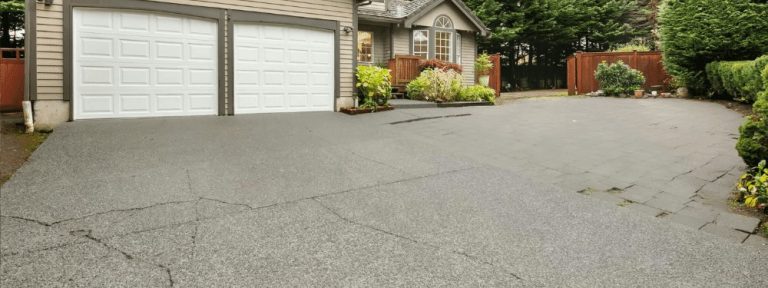
Stage two brings small cracks. Hairline at first, barely noticeable. But those cracks let water in. In New Jersey and Pennsylvania, water is your pavement’s worst enemy. It seeps into the base layer, and when temperatures drop, it freezes. Frozen water expands. That expansion pushes the pavement apart from below, creating bigger cracks and surface deterioration.
Stage three is when you start seeing potholes. Water has eroded the base layer. The surface asphalt has nothing solid underneath. Traffic loads finish the job, and suddenly you’ve got craters that damage vehicles and create liability risks.
Stage four is complete failure. The base is compromised. Cracks spider across the entire surface. Water pools everywhere because the pavement has settled unevenly. At this point, patching doesn’t work. You need full replacement—the most expensive outcome possible.
Here’s the thing: every stage is preventable. Sealcoating stops oxidation. Crack sealing stops water infiltration. Drainage solutions stop base erosion. But only if you do them at the right time. Wait too long, and you skip straight to stage four.
Property owners in Hunterdon County, Bucks County, and Mercer County deal with weather that accelerates this process. Freeze-thaw cycles are relentless. Summer heat is intense. Your pavement takes a beating. A maintenance schedule isn’t optional here—it’s the only way to protect your investment.
The Real Cost of Reactive Maintenance vs. Preventive Maintenance
Let’s talk numbers, because this is where most property owners make decisions.
Reactive maintenance means you wait until something breaks, then you fix it. It feels cheaper in the moment. A pothole repair here, a patch job there. But those costs add up fast, and they don’t solve the underlying problem.
Preventive maintenance means you follow a schedule. Sealcoating every two to three years. Crack sealing when cracks are still small. Restriping every 12 to 18 months. It requires planning and upfront spending, but the math is clear.
Here’s a real-world comparison. A typical commercial parking lot in New Jersey costs about $75,000 to repave. That’s $2 to $4.50 per square foot for a full replacement. If your lot fails after 15 years, that’s $5,000 per year in cost-per-year analysis.
Now add preventive maintenance. Sealcoating costs $0.15 to $0.30 per square foot every two to three years. For a 20,000-square-foot lot, that’s $3,000 to $6,000 every few years. Crack sealing runs a few hundred dollars annually. Line striping is $0.15 to $0.25 per linear foot every 12 to 18 months. Total annual maintenance? Around $1,000 to $1,500.
But here’s the payoff: that same parking lot now lasts 25 to 30 years instead of 15. Your cost-per-year drops to $2,500 to $3,000 when you factor in both the initial paving cost and maintenance. You’ve cut your annual cost nearly in half—and you’ve avoided emergency repairs, liability claims, and customer complaints.
The National Asphalt Pavement Association confirms this. Preventive maintenance can extend pavement life by up to 10 years and reduce overall costs by 50% or more compared to reactive approaches.
Still think skipping maintenance saves money? The math says otherwise. Reactive maintenance might feel cheaper today, but it’s costing you double over the life of your pavement.
The Exact Maintenance Schedule That Doubles Your Parking Lot’s Life
You don’t need to guess when to maintain your parking lot. There’s a proven schedule that works for commercial properties across Hunterdon County, Bucks County, and Mercer County.
This schedule is based on how asphalt actually ages and what interventions stop deterioration at each stage. Follow it, and you’ll get 25 to 30 years from your pavement instead of 15. Here’s the timeline, broken down by service and frequency.
Asphalt Sealcoating: Every 2-3 Years Starting at 6-12 Months
Sealcoating is the single most important maintenance task for extending pavement life. It’s a protective layer applied to the asphalt surface that does three critical things: fills surface voids, blocks UV damage, and repels water and chemicals.
Here’s the schedule. Your parking lot needs its first sealcoat 6 to 12 months after installation—not immediately, because new asphalt needs time to cure. After that, sealcoat every two to three years.
Why that frequency? Because sealcoating wears down. Traffic, weather, and UV exposure gradually break down the protective layer. By year three, it’s thin enough that your pavement is vulnerable again. Waiting longer means you’ve lost protection, and oxidation has already started damaging the surface.
The process itself is straightforward but requires proper prep. The surface gets cleaned thoroughly—debris, oil, dirt all removed. Any existing cracks get sealed first. Then the sealcoat is applied in thin, even layers using a squeegee or spray equipment. It needs 24 to 48 hours to cure before traffic can return.
Cost-wise, sealcoating runs $0.15 to $0.30 per square foot depending on lot size and condition. For a 20,000-square-foot parking lot, that’s $3,000 to $6,000 every two to three years. Compare that to the $40,000 to $90,000 cost of repaving, and the ROI is obvious.
Property owners often ask if they can skip sealcoating to save money. The answer is no—not if you want your pavement to last. Unsealed asphalt becomes brittle from UV damage. It cracks faster. Water penetrates deeper. You end up needing resurfacing or replacement years earlier than you should.
One more thing: sealcoating also restores that deep black color. It’s not just functional—it improves curb appeal. Customers notice. A fresh, dark parking lot signals that your property is well-maintained and professional. That matters more than most property owners realize.
Parking Lot Striping, Crack Sealing, and Drainage Solutions
Sealcoating isn’t the only maintenance your parking lot needs. Three other services complete the schedule: striping, crack sealing, and drainage maintenance.
Parking lot striping should happen every 12 to 18 months. Paint fades from traffic, weather, and UV exposure. Faded lines create confusion, reduce usable parking spaces, and increase liability risk. They also make your lot look neglected. Fresh striping costs $0.15 to $0.25 per linear foot and takes just a day or two. It’s one of the most cost-effective ways to maintain safety, maximize capacity, and keep your property looking sharp.
Here’s an important detail: striping must happen after sealcoating, not before. Sealcoat covers old lines. If you stripe first, you’re wasting money. The right sequence is sealcoat, cure, then stripe.
Crack sealing should happen annually or as soon as you notice cracks forming. This is where property owners make the biggest mistake—they wait. A hairline crack seems harmless. It’s not. Water gets in, freezes, expands, and turns that hairline into a pothole.
Crack sealing involves cleaning out the crack, filling it with hot rubberized sealant, and smoothing it flush with the surface. It’s quick, inexpensive, and prevents thousands in future damage. The cost is minimal—often a few hundred dollars depending on how many cracks need attention. But the payoff is huge. Sealed cracks don’t spread. Water stays out. Your pavement lasts years longer.
Drainage solutions are the third piece. Water is asphalt’s number-one enemy. If your parking lot has standing water after rain, you have a drainage problem. That water seeps into the base layer, erodes the foundation, and causes settling and structural failure.
Proper drainage starts with design—your parking lot should have a 1% to 5% slope to direct water toward drains, curbs, or permeable edges. Catch basins and trench drains collect runoff and channel it away from the pavement. If your lot doesn’t have adequate drainage, it needs to be added. The upfront cost varies depending on the solution, but it’s always cheaper than replacing a parking lot that failed from water damage.
Drainage maintenance is also critical. Catch basins get clogged with debris. Drains get blocked. Inspect them twice a year—spring and fall—and clear any blockages. A clogged drain is the same as no drain. Water backs up, pools on the surface, and starts the deterioration process.
Put it all together, and your maintenance schedule looks like this: sealcoat every two to three years, restripe every 12 to 18 months, seal cracks annually, and inspect drainage twice a year. Follow that schedule, and your parking lot will last 25 to 30 years instead of 15. The cost-per-year analysis is dramatically better, and you avoid the nightmare of emergency repairs or premature replacement.
Protect Your Investment with a Preventive Maintenance Plan
Your parking lot is one of the biggest investments in your property. It’s also one of the most visible. Customers see it first. Employees use it daily. Neglect it, and you’re risking liability, losing property value, and setting yourself up for a massive repaving bill.
The good news? You don’t have to let that happen. A preventive maintenance plan—sealcoating every two to three years, crack sealing annually, striping every 12 to 18 months, and drainage inspections twice a year—doubles your pavement’s lifespan and cuts your long-term costs in half.
Property owners in Hunterdon County, Bucks County, and Mercer County deal with weather that’s tough on asphalt. Freeze-thaw cycles, summer heat, heavy rain—it all accelerates deterioration. That’s exactly why a maintenance schedule matters here. It’s not optional. It’s the only way to protect your investment and avoid the cost cascade that turns small cracks into $75,000 repaving projects.
If your parking lot hasn’t been maintained in a while—or if you’re not sure when it was last sealcoated, striped, or inspected—now’s the time to take action. We’ve been helping property owners across New Jersey and Pennsylvania extend their pavement’s life since 1948. We understand the local climate, the specific challenges your parking lot faces, and how to create a maintenance plan that fits your property and budget.