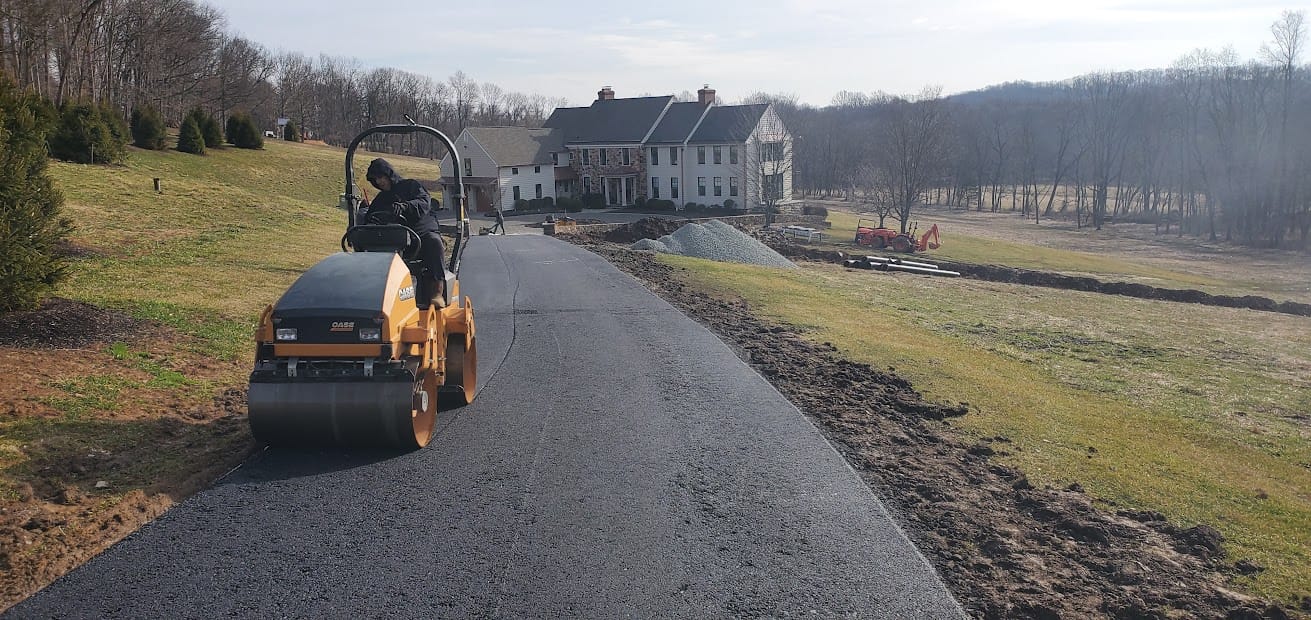
Top 10 Benefits of Professional Parking Lot Paving for Property Managers
Your parking lot is probably the last thing you think about until something goes wrong. A tenant complains about a pothole. Someone trips on cracked pavement. Or you get a letter about ADA violations.
By then, you’re dealing with emergency repairs, potential lawsuits, or fines that could’ve been avoided. Professional parking lot paving does more than fix surface problems. It protects your property value, reduces liability, and saves you from costly surprises down the road. Here’s what you need to know about the real benefits of getting it done right.
Why Parking Lot Paving Matters for Commercial Properties
Most property managers don’t realize how much their parking lot affects everything else. It’s not just a place for cars. It’s the first thing tenants see. The first thing customers notice. And it’s one of your biggest liability exposures.
A deteriorating parking lot sends a message. It tells people you’re not paying attention to details. Worse, it creates real safety hazards that can lead to injuries, insurance claims, and legal trouble.
Professional paving addresses all of that. It creates a safe, functional surface that protects both people and your bottom line. And when done correctly, it lasts decades with the right maintenance plan.
How Long Does Asphalt Parking Lot Paving Last
One of the first questions property managers ask is how long the investment will last. The answer depends on a few factors, but a professionally paved asphalt parking lot typically lasts 15 to 25 years. With proper maintenance, you can push that to 30 years or more.
That lifespan isn’t automatic. It requires attention. Climate plays a role—freeze-thaw cycles in New Jersey and Pennsylvania can be hard on asphalt if water gets into cracks. Traffic volume matters too. A lot that sees heavy truck traffic will wear differently than one used primarily by passenger vehicles.
The quality of installation makes the biggest difference. Proper base preparation, drainage design, and compaction determine how well your lot holds up over time. Shortcuts during installation lead to premature failure. You’ll see cracks within a few years, standing water after every rain, and potholes that keep coming back no matter how many times you patch them.
Maintenance extends that lifespan significantly. Sealcoating every three to five years protects the surface from UV damage, water infiltration, and chemical spills. Crack sealing prevents small issues from turning into structural problems. These aren’t optional extras. They’re what separate a lot that lasts 15 years from one that’s still performing well at 30.
The return on investment is clear. Spending on quality installation and regular maintenance costs far less than premature replacement or dealing with the liability issues that come from a failing lot.
What Makes Professional Paving Different from Budget Work
Not all paving contractors do the same work. The difference between professional paving and budget work shows up fast, and it shows up in ways that cost you money.
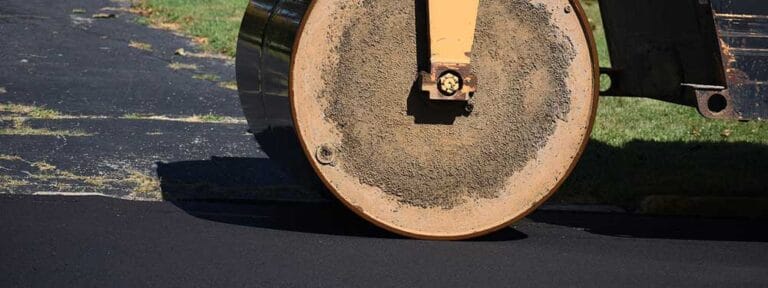
Professional paving starts below the surface. Before any asphalt goes down, the subgrade needs proper preparation. That means addressing drainage issues, compacting the base correctly, and ensuring the foundation can support the load it’ll carry. Budget contractors skip these steps or rush through them. The result looks fine for a few months. Then the problems start.
Drainage is where you see the clearest difference. A professional paving contractor designs the lot to move water away from buildings and into appropriate drainage systems. We create the right slope, install catch basins where needed, and make sure water doesn’t pool anywhere on the surface. When drainage fails, water sits on the pavement, seeps into cracks, and accelerates deterioration. In winter, that water freezes and expands, creating potholes and structural damage.
Material quality matters too. Some contractors use “driveway mix” asphalt for commercial lots because it’s cheaper. It’s not designed for the traffic and weight a commercial parking lot handles. Professional contractors use the right mix for the application, applied at the correct thickness, compacted properly.
The difference also shows up in details. Professional striping uses durable paint and follows ADA requirements precisely. Transitions between new and existing pavement are smooth. Curbs and walkways integrate correctly. These aren’t cosmetic touches. They affect safety, compliance, and how long the work holds up.
Budget work creates ongoing problems. You’ll spend more on repairs, deal with more complaints, and face higher liability exposure. Professional paving costs more upfront but delivers a surface that performs reliably for decades. For property managers responsible for protecting an investment and managing risk, that difference matters.
ADA Compliance and Liability Reduction Through Proper Paving
ADA compliance isn’t optional, and the penalties for violations are severe. Federal fines start at $75,000 for a first offense and can reach $150,000 for repeat violations. Lawsuits are common, especially for properties in retail, hospitality, and healthcare.
Professional parking lot paving ensures your property meets current ADA standards. That includes the number of accessible spaces, proper dimensions, correct signage, and surface slope requirements. It’s not just about avoiding fines. It’s about creating a space that’s genuinely accessible to everyone who uses your property.
Beyond ADA issues, parking lots are high-liability areas. Slip and fall accidents average $30,000 to $40,000 in costs. Cracked pavement, potholes, and poor lighting create conditions where people get hurt. Property owners have a legal duty to maintain safe conditions. When you fail to address known hazards, you’re exposed to significant legal and financial risk.
ADA Parking Lot Requirements Property Managers Need to Know
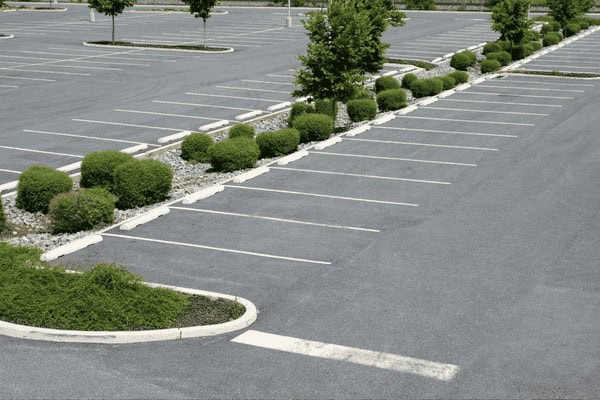
ADA parking requirements are specific and non-negotiable. The number of accessible spaces depends on your total lot size. For lots with 1 to 25 spaces, you need at least one accessible space. Larger lots require more, with the percentage increasing as the lot grows. At least one of every six accessible spaces must be van-accessible.
Each accessible space must be at least 8 feet wide with an adjacent access aisle. Van-accessible spaces require additional width. The surface slope can’t exceed 2% in any direction. That’s roughly 1:48, and it applies to both the parking space and the access aisle.
Signage requirements are just as strict. Each accessible space needs a vertical sign with the International Symbol of Accessibility, mounted at least 60 inches above the ground measured to the bottom of the sign. Van-accessible spaces need additional signage indicating that designation. Painted symbols on the pavement alone don’t meet ADA standards.
The accessible route from parking to the building entrance must be clearly marked, free of obstacles, and meet slope requirements. If there are curbs, you need compliant curb ramps with proper slope and tactile warnings.
These requirements change when you resurface or restripe your lot. Even if your lot was compliant when originally built, any substantial work triggers a requirement to meet current code. Many property managers don’t realize this until they’re facing violations.
Working with a paving contractor experienced in ADA compliance ensures you get it right the first time. We understand the requirements, know how to measure and verify slope, and can design your lot layout to maximize both accessibility and parking capacity.
How Proper Paving Reduces Slip and Fall Liability
Slip and fall accidents in parking lots are more common than most property managers realize. They account for 16% of all insurance claims and 26% of settlement costs. The conditions that cause these accidents are preventable with proper paving and maintenance.
Uneven surfaces are a primary cause. When pavement settles unevenly or develops cracks that create height differences, people trip. Heels catch in cracks. Stroller wheels stop abruptly. Seniors lose their balance. These aren’t freak accidents. They’re predictable outcomes of deteriorating pavement.
Poor drainage creates slipping hazards. When water pools on the surface, it becomes slippery. In winter, those pools freeze into ice patches. Property owners are responsible for addressing these conditions. If someone falls because of standing water or ice that resulted from poor drainage, you’re liable.
Potholes are obvious hazards, but even shallow depressions cause problems. A slight dip in a pedestrian walkway might not look serious, but it’s enough to cause someone to lose footing. The legal standard isn’t whether the hazard looks dangerous. It’s whether the property owner knew or should have known about it and failed to address it within a reasonable timeframe.
Professional paving eliminates these hazards. Proper slope ensures water drains correctly. A smooth, even surface removes trip hazards. Clear striping and well-marked pedestrian paths separate foot traffic from vehicles. Good lighting helps people see where they’re going.
Documented maintenance shows due diligence. Regular inspections, preventative repairs, and records of work performed demonstrate that you’re taking reasonable steps to maintain safe conditions. That documentation matters if you ever face a liability claim. It shows you weren’t negligent.
The cost of proper paving and maintenance is minimal compared to the cost of a single serious injury. Beyond the financial impact, there’s the damage to your property’s reputation and the stress of dealing with legal proceedings. Prevention is always cheaper and easier than dealing with the aftermath.
Making the Right Choice for Your Commercial Property
Professional parking lot paving protects your investment in ways that go far beyond appearance. It reduces liability exposure, ensures ADA compliance, extends the life of your pavement, and creates a safer environment for everyone who uses your property.
The difference between quality work and budget paving shows up quickly. Proper installation, attention to drainage, ADA compliance, and regular maintenance deliver a parking lot that performs reliably for decades. Shortcuts create ongoing problems that cost more to fix than doing it right the first time.
For property managers in Hunterdon County, NJ, Bucks County, PA, and Mercer County, NJ, choosing the right paving partner matters. We bring generations of experience, a commitment to quality, and a straightforward approach to every project. Whether you need a complete parking lot installation, repairs, or ongoing maintenance, working with a contractor who understands both the technical requirements and the practical realities of property management makes all the difference.