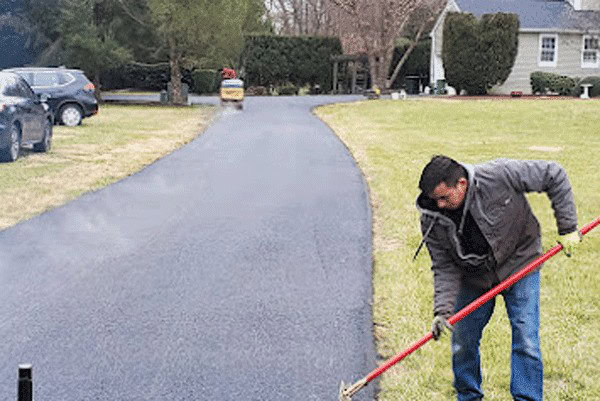
Driveway Paving Materials, Process & Costs Explained
Your driveway takes a beating. Weather, vehicles, time—they all add up. And when cracks start spreading or water starts pooling, you know something needs to happen. But where do you even start? The information out there is either too vague or trying to sell you something before you understand what you actually need.
You’re not looking for the cheapest option or the fanciest pitch. You want to know what works, what it actually costs in Hunterdon County, NJ, and how to avoid the contractors who disappear after taking your money. Let’s walk through the real details about driveway paving—materials, costs, the actual process, and what separates quality work from expensive mistakes.
Understanding Your Driveway Paving Options
When you’re looking at driveway paving, you’re really choosing between two main materials: asphalt and concrete. Both work. Both last. But they behave differently in New Jersey’s climate, cost different amounts upfront, and require different levels of maintenance over their lifespan.
Asphalt is what you see on most residential driveways around Hunterdon County. It’s that dark, smooth surface that handles our freeze-thaw cycles better than concrete because it has some flex to it. Concrete is lighter in color, harder, and can last longer if conditions are right—but it’s also more prone to cracking when temperatures swing dramatically.
The choice isn’t about which one is “better.” It’s about which one makes sense for your property, your budget, and how much maintenance you’re willing to handle down the road.
Cost to Install Asphalt Driveway
Let’s talk numbers because this is probably your first question. In New Jersey, you’re looking at somewhere between $3.50 and $6.00 per square foot for a new asphalt driveway. That’s higher than the national average—about 15-25% more—because of our labor costs, material transportation, and the fact that everything in this state just costs more.
For a typical two-car driveway that’s around 600 square feet, you’re looking at $2,100 to $3,600 just for the asphalt itself. But that’s not the full picture. The total cost to install an asphalt driveway includes removing your old surface if you have one, preparing the base properly, grading for drainage, and the actual paving. When you factor in everything, most homeowners pay between $7 and $13 per square foot for the complete job.
That means a standard driveway runs somewhere between $4,200 and $7,800 total. If your property has drainage issues, needs significant grading work, or requires removal of old concrete (which is harder to break up than old asphalt), you’ll be on the higher end. If you’re overlaying existing asphalt that’s still in decent shape, you might save $2 to $4 per square foot.
Here’s what drives the cost up: poor drainage that needs correction, tree removal, steep slopes that require extra equipment and expertise, soil conditions that need additional base material, and properties that are hard to access with heavy machinery. A contractor who shows up and gives you a price without looking at these factors isn’t giving you a real estimate—they’re guessing, and you’ll pay for that guess later when “unexpected issues” suddenly appear.
The right contractor walks your property, checks the drainage, looks at what’s underneath your current surface if you have one, and gives you a price that accounts for the actual work needed. That estimate might be higher than the guy who barely looked at your driveway, but it’s honest. And honest saves you money in the long run.
Cost to Replace Asphalt Driveway vs. New Installation
Replacing an existing asphalt driveway costs more than installing one on bare ground, but usually less than tearing out old concrete. The difference comes down to what needs to be removed and how much prep work the site requires.
When you’re replacing asphalt, the contractor has to break up and haul away the old material. That runs about $1 to $2 per square foot for removal alone. If the base underneath is still solid, you might save some money there. But if water damage or settling has compromised that base layer—and it often has, which is why you’re replacing the driveway in the first place—you’re starting from scratch with excavation and new base material.
Concrete removal costs more because it’s harder to break up and heavier to haul. You’re looking at closer to $2 to $3 per square foot just for demo. And concrete almost never leaves you with a usable base, so you’re definitely rebuilding that foundation layer.
Here’s the thing about replacement costs that most contractors won’t tell you upfront: the real expense isn’t the removal—it’s fixing whatever caused your old driveway to fail. If water was pooling because the grade was wrong, just paving over the same slope means you’ll have the same problem in five years. If the base was too thin or the wrong material, repeating that mistake wastes your money.
A proper replacement addresses the original problem. That might mean regrading to improve drainage, installing a thicker base, or adding solutions for water management that weren’t there before. Yes, it costs more. But you’re paying once instead of paying twice—once now for a cheap fix, and again in a few years when it fails.
The cost difference between doing it right and doing it cheap might be $1,500 to $2,500 on a typical driveway. That sounds like a lot until you realize you’re comparing a 25-year solution to a 10-year band-aid. Your call on which makes more sense.
Asphalt vs Concrete: Which Driveway Material Makes Sense for You
This is where most homeowners get stuck. Everyone has an opinion about asphalt versus concrete, but most of those opinions are based on one person’s experience or what they’ve heard from a neighbor. Let’s look at what actually matters for properties in Hunterdon County.
Asphalt costs less upfront—about 45% less than concrete. It handles our winter freeze-thaw cycles better because it’s flexible. When water gets into tiny cracks and freezes, asphalt can expand slightly without catastrophic cracking. It’s also quicker to install and you can drive on it within a few days instead of waiting a week or more.
Concrete lasts longer if conditions are right—potentially 30 to 40 years compared to asphalt’s 15 to 30 years. It requires less maintenance, holds up better in extreme heat, and gives you more options for color and decorative finishes. But it costs more to install, takes longer to cure, and when it does crack in our climate, repairs are more expensive and harder to blend in.
Is Asphalt Cheaper Than Concrete for Driveways
Yes, asphalt is cheaper upfront. You’ll pay roughly $3.50 to $6.00 per square foot for asphalt versus $6.00 to $12.00 per square foot for concrete in New Jersey. For that 600-square-foot driveway, you’re looking at $2,100 to $3,600 for asphalt materials versus $3,600 to $7,200 for concrete—and that’s before labor and prep work.
But “cheaper” depends on your timeline. Asphalt needs sealcoating every 2 to 3 years, which runs $300 to $800 each time. Over 20 years, you’re spending $2,000 to $5,000 on maintenance. Concrete needs occasional cleaning and maybe sealing every 5 to 10 years, which costs less over time.
If you’re planning to stay in your home for 25+ years, concrete’s higher upfront cost might balance out. If you’re thinking 10 to 15 years, asphalt’s lower initial investment makes more sense. And if you’re in an area where winter salt and freeze-thaw cycles are harsh—which describes most of Hunterdon County—asphalt’s flexibility gives it an edge in actual performance regardless of long-term cost calculations.
The real answer isn’t about which material costs less. It’s about which one fits your situation. How long are you planning to stay? How much maintenance are you willing to do? Does your property have specific drainage challenges that favor one material over the other? Those questions matter more than the per-square-foot price.
Material cost is one thing. Performance in your actual conditions is another. A cheaper material that fails in 12 years costs more than a pricier one that lasts 25. But a more expensive material that cracks in 8 years because it wasn’t right for your climate is just money wasted. Focus on what works for your property, not just what costs less today.
Asphalt vs Concrete Driveway: Resale Value and Long-Term Performance
Real estate agents will tell you that curb appeal matters, and your driveway is a huge part of that first impression. But does the material itself—asphalt versus concrete—actually affect your home’s value? The short answer: condition matters more than material.
A freshly sealed asphalt driveway looks clean and well-maintained. A cracked, stained concrete driveway looks neglected. Buyers respond to what they see, not what’s underneath. If you’re planning to sell within a few years, spending extra on concrete doesn’t give you a better return than investing in quality asphalt installation and keeping it maintained.
Concrete can add value in upscale neighborhoods where it’s the standard, or when you’re using decorative finishes that enhance the home’s aesthetic. But in most residential areas around Hunterdon County, asphalt is expected and accepted. Going with concrete doesn’t automatically mean your home sells for more.
Long-term performance is where the differences show up. Asphalt in New Jersey typically lasts 15 to 20 years with regular maintenance—sealcoating every few years, crack filling when needed, and addressing drainage issues before they become major problems. Concrete can last 30 to 40 years if it’s installed correctly and the climate cooperates, but our freeze-thaw cycles aren’t ideal for concrete longevity.
Here’s what actually affects resale value: a driveway that’s in good condition, properly graded so water doesn’t pool, free of major cracks or potholes, and clean. The material is secondary to the condition. A 10-year-old asphalt driveway that’s been maintained beats a 15-year-old concrete driveway that’s been ignored.
If you’re choosing based on resale value, think about your timeline. Selling within 5 years? Fresh asphalt with good sealcoating looks great and costs less upfront. Staying 20+ years? Either material works if you maintain it, but concrete’s lower maintenance requirements might appeal to you more. The market doesn’t care which one you choose as long as it looks good when buyers show up.
One more thing: drainage and grading matter more for resale value than material choice. A driveway that directs water away from the house, doesn’t have standing puddles, and connects smoothly to the street signals quality to buyers. One that pools water or has obvious drainage problems raises red flags regardless of whether it’s asphalt or concrete.
Making Your Driveway Paving Decision
You’ve got the information now. Material options, realistic costs for Hunterdon County, what affects longevity, and how to think about asphalt versus concrete without just going with the cheapest quote. The next step is finding a contractor who’s going to do the work right—proper base preparation, correct grading for drainage, quality materials, and honest communication about what your property actually needs.
This isn’t about picking the fanciest option or the rock-bottom price. It’s about getting a driveway that performs well for 20+ years because someone took the time to do it correctly the first time. That means addressing drainage issues, using adequate base material, grading properly, and not cutting corners just to save a few hundred dollars today.
Whether you’re replacing a failing driveway or installing one for the first time, the principles are the same: honest assessment of your property’s needs, transparent pricing that accounts for the real work required, and contractors who treat your project like it matters. If you’re in Hunterdon County and want that kind of approach, we’ve been handling residential driveway paving with that philosophy since 2000, building on family experience that goes back to 1948.