
Parking Lot Line Painting: Commercial Solutions
Your parking lot lines are fading. Maybe you’ve noticed customers hesitating at intersections, or perhaps someone mentioned the handicap spaces are hard to see. Those faded lines aren’t just a cosmetic issue. They’re a liability waiting to happen, and they’re quietly telling every visitor that maintenance isn’t a priority here. Clear, professionally applied striping does more than guide traffic—it protects you from lawsuits, keeps you compliant with regulations, and shows customers you care about their safety. Here’s what you need to know about parking lot line painting for commercial properties in Hunterdon County, and why waiting to address it costs more than you think.
Professional Parking Lot Line Painting for Commercial Properties
Commercial parking lot line painting involves more than rolling on a coat of paint. It’s about creating a traffic management system that protects people, maximizes your space, and keeps you on the right side of federal and local regulations.
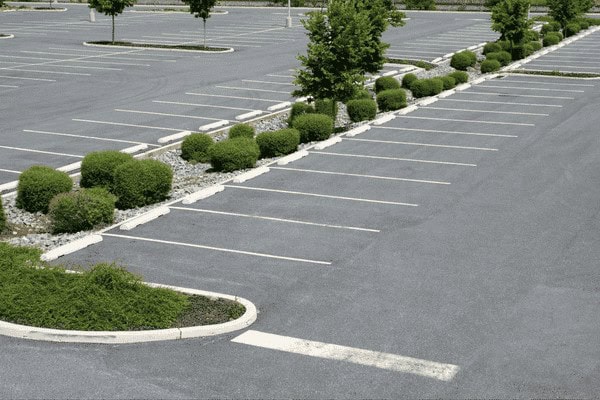
When done right, fresh striping transforms how your parking lot functions. Drivers know where to go. Pedestrians have clear walkways. Emergency vehicles can access fire lanes without obstruction. Every line serves a purpose, from the standard parking stalls to the directional arrows that prevent head-on conflicts in driving lanes.
The difference between a professional striping job and a rushed one shows up fast. Quality work uses proper surface preparation, the right paint for your traffic volume, and precise measurements that optimize your layout. Cheap work fades within months, creates confusion, and forces you to repaint sooner than necessary—which means you’re paying twice for the same service.
How Often Should You Repaint Parking Lot Lines
Most commercial properties in Hunterdon County need restriping every 12 to 24 months. That’s not an arbitrary timeline. It’s based on how quickly paint degrades under New Jersey’s weather conditions and the traffic your lot handles daily.
High-traffic commercial lots—think retail centers, medical facilities, or office complexes with constant turnover—wear through paint faster. You might need annual restriping if your property sees heavy use. Lower-traffic lots can stretch to 18 or 24 months before lines become difficult to see.
Climate plays a bigger role than most property managers realize. New Jersey’s freeze-thaw cycles break down paint faster than steady temperatures would. Summer UV exposure fades pigments. Winter plowing scrapes away surface layers. Rain and snow infiltrate any weak spots in your pavement, accelerating deterioration underneath the paint.
The type of paint matters too. Standard water-based acrylic lasts 12 to 18 months under normal conditions. Epoxy-based paints extend that to several years. Thermoplastic striping, the most durable option, can last three to five times longer than latex paint—but it costs more upfront.
Here’s a practical approach: inspect your lines every six months. If you’re squinting to see where stalls begin and end during daylight, your customers definitely can’t see them at night or in rain. If handicap symbols are faded enough that you’re not sure they’d photograph clearly, you’re risking compliance violations.
Sealcoating creates an immediate need for restriping. The sealant covers your existing lines completely, so you’ll need fresh paint within 48 hours of completing that work. Smart property managers coordinate both services at once rather than paying for two separate mobilizations.
Don’t wait until lines disappear entirely. By then, you’ve already created liability exposure and frustrated customers who can’t figure out where to park. Schedule restriping when lines first start fading—usually when they’ve lost about 40% of their original visibility. That proactive approach keeps your lot functional and compliant year-round.
ADA Compliance Requirements for Parking Lot Striping
ADA compliance isn’t optional, and the penalties for getting it wrong are steep. First-offense violations can cost $75,000. Repeat violations jump to $150,000. Beyond fines, you’re exposed to lawsuits from individuals who couldn’t access your property because your parking didn’t meet federal standards.
The Americans with Disabilities Act requires specific numbers of accessible spaces based on your total parking count. Lots with 1 to 25 spaces need at least one accessible space. The requirement scales up from there—26 to 50 spaces need two accessible spaces, 51 to 75 need three, and so on. For every six accessible spaces you provide, at least one must be van-accessible.
Dimensions matter more than most people realize. A standard car-accessible space must be at least 8 feet wide, measured from the center of each boundary stripe. It needs an adjacent access aisle at least 5 feet wide. That’s 13 feet total for each accessible space.
Van-accessible spaces require more room. You can either provide an 11-foot space with a 5-foot access aisle, or an 8-foot space with an 8-foot access aisle. Both configurations work, but the wider access aisle is often easier for people using wheelchair lifts.
Access aisles can be shared between two spaces, which helps you meet requirements without dedicating excessive square footage. The aisle must extend the full length of the parking space and maintain the same level surface—no slopes steeper than 1:48 in any direction.
Signage requirements trip up a lot of property owners. Every accessible space needs a sign with the international symbol of accessibility, mounted at least 60 inches above the ground measured to the bottom of the sign. Van-accessible spaces need an additional “Van Accessible” designation on the sign.
The path from accessible spaces to your building entrance matters too. That accessible route can’t have curbs or stairs, must be at least 3 feet wide, and needs a firm, stable, slip-resistant surface. If your accessible spaces are on the opposite side of the lot from your entrance, you haven’t actually provided accessibility.
Paint color isn’t specified in ADA guidelines, but it must contrast with your parking surface. Most facilities use white or blue paint on asphalt, yellow on concrete. Some municipalities have specific color requirements, so check local codes before starting work.
When you restripe your parking lot, federal law requires you to bring it into ADA compliance. The government considers restriping “readily achievable” because it’s relatively inexpensive compared to other accessibility modifications. You can’t restripe and ignore compliance requirements just because the lot was laid out incorrectly years ago.
Comprehensive Parking Lot Repair Services
Line painting only works on sound pavement. If your parking lot has cracks, potholes, or drainage problems, fresh striping won’t fix the underlying issues—and it won’t last long on damaged asphalt.
Comprehensive parking lot repair addresses structural problems before cosmetic ones. That means evaluating your pavement’s condition, identifying what’s causing deterioration, and fixing it properly so your investment in striping actually lasts.
Cracks come in several varieties, each indicating different problems. Alligator cracking—those interconnected patterns that look like reptile skin—signals base failure underneath the asphalt. Block cracking suggests the asphalt itself is aging and losing flexibility. Longitudinal cracks running the length of your lot often point to poor joint construction or pavement edge issues.
Ignoring these problems doesn’t make them go away. Water infiltrates through cracks, weakening the base material underneath. During winter, that water freezes and expands, making cracks wider. Come spring, you’ve got potholes where you used to have manageable cracks. The repair cost just multiplied.
Common Parking Lot Damage and Repair Solutions
Potholes are the most visible parking lot problem, but they’re actually the end result of earlier damage you didn’t address. They form when water penetrates the pavement, weakens the base, and traffic breaks through the surface. Once you’ve got a pothole, you’re looking at more extensive repairs than if you’d sealed the original crack.
Proper pothole repair involves more than throwing cold patch into the hole. The damaged area needs to be cut out cleanly, the base repaired if necessary, and hot-mix asphalt installed with proper compaction. Shortcuts here mean the same pothole reappears within months.
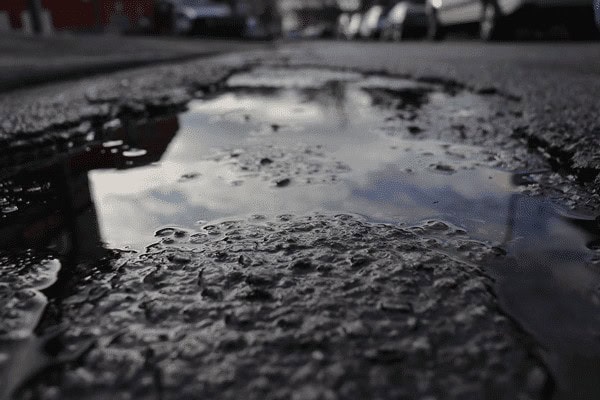
Depressions and “bird baths”—those low spots where water pools after rain—indicate problems with your lot’s grade or base stability. They’re more than annoying puddles. Standing water accelerates pavement deterioration, creates slip hazards, and looks unprofessional. Fixing them requires removing the affected pavement, correcting the subgrade, and repaving.
Edge deterioration happens when the asphalt at your lot’s perimeter crumbles away. It’s often caused by installing asphalt too thin around edges or extending it beyond proper base support. Left alone, edge damage works its way inward, eventually requiring repairs to larger sections of your lot.
Surface raveling—when the top layer of asphalt starts to break apart and you see loose aggregate—signals that your pavement is oxidizing and losing its binding agents. This happens naturally over time, accelerated by UV exposure and lack of sealcoating. Once raveling starts, it progresses quickly without intervention.
Drainage problems show up as water pooling in areas where it shouldn’t, or water flowing toward your building instead of away from it. Poor drainage is one of the fastest ways to destroy a parking lot. Water undermines the base, creates potholes, and during winter, those wet areas become ice hazards.
Addressing these issues before restriping makes sense financially. Fresh paint on failing pavement means you’ll be repairing that pavement soon anyway—and then restriping again because the repairs will damage your new lines. Do the structural work first, then stripe. Your paint will last longer, and you’ll avoid paying twice.
The repair approach depends on how extensive the damage is. Minor cracks get sealed with hot rubberized crack filler. Larger damaged areas need patching—cutting out the bad section and replacing it with new asphalt. If 25% or more of your lot shows significant damage, you’re probably looking at an overlay or complete replacement rather than piecemeal repairs.
Parking Lot Maintenance Programs for Commercial Properties
Reactive maintenance—fixing things after they break—costs more than proactive care. A comprehensive parking lot maintenance program catches small problems before they become expensive emergencies.
Regular sealcoating is the foundation of pavement preservation. Applied every 2 to 3 years, sealant protects your asphalt from UV damage, water infiltration, and chemical spills from vehicles. It’s like sunscreen for your parking lot. The cost of sealcoating is a fraction of what you’d pay to replace pavement that deteriorated because you skipped it.
Crack sealing should happen annually, or whenever you spot new cracks forming. Small cracks sealed promptly don’t turn into potholes. The repair costs maybe a few hundred dollars instead of thousands for pothole patching or pavement replacement.
Seasonal inspections help you stay ahead of weather-related damage. Check your lot after winter to identify any freeze-thaw damage. Inspect again in fall before cold weather returns. Document what you find—those records demonstrate due diligence if someone ever claims your lot was unsafe.
Line striping fits into this maintenance cycle. When you sealcoat, you restripe immediately after. Between sealcoating cycles, monitor your lines and touch up any areas that fade faster due to heavy traffic or turning movements.
Drainage maintenance prevents more expensive problems. Keep catch basins clear of debris. Make sure water flows where it’s supposed to. If you notice new areas where water pools, address them before they cause pavement damage.
A written maintenance plan serves two purposes. First, it keeps you organized—you know what needs attention and when. Second, it provides documentation that you’re maintaining your property to reasonable standards. That documentation matters if someone gets injured and claims you were negligent.
Property managers who implement regular maintenance programs typically extend their parking lot’s lifespan from 15 years to 25 or even 30 years. That’s a significant return on the modest investment in preventive care. You’re also maintaining property value—a well-kept parking lot makes your entire facility look better maintained.
Maintaining Safe, Compliant Commercial Parking Areas
Clear parking lot lines do more than look good. They protect people, reduce your liability exposure, and demonstrate that you maintain your property to professional standards. Faded striping creates confusion, increases accident risk, and exposes you to compliance violations that carry serious financial penalties.
Commercial properties in Hunterdon County face specific challenges—freeze-thaw cycles that break down paint faster, clay soil that affects drainage, and seasonal weather that limits when work can be done. Working with contractors who understand these local conditions means your striping lasts longer and performs better.
The right approach combines regular maintenance with quality workmanship. Don’t wait until lines disappear. Schedule inspections, plan restriping before visibility becomes a problem, and coordinate striping with other pavement maintenance to get the most value from every dollar spent. When you’re ready to address your parking lot’s striping needs, we bring decades of experience and a commitment to treating every project with the attention it deserves.