Is Asphalt Cheaper Than Concrete? Real Cost Analysis
You’re planning a new driveway or staring at one that’s seen better days. The quotes are coming in, and you’re trying to figure out if saving money on asphalt now means spending more later—or if concrete’s higher price is just expensive overkill.
Here’s the direct answer: asphalt is cheaper to install. A standard driveway runs $3,000-$7,200 for asphalt versus $3,600-$9,000 for concrete.
But installation cost is only part of the equation. Maintenance requirements, repair expenses, and how each material performs through New Jersey’s freeze-thaw cycles all affect what you’ll actually spend over 20-30 years. Let’s break down the real numbers so you can make a decision based on facts, not guesswork.
Asphalt vs Concrete Driveway Cost: What You’ll Pay for Installation
When you’re comparing estimates, asphalt consistently costs less upfront. Current pricing in New Jersey runs $5-$12 per square foot for asphalt installation compared to $6-$15 per square foot for concrete. On a typical 600-square-foot two-car driveway, you’re looking at $3,000-$7,200 for asphalt versus $3,600-$9,000 for concrete.
That $600-$1,800 difference is real money. For homeowners working with tighter budgets or those who need quality paving without premium pricing, asphalt delivers a durable surface at a lower entry cost.
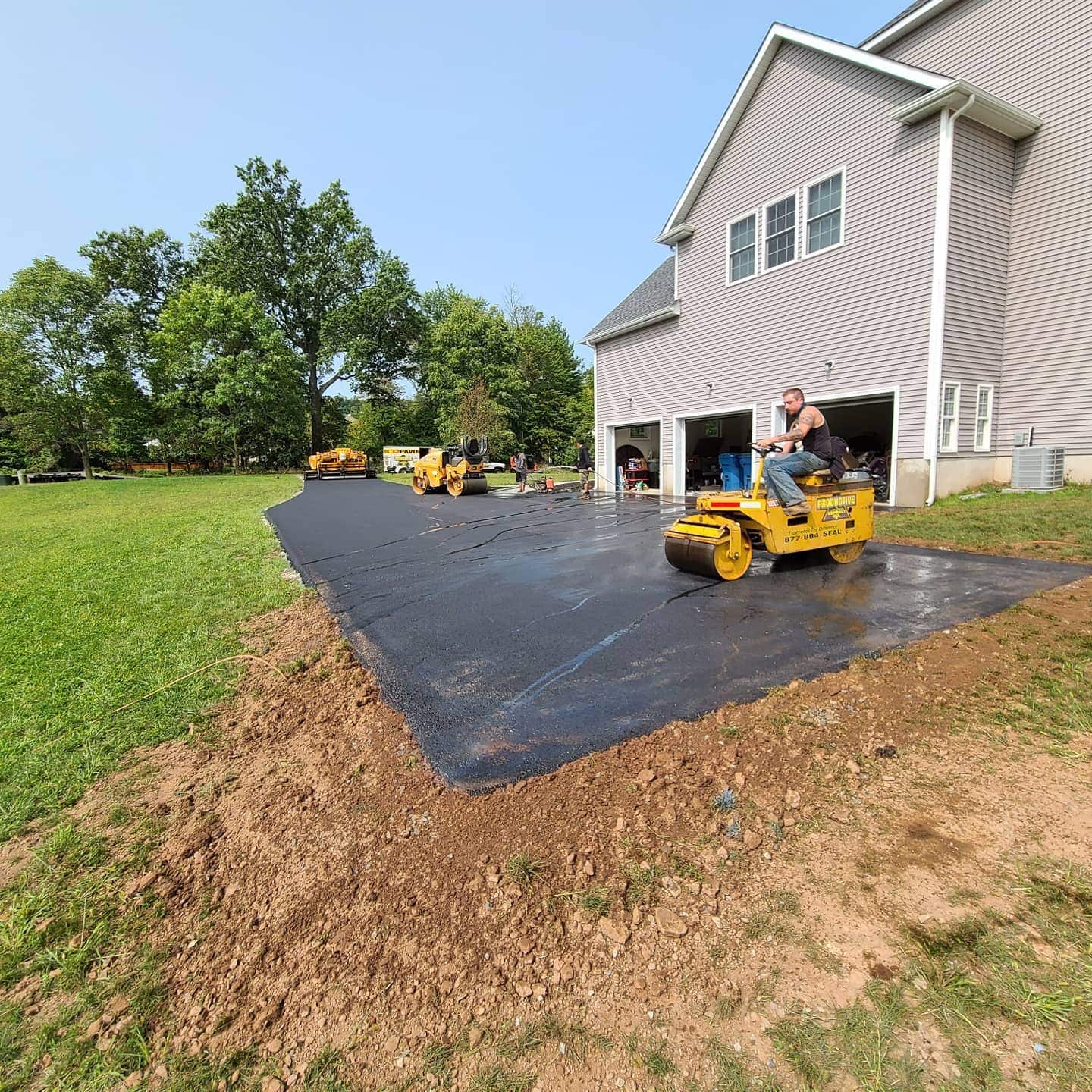
The price gap comes from materials and labor. Asphalt uses petroleum-based binders mixed with aggregate—a straightforward process that moves quickly. Most residential driveways are completed in 1-3 days, and you can drive on the surface within 24-48 hours. Concrete requires precise mixing, forming, finishing, and a seven-day cure before it can handle vehicle weight. More labor days mean higher costs.
Why Asphalt Costs Less Than Concrete: Materials and Labor Breakdown
The difference between asphalt and concrete pricing isn’t random. It traces directly to material composition, installation complexity, and labor requirements.
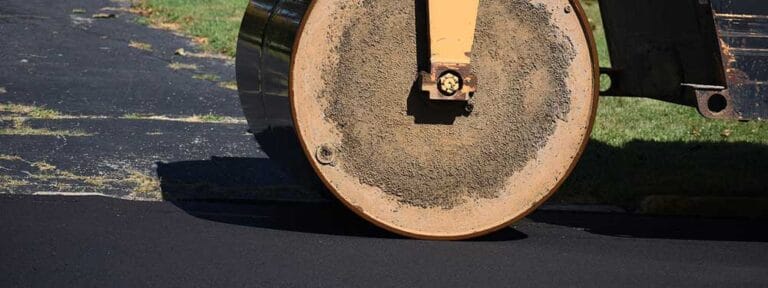
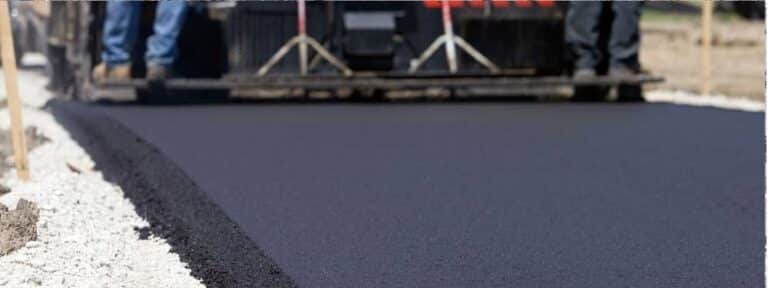
Asphalt is petroleum-based, which makes it less expensive than cement products. The installation process is relatively straightforward—heat the mixture, spread it evenly, compact it properly. Experienced crews can complete a residential driveway efficiently without extensive specialized finishing work. You get a durable black surface that does its job without decorative options, which keeps costs predictable.
Concrete involves more variables and more labor. The mixture of cement, sand, gravel, and water requires precise ratios. Installation demands forming, careful pouring, skilled finishing, and extended curing time. Each step adds labor hours. If you want stamped patterns, custom colors, or decorative finishes, you’re adding significantly more—stamped concrete runs $12-$18 per square foot, more than double basic asphalt.
Site conditions affect both materials, but concrete’s longer timeline means weather delays cost more in labor days. You need consistent temperatures above 50°F and dry conditions for proper curing. In New Jersey’s variable spring and fall weather, that can extend project timelines and costs.
Local soil conditions matter too. Hunterdon County’s clay-heavy soils retain moisture longer than sandy soils, which affects base preparation requirements for both materials. Proper grading and drainage aren’t optional—they’re essential for preventing premature failure. Quality contractors account for these local factors in their estimates, which is why the cheapest bid often isn’t the smartest choice. You’re paying for expertise that prevents expensive problems three years down the road.
The installation price gets you in the door. What you spend over the next 15-30 years determines whether you actually saved money or just delayed the real costs.
Long-Term Maintenance Costs: Asphalt vs Concrete Over 20 Years
This is where the cost comparison gets more complex. Asphalt’s lower installation price comes with ongoing maintenance requirements that concrete doesn’t demand as frequently.
Asphalt needs sealcoating every 3-5 years to protect against water infiltration, UV damage, and chemical spills. In New Jersey, professional sealcoating runs $300-$800 per application. Over 20 years, you’re looking at 4-6 sealcoating sessions—adding $1,200-$4,800 to your total investment. Cracks need filling as they appear, typically costing $250-$800 per repair session depending on severity.
Concrete requires less frequent maintenance. You might sealcoat every 5 years to prevent stains, but it’s not as critical. The material’s rigidity means fewer small cracks forming from daily stress and traffic.
But when concrete does crack—and in New Jersey’s freeze-thaw climate, it eventually will—repairs get expensive. You can’t simply fill concrete cracks like you patch asphalt. Significant damage often requires cutting out and replacing entire sections, which is labor-intensive. Concrete repair costs range from $3-$25 per square foot depending on damage type. A major repair easily hits $1,000-$3,000.
So which ends up cheaper over time? It depends on your maintenance discipline and timeline. If you stay on top of asphalt sealcoating and catch cracks early, you’ll spend more in small increments but avoid catastrophic failures. Neglect it, and you’re looking at resurfacing or replacement much sooner than the material’s potential 20-30 year lifespan.
Concrete rewards a hands-off approach. Less frequent maintenance means fewer expenses short-term, but when problems develop, they hit harder. The material lasts longer overall—30-40+ years with proper care—so if you’re staying in your home long-term, concrete’s higher upfront cost spreads across more years of use.
For Hunterdon County homeowners, there’s another critical factor: New Jersey’s climate actively works against both materials, but in different ways.
Which Is Better for a Driveway Concrete or Asphalt: Climate Performance
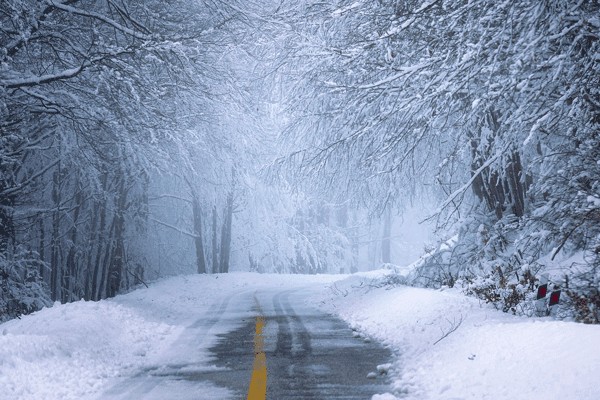
New Jersey’s weather tests driveways relentlessly. We experience 55-75 freeze-thaw cycles every winter—days when temperatures drop below freezing overnight and rise above it during the day. Water seeps into tiny cracks, freezes and expands by roughly 9%, then thaws and penetrates deeper. This cycle repeats weekly, sometimes daily, throughout winter.
That constant expansion and contraction destroys driveways from the inside out. The question is which material handles it better.
Asphalt wins in freeze-thaw conditions. Its flexibility allows it to expand and contract with temperature changes without cracking as readily as concrete. The material bends slightly under stress rather than fracturing. This is why asphalt dominates northern driveways, roads, and parking lots throughout New Jersey—it’s engineered for exactly these conditions.
Concrete’s rigidity becomes a liability when temperatures fluctuate. Once water penetrates and freezes, concrete has nowhere to flex. Ice pressure creates cracks that widen with each freeze cycle. Salt from winter de-icing accelerates damage, seeping into concrete’s porous surface and causing scaling—where the surface flakes and peels in layers.
Asphalt Lifespan and Durability in New Jersey’s Freeze-Thaw Cycles
Asphalt typically lasts 15-30 years in New Jersey’s climate, with the range depending almost entirely on installation quality and maintenance consistency. A properly installed asphalt driveway with regular sealcoating can reach that 30-year mark. Neglected asphalt might need replacement in 15 years or less.
The material’s flexibility is its advantage in cold climates. When water freezes in small cracks, asphalt can accommodate some expansion without catastrophic failure. You’ll still get cracks—no material is immune—but they develop more slowly and are easier to repair before becoming serious structural problems.
Sealcoating creates a protective barrier that prevents water from penetrating the surface initially. Think of it like waterproofing—you’re stopping moisture infiltration rather than dealing with damage after it happens. This is why the sealcoating schedule matters so much in our climate. Miss a few years and water infiltrates, freezes, and starts the deterioration cycle that leads to potholes and base failure.
Heat affects asphalt too, though it’s less concerning in New Jersey than our winters. During summer’s hottest days, asphalt can soften slightly, making it vulnerable to indentations from heavy vehicles or sharp objects. You might notice slight impressions where cars park regularly during heat waves. It’s not structural damage, but it’s worth understanding.
The real advantage shows up in repairs. When asphalt cracks, you can fill them with hot-pour rubberized materials that create waterproof seals. The repair blends with the existing surface and costs a fraction of concrete repairs. For minor damage, homeowners can even handle repairs themselves with cold-patch materials from hardware stores—though professional repairs last longer and perform better.
If your asphalt eventually needs more than crack filling, you have the option to resurface or overlay rather than complete replacement. This involves adding a new asphalt layer over the existing surface, assuming the base remains solid. Resurfacing costs $2-$5 per square foot—significantly less than full replacement at $7-$15 per square foot. Concrete doesn’t offer this option; when it fails, you’re typically looking at complete removal and replacement.
Asphalt vs Concrete Driveway Resale Value: What Buyers Actually Care About
Does choosing concrete over asphalt actually increase your home’s resale value enough to justify the higher cost? It’s a fair question that deserves a straight answer.
Research shows concrete driveways generally add more perceived value than asphalt, particularly in neighborhoods where concrete is standard. Buyers notice curb appeal, and a well-maintained concrete driveway with custom finishes makes a strong first impression. Real estate professionals consistently identify driveways as one of the first features influencing how homes perform on the market.
But the difference isn’t as dramatic as you might expect. A paved driveway—whether asphalt or concrete—adds significantly more value than gravel or unpaved surfaces. When comparing asphalt to concrete specifically, both materials add value, and neither dramatically outperforms the other in actual sale price impact.
What matters more is condition and neighborhood appropriateness. A freshly sealed, crack-free asphalt driveway in excellent condition impresses buyers more than a stained, cracked concrete driveway that obviously needs work. Similarly, if you’re in a neighborhood where most homes have concrete driveways, your asphalt might stand out negatively—not because asphalt is inferior, but because it doesn’t match buyer expectations for that specific area.
The resale conversation also depends on your timeline. If you’re planning to sell within 5 years, concrete’s higher upfront cost might not pay off in increased sale price. You’re essentially improving the property for the next owner without recouping your investment. If you’re staying 15-20 years, the equation shifts. You enjoy the driveway’s full lifespan, and by the time you sell, both materials would likely need maintenance or replacement anyway.
For most Hunterdon County homeowners, the practical answer is this: choose the material that fits your budget and maintenance preferences while you actually live there. A well-maintained asphalt driveway won’t hurt resale value, and the money you save on installation can go toward other improvements that might offer better ROI—like kitchen updates or bathroom renovations that buyers actively seek.
The resale question ties into total cost of ownership. Concrete’s 30-40 year lifespan sounds impressive until you factor in that it costs 20-45% more upfront and repairs are significantly more expensive when needed. Asphalt’s 15-30 year lifespan with regular maintenance might actually deliver better value per year of use, especially if you’re not planning to stay in the home for three decades.
Choosing Between Asphalt and Concrete: Which Driveway Material Is Right for You
So which is cheaper—asphalt or concrete driveway? Asphalt wins on installation cost, ease of repair, and performance in New Jersey’s freeze-thaw climate. Concrete wins on longevity, lower maintenance frequency, and potentially higher resale value in certain neighborhoods.
The right choice depends on your budget, timeline, and how you feel about ongoing maintenance. If you need quality paving at a lower upfront cost and don’t mind sealcoating every few years, asphalt delivers excellent value. If you’re planning to stay long-term and prefer less frequent maintenance, concrete might justify its higher price.
What matters most is working with a contractor who understands local soil conditions, climate challenges, and won’t cut corners on base preparation and drainage—the factors that determine whether your driveway lasts 15 years or 30, regardless of material choice. We’ve been helping homeowners in Hunterdon County, Mercer County, Somerset County, Bucks County, and Lehigh County make these decisions since 1948, with straightforward guidance that comes from four generations of paving experience.