
What to Watch During Asphalt Driveway Installation
You’re about to spend thousands on a new driveway. The contractor seems legitimate, the price sounds reasonable, and the timeline works with your schedule. But how do you know if you’re actually getting what you paid for?
Asphalt scams cost homeowners over $8,000 in some cases, leaving them with substandard work or nothing at all. Even well-meaning contractors sometimes cut corners that lead to premature failure. The difference between a driveway that lasts 20 years and one that cracks within five often comes down to details you can’t see once the asphalt is laid.
This guide shows you exactly what to watch during asphalt driveway installation—from the moment a contractor knocks on your door to the final roller pass. You’ll know how to verify legitimacy, spot red flags during the work, and ensure you’re getting the quality installation your property deserves.
How to Spot Asphalt Contractor Scams Before Work Starts
The most expensive mistakes happen before any equipment arrives at your property. Scammers and fly-by-night operators use predictable tactics that you can spot if you know what to look for.
Door-to-door contractors claiming they have “leftover asphalt” from a nearby job rarely deliver quality work. Professional paving requires careful planning—legitimate contractors don’t end up with excess material they need to unload. This pitch is designed to create urgency and pressure you into a quick decision before you can research the company or get competing bids.
Check their vehicle license plates and business address. Out-of-state plates or unmarked trucks signal a traveling crew that won’t be around to fix problems. Established local contractors have branded vehicles, physical business locations, and reputations they’ve spent years building in your community.
Red Flags That Signal Contractor Legitimacy Issues
Legitimate contractors welcome scrutiny. They provide documentation, answer questions directly, and give you time to make informed decisions. Scammers avoid accountability at every turn.
Ask to see their insurance certificate and business license. Any hesitation or excuse means you should walk away immediately. If they’re not insured and someone gets hurt on your property, you could be held liable. Licensed contractors have met legal requirements and can be held accountable if problems arise.
Request a written estimate that breaks down every cost. Vague quotes like “around $5,000” leave room for surprise charges later. Your estimate should specify the depth of the base material, inches of compacted asphalt, type of asphalt mix, square footage, drainage work, and warranty coverage. Without these details, you can’t compare estimates fairly or hold the contractor accountable for delivering what they promised.
Check their online presence and reviews. A company without a website or with only a handful of reviews may not be established enough to stand behind their work. Look for contractors with substantial review histories—both positive feedback and how they respond to complaints tell you about their commitment to customer satisfaction.
Ask for local references from recent projects. Legitimate contractors readily provide contact information for past clients. Take the time to call these references and ask about the quality of work, communication during the project, and whether any issues arose after completion. If a contractor can’t or won’t provide references, that’s your signal to keep searching.
Watch out for pressure tactics. Phrases like “this price is only good today” or “we need a decision now to fit you in the schedule” are designed to prevent you from doing research. Quality contractors understand that a driveway is a significant investment. They give you time to think, compare options, and make the right choice for your property.
Cash-only payment demands are another major red flag. Legitimate businesses accept checks and credit cards, which create paper trails and consumer protections. Cash payments benefit the contractor by making transactions untraceable—exactly what scammers want when they skip town after doing substandard work or taking your deposit without finishing the job.
What a Fair Asphalt Paving Estimate Should Include
A proper estimate is more than a bottom-line number. It’s your roadmap for the entire project and your protection if disputes arise later.
Your written estimate should start with site preparation details. This includes removing the existing driveway if necessary, grading for proper drainage, and addressing any soft spots or problem areas in the subgrade. Skipping or skimping on preparation work is where many contractors cut costs—and where your driveway problems will start within a few years.
The base layer specifications matter more than most homeowners realize. Your estimate should state the type of base material, the depth before compaction, and the compaction method. Clay soil conditions common in Hunterdon County, NJ require deeper base preparation than sandy soil. A contractor who doesn’t discuss soil conditions and adjust their approach accordingly either lacks experience or plans to cut corners.
Asphalt specifications should be crystal clear. How many inches of asphalt will be installed, and is that measurement before or after compaction? Some contractors quote “4 inches” but mean 4 inches of poured material that compacts down to 2 inches. You want to know the final compacted thickness because that determines how long your driveway lasts. Residential driveways typically need 2-3 inches of compacted asphalt over a proper base, while commercial applications require more.
Drainage solutions should be explicitly addressed. Water is the enemy of asphalt—it causes cracks, potholes, and premature failure. Your estimate should explain how the contractor will grade your driveway to direct water away from your home and prevent pooling. In areas with clay soil and freeze-thaw cycles, proper drainage isn’t optional.
Timeline expectations help you plan and hold the contractor accountable. When will work start? How many days will it take? When can you use your driveway again? Weather affects asphalt installation, so your contractor should explain how rain or temperature changes might impact the schedule.
Warranty coverage protects your investment. What does the warranty cover—materials, workmanship, or both? How long does it last? What voids the warranty? Get these terms in writing before work begins. Contractors confident in their work offer meaningful warranties and honor them without hassle.
Payment terms should be reasonable and protect both parties. Be wary of contractors demanding large deposits upfront or full payment before completion. Standard practice involves a deposit to secure materials, progress payments as work advances, and final payment only after you’ve inspected and approved the finished driveway. Never pay in full before the job is done.
Understanding the Asphalt Driveway Process Step by Step
Knowing the proper installation sequence helps you spot shortcuts and quality issues while work is in progress. Each step builds on the previous one—skip or rush any stage and you compromise the entire project.
Professional installation starts with complete removal of the old surface if you’re replacing an existing driveway. Heavy machinery breaks up and hauls away old asphalt or concrete, leaving a clean slate for proper preparation. Contractors who suggest paving over severely damaged existing surfaces are setting you up for failure—the new asphalt will only be as good as what’s underneath it.
Grading and drainage work comes next. Using laser-guided equipment, skilled contractors slope the surface so water runs off instead of pooling. This step requires expertise and precision. Eyeballing drainage or skipping this step entirely leads to standing water, which seeps into cracks, freezes, expands, and destroys your driveway from below.
Base Preparation Makes or Breaks Your Driveway
The sub-base is the foundation your asphalt relies on. You’ll never see it once the driveway is finished, but it determines whether your investment lasts 20 years or fails within five.
Proper base material typically consists of crushed stone or gravel that’s been carefully graded for size and composition. The depth depends on your soil type—clay soils that hold water and are prone to frost heave require deeper bases than well-draining sandy soils. In Hunterdon County, NJ, clay soil is common, which means you’re looking at a minimum 8-inch base for residential driveways.
Watch the compaction process carefully. Base material must be compacted in layers, not all at once. Contractors should make multiple passes with heavy roller equipment, compacting a few inches at a time until the entire base is dense and stable. If you can walk on the base and your feet sink in or leave impressions, it’s not compacted enough. Insufficient compaction means the base will settle unevenly under the weight of vehicles, causing the asphalt above to crack and fail.
The base also serves as a frost barrier. In climates with freeze-thaw cycles, proper base thickness and compaction prevent frost from reaching the subgrade soil below. When frost penetrates too deep, it causes heaving—the ground literally lifts and shifts, cracking your driveway. This is why proper base preparation matters so much in New Jersey’s climate.
Reputable contractors take their time with base preparation. If your contractor rushes this step or seems impatient about the time it takes, that’s a warning sign. Base work isn’t glamorous, but it’s where experienced contractors separate themselves from fly-by-night operators.
Ask questions during this phase. Why did they choose this base material? How deep is it? How are they ensuring proper compaction? A knowledgeable contractor will explain their choices and welcome your interest. Someone cutting corners will get defensive or provide vague answers.
What to Watch During the Actual Asphalt Installation
Once the asphalt arrives, timing and technique matter. Hot-mix asphalt must be installed and compacted while it’s still hot—once it cools, you can’t achieve proper density.
Temperature affects everything. Asphalt requires ground temperatures above 50°F for proper installation. Contractors who try to pave in cold weather or when rain is forecast are gambling with your money. The asphalt won’t bond correctly, won’t compact properly, and will fail prematurely. If weather conditions aren’t right, a quality contractor will reschedule rather than risk a substandard installation.
Watch the thickness as asphalt is laid. This is where dishonest contractors increase their profits—by installing less material than they quoted. Residential driveways need 2-3 inches of compacted asphalt over a proper base. If you specified 3 inches in your contract and the installed layer looks thin, speak up immediately. Once it’s compacted and cooled, you can’t easily verify thickness, and you’ll have no recourse if you discover the problem later.
The paving machine should lay asphalt in smooth, continuous passes. Gaps, seams, and uneven areas indicate poor technique or equipment problems. Skilled operators maintain consistent speed and material flow, creating a uniform surface without thin spots or excessive thickness variations.
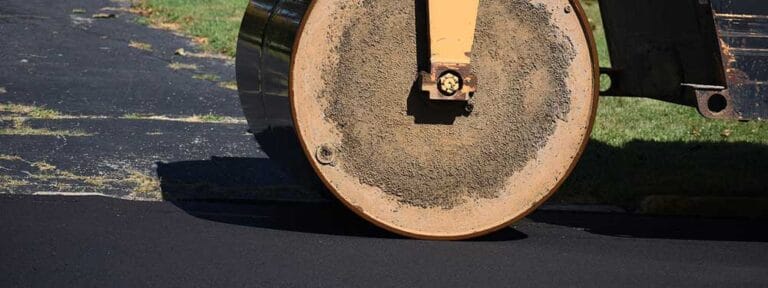
Compaction happens immediately after asphalt is laid, while it’s still hot. Heavy roller equipment makes multiple passes, compacting the material to the proper density. Insufficient compaction leaves air pockets that allow water infiltration and premature deterioration. Over-compaction can push too much binder to the surface, creating a slick, unstable layer. Experienced operators know exactly how much compaction each asphalt mix requires.
Pay attention to transitions and edges. Where your new driveway meets existing surfaces—like the street, garage apron, or walkways—requires special attention. These butt joints must be properly graded and sealed to prevent water from working its way under the asphalt. Edges that aren’t supported will crumble over time, so contractors should tamp and angle edges for long-term stability.
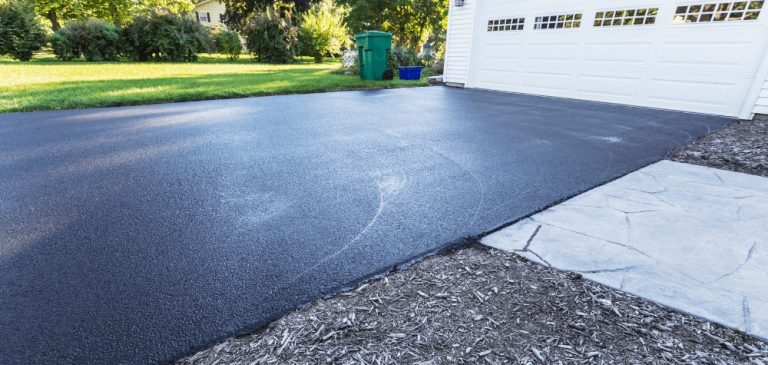
The surface should look smooth and uniform when finished, with a consistent texture and color. Some minor variations are normal—asphalt contains different-sized aggregates that create slight texture differences. But major color variations, obvious seams, or rough patches indicate quality problems.
Don’t let anyone rush you through a final inspection. Walk the entire driveway before the crew leaves. Check for soft spots, uneven areas, or drainage concerns. If something doesn’t look right, ask about it now. Once the crew is gone and the asphalt has cooled, fixing problems becomes exponentially more difficult and expensive.
Protecting Your Investment After Installation
Your new driveway needs time to cure properly. Wait at least 24 hours before walking on it and 48-72 hours before driving on it—longer if temperatures are above 80°F. Rushing this curing period causes permanent damage like rutting and scarring that no amount of repair work can fully fix.
Asphalt remains somewhat pliable for the first 6-12 months. During this time, avoid parking in the same spot repeatedly, turning your steering wheel while stationary, and allowing heavy vehicles or equipment on the surface. These actions can leave permanent impressions while the asphalt is still curing.
Plan for seal coating about 90 days after installation, but definitely within the first year. Seal coating too early traps oils and solvents that need to escape during curing. Wait too long and you miss the window for optimal protection. A quality seal coat protects against UV damage, water infiltration, and chemical spills that would otherwise deteriorate your asphalt.
The difference between a driveway that lasts 20 years and one that needs replacement in 10 comes down to installation quality and basic maintenance. You’ve invested in proper installation—now protect that investment with reasonable care and periodic seal coating.
If you’re ready to move forward with your driveway project in Hunterdon County, NJ, we’re here to help. At Productive Asphalt LLC, we bring roots in the industry dating back to 1948 and a commitment to treating every project with the same attention to detail. We provide the transparency and expertise that turns a significant investment into lasting value for your property.