Essential Yard Grading for Proper Drainage
You’re planning a paving project, or maybe you’ve already noticed water collecting where it shouldn’t. Either way, you’re smart to be thinking about drainage now instead of after problems show up. The truth is, proper yard grading makes the difference between a driveway that lasts twenty years and one that cracks within five. It’s also the difference between a dry basement and one that springs leaks every time it rains hard. What happens before the asphalt goes down determines everything that comes after. Let’s talk about what proper grading actually looks like and why it matters so much for properties in Hunterdon County.
Why Yard Grading for Drainage Matters Before Any Paving Project
Water runs downhill. Simple physics, but it’s amazing how many paving projects ignore this basic fact until problems appear. Proper yard grading creates a controlled path for water to follow, directing it away from your foundation, your driveway, and anywhere else it can cause damage.
When contractors skip this step or rush through it, you end up with low spots where water collects. That pooling water doesn’t just sit there looking ugly. It seeps into the ground, softening the soil beneath your pavement. In Hunterdon County’s climate, that water freezes and thaws repeatedly through winter, expanding and contracting in ways that crack and destroy asphalt from underneath.
The grading work happens before you see any pavement laid. It’s the foundation beneath the foundation. Get this wrong, and everything built on top of it fails prematurely—no matter how good the asphalt itself might be.
How Poor Drainage Destroys Driveways and Foundations
Let’s be specific about what happens when water doesn’t drain properly. First, it saturates the base material beneath your pavement. That base needs to stay stable and compacted to support the weight of vehicles. When water infiltrates it, the base softens and shifts.
You’ll start seeing small cracks. Then those cracks widen. Water gets into the cracks, freezes, expands, and makes them worse. Within a few years, you’re looking at potholes, major cracking, and sections of pavement that have settled or heaved. The whole surface becomes uneven and damaged.
But the pavement damage is actually the smaller problem. Water that pools near your foundation is working its way into your basement or crawl space. It’s creating hydrostatic pressure against foundation walls. Over time, this causes cracks, leaks, and serious structural issues that cost tens of thousands to repair.
Clay-heavy soils common throughout Hunterdon County make this worse. Clay doesn’t drain well naturally. It holds water, swells when wet, and shrinks when dry. That expansion and contraction puts even more stress on foundations and pavement. Without proper grading to move water away quickly, you’re fighting a losing battle against the soil itself.
The signs show up gradually. Maybe you notice your basement smells musty after heavy rain. Or there’s a damp spot on the foundation wall. Perhaps your yard stays soggy for days after a storm, or you’re seeing erosion along your walkway. These aren’t minor annoyances—they’re warnings that water isn’t going where it should.
What Proper Slope and Grading Actually Look Like
Here’s what you need to know about proper grading: your yard should slope away from your house at a minimum of 3% grade. That translates to about a 6-inch drop over 10 feet of distance. The ideal slope is around 5%, though acceptable grading can range from 3% to 25% depending on your specific property conditions.
This isn’t something you can eyeball. Your yard might look relatively flat but actually be sloping toward your foundation instead of away from it. That’s called negative grading, and it’s one of the most common causes of drainage problems. Water flows to the lowest point, so if your foundation sits lower than the surrounding yard, that’s where the water goes.
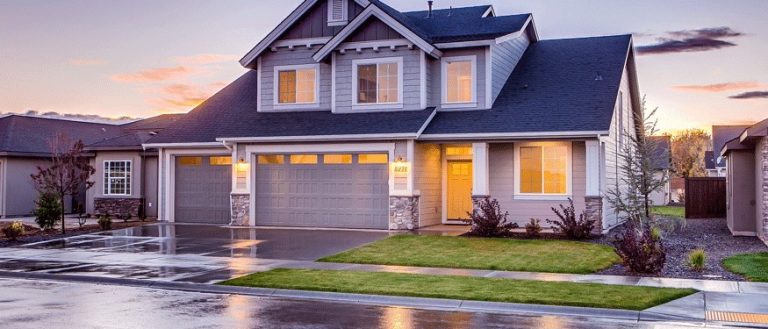
Proper grading starts at your foundation and slopes downward in all directions, creating a gentle hill effect with your house at the high point. The slope needs to be consistent—not interrupted by low spots or dips where water can collect. It also needs to direct water toward appropriate drainage areas like the street, a drainage swale, or another designated runoff location.
For paving projects specifically, the grading needs to account for the pavement itself. Your driveway should have a slight crown in the center or be tilted to one side so water runs off the surface instead of pooling. The edges need to be properly supported so they don’t crumble or allow water to seep underneath.
When we assess your property’s natural drainage patterns before starting work, we identify where water currently flows, where it needs to go, and what grade changes are necessary to make that happen. We also account for roof drainage from gutters and downspouts, because that concentrated water flow needs to be managed too.
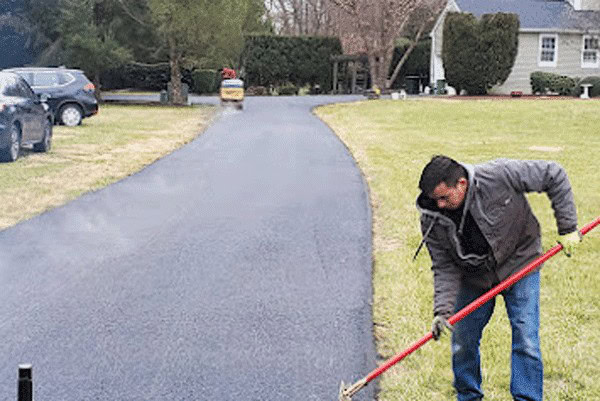
The base preparation phase is when all this grading work happens. We excavate to the proper depth, bring in appropriate base materials, and grade everything to the correct slope before compacting. We don’t rush this phase, because we know it determines how long the pavement will last.
Signs Your Contractor Is Cutting Corners on Drainage Preparation
You can’t see the base after asphalt goes down, which is exactly why some contractors cut corners there. They know most homeowners won’t know the difference until problems appear years later. By then, they’re long gone and you’re stuck with the repair bills.
Watch for these red flags during the preparation phase. If your contractor doesn’t assess drainage patterns before starting work, that’s a problem. Proper grading requires understanding where water currently flows and where it needs to go. Skipping this assessment means they’re guessing—or worse, not thinking about drainage at all.
Pay attention to how much time they spend on base preparation. If they’re rushing through excavation and grading to get to the paving phase quickly, they’re probably not doing it right. Proper compaction alone takes time and multiple passes with the right equipment. Contractors who shortcut this step create bases that settle and shift under load.
Common Grading Mistakes That Lead to Pavement Failure
The most frequent mistake is creating low spots during grading. These depressions become water collection points. Even small dips that don’t look like much can hold enough water to cause problems. When that water freezes in winter, it expands with tremendous force, cracking the pavement from below.
Another common error is ignoring how roof drainage affects the grading plan. Your roof sheds a lot of water during heavy rain. If gutters and downspouts discharge right onto your driveway or near your foundation without proper drainage paths, you’re going to have problems. The grading needs to account for this concentrated water flow and direct it safely away.
Failing to compact the base properly is probably the most expensive mistake contractors make. Loose, poorly compacted base material settles over time under the weight of vehicles. This creates uneven surfaces, cracks, and eventual pavement failure. Proper compaction requires the right equipment and multiple passes—work that takes time and can’t be rushed.
Some contractors also make the mistake of using inadequate base materials. Quality crushed stone provides good drainage and structural support. Cheaper alternatives might save money upfront but don’t perform as well, especially in areas with clay soils or high water tables. The base material needs to drain water while staying stable enough to support pavement.
Sloping toward the foundation instead of away from it sounds like an obvious error, but it happens more often than you’d think. Sometimes it’s the result of adding soil in the wrong places or not properly calculating the slope. Other times it’s just carelessness. Either way, the result is water flowing toward your house instead of away from it.
Not accounting for local soil conditions is another critical mistake. Hunterdon County’s clay-heavy soils behave differently than sandy soils. Clay holds water and swells when wet. Grading plans need to account for this by creating steeper slopes or incorporating drainage features that move water away faster. Contractors who don’t understand local conditions often create grading that works fine on paper but fails in practice.
What to Expect During Professional Drainage and Grading Work
When you hire a contractor who takes drainage seriously, here’s what the process looks like. We start with a thorough site assessment, walking your property to understand current drainage patterns, identify problem areas, and note where water needs to go. We’re looking at your roof drainage, existing slopes, soil conditions, and any areas where water currently pools or causes issues.
Next comes the planning phase. We explain our drainage strategy before work begins. We’ll show you where we plan to direct water, what slope we’re creating, and how we’ll address any challenging areas. You’ll get a clear written estimate that includes all the drainage and grading work—not vague language that leaves room for surprise charges later.
During excavation, we remove old pavement completely if you’re replacing an existing driveway. We dig down to the proper depth based on your specific use. Residential driveways typically need different specifications than commercial parking lots that handle heavy truck traffic. We’re also checking for any underground utilities and marking them clearly to avoid damage.
The base installation phase is where the grading actually happens. We bring in quality base materials—usually crushed stone—and spread it to create the proper slope. This isn’t dumped in one pile and spread around. It’s carefully placed and graded to exact specifications using laser levels or other precision equipment to ensure the slope is correct throughout.
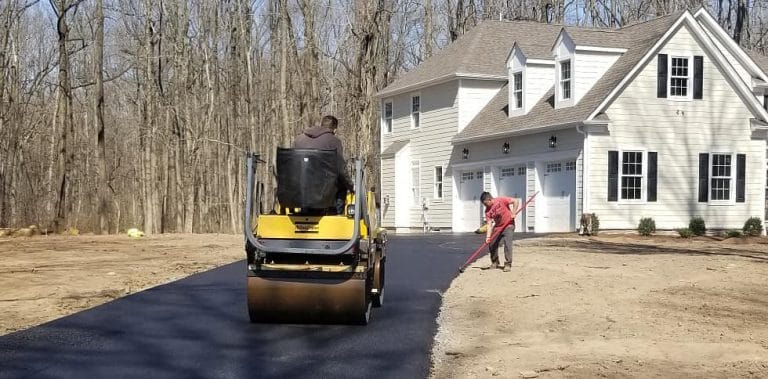
Compaction comes next, and this is where you can really tell the difference between quality contractors and those cutting corners. Proper compaction requires multiple passes with heavy rollers or plate compactors. The base needs to be compacted in layers, not all at once. You’ll see us making multiple passes, checking our work, and ensuring everything is solid before moving forward.
Throughout this process, we maintain communication. We update you on progress, point out anything unexpected we find, and get your approval before addressing surprises that might affect cost. You’re not left guessing what’s happening or when we’ll be finished.
The final grading check happens right before paving. We verify the slope is correct, check for any low spots or areas that need adjustment, and make sure water will flow where it’s supposed to. Only then do we move forward with installing the asphalt surface.
Protecting Your Investment With Proper Grading and Drainage
Proper yard grading for drainage isn’t the exciting part of a paving project. You don’t see it after the work is done. But it’s the foundation that determines whether your investment lasts two decades or fails in five years. It’s what keeps water away from your foundation instead of pooling against it. And it’s what separates contractors who do quality work from those who cut corners.
If you’re planning a paving project in Hunterdon County, or if you’re dealing with drainage issues around your property, the preparation work matters more than anything else. The right grading prevents problems before they start. It protects your foundation, extends your pavement’s life, and saves you from expensive repairs down the road.
We’ve been handling this kind of work since 1948, with expertise in water management solutions that work with your property’s natural drainage patterns. Every project gets the same attention to proper grading and base preparation, because that’s what creates results that last.